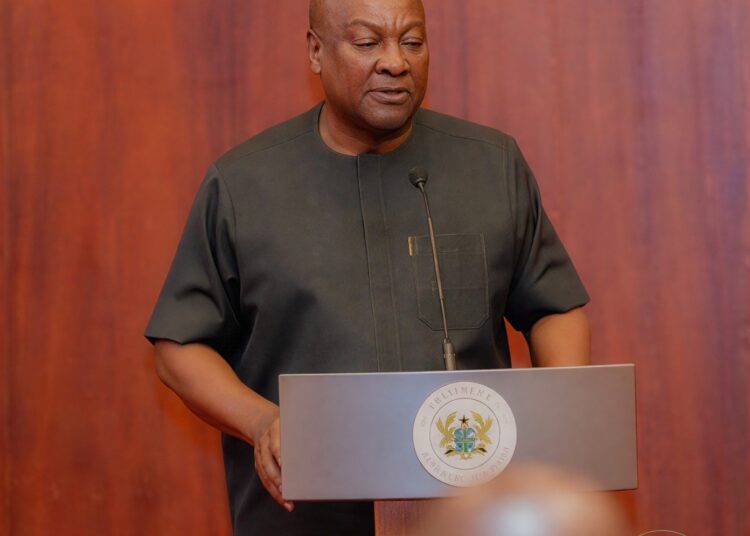
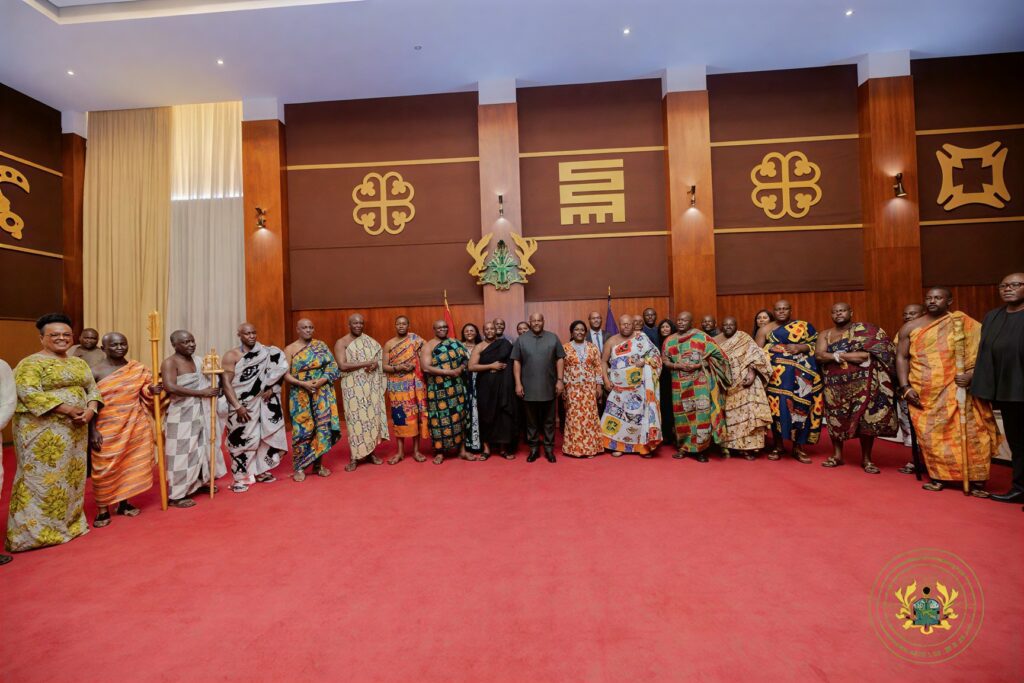
President John Dramani Mahama has reaffirmed his administration’s commitment to balanced national development following an extensive meeting with the Eastern Regional House of Chiefs. The high-level engagement, led by Nene Sakite II, provided a formal platform for the President to outline key government initiatives for the region.
The President detailed plans to operationalize the University of Engineering and Agricultural Sciences at Bunso to expand access to specialized higher education. He expressed confidence that the institution would create opportunities for young people seeking tertiary education in engineering and science fields.
He noted that recent economic indicators show significant improvement, helping to restore investor confidence and create conditions for accelerated infrastructure growth. According to the President, the national economy has demonstrated greater resilience to external shocks compared to previous fiscal quarters.
“We need to prepare for those milestones. One, we are coming out of the IMF program; it is coming to an end. We have the final review coming up next month. But we intend to, beyond the IMF program, still keep the fiscal discipline that has resulted in the stabilization of the macroeconomic environment.”
His Excellency, John Dramani Mahama
The Administration has successfully completed the IMF programme and has pledged to maintain fiscal discipline to safeguard these hard-won gains. President Mahama emphasized the need to prioritize industrialization and agriculture to address youth unemployment.
He also highlighted the uncapping of the District Assembly Common Fund, which is intended to empower local authorities to drive grassroots development. This policy change allows districts greater autonomy in managing resources to meet local needs.
Healthcare remains a key priority, with the expansion of the Free Primary Healthcare programme and the Ghana Medical Trust Fund. These initiatives aim to deliver mobile health services to underserved communities while strengthening the overall healthcare system.
Addressing infrastructure challenges, the President directed the contractor handling the stalled Eastern Regional Hospital project to return to site immediately, confirming that the necessary payments have been made to facilitate its completion.
He further announced that six new regions are scheduled to receive regional hospitals to ensure nationwide access to modern healthcare. Sod-cutting ceremonies for three of these hospitals are expected this year, with the remaining three to follow next year.
Nene Sakite II commended the government for its continued support and efforts in maintaining peace and stability across traditional areas. The House of Chiefs expressed appreciation for ongoing projects and the visible progress in the Eastern Region.
The delegation included the Minister for Local Government, Chieftaincy and Religious Affairs, Ahmed Ibrahim, and the Eastern Regional Minister, Rita Akosua Adjei Awatey, underscoring collaboration between central government and local leadership.
The House of Chiefs also thanked the government for prioritizing national peace and security, noting that stability remains crucial for attracting investment.
Mahama Outlines Governance Strategy To Strengthen Stability Nationwide
President Mahama outlined the importance of security and conflict resolution during his engagement with prominent traditional rulers. He identified chieftaincy disputes and land boundary issues as major sources of conflict that require the attention of the National House of Chiefs.
He noted that the 1992 Constitution bars government interference in chieftaincy matters to preserve the independence of traditional institutions. However, the state intervenes when law and order break down to ensure public safety.
“We intend to, beyond the IMF programme, maintain the fiscal discipline that has contributed to the stabilization of the macroeconomic environment,” he stated.
Addressing calls for a Chieftaincy Common Fund, the President explained that no such statutory fund currently exists under Ghanaian law. He suggested that Metropolitan, Municipal, and District Assemblies utilize portions of the Common Fund within their discretion to support traditional authorities.
He added that the government is reviewing stipends for traditional rulers with the aim of increasing them over time, focusing on direct support rather than establishing a new statutory fund.
The President also shared insights from his recent visit to Korea, where discussions were held on the University of Engineering, Science, and Agriculture. He reaffirmed that operationalizing the Bunso campus remains a top priority for his administration this year.
He noted that investments in education are being scaled up to strengthen foundational learning and improve facilities for both teachers and students. The “Big Push” infrastructure agenda, he explained, serves as the primary vehicle for these large-scale investments in human capital development.
The meeting concluded with a renewed commitment to collaboration to ensure development reaches every community across the country. President Mahama expressed appreciation to the chiefs for their wisdom and their role in maintaining social cohesion at the local level.
He emphasized that recent economic stabilization provides a strong foundation for the next phase of national growth and assured the delegation that fiscal discipline will remain a core feature of his governance approach.
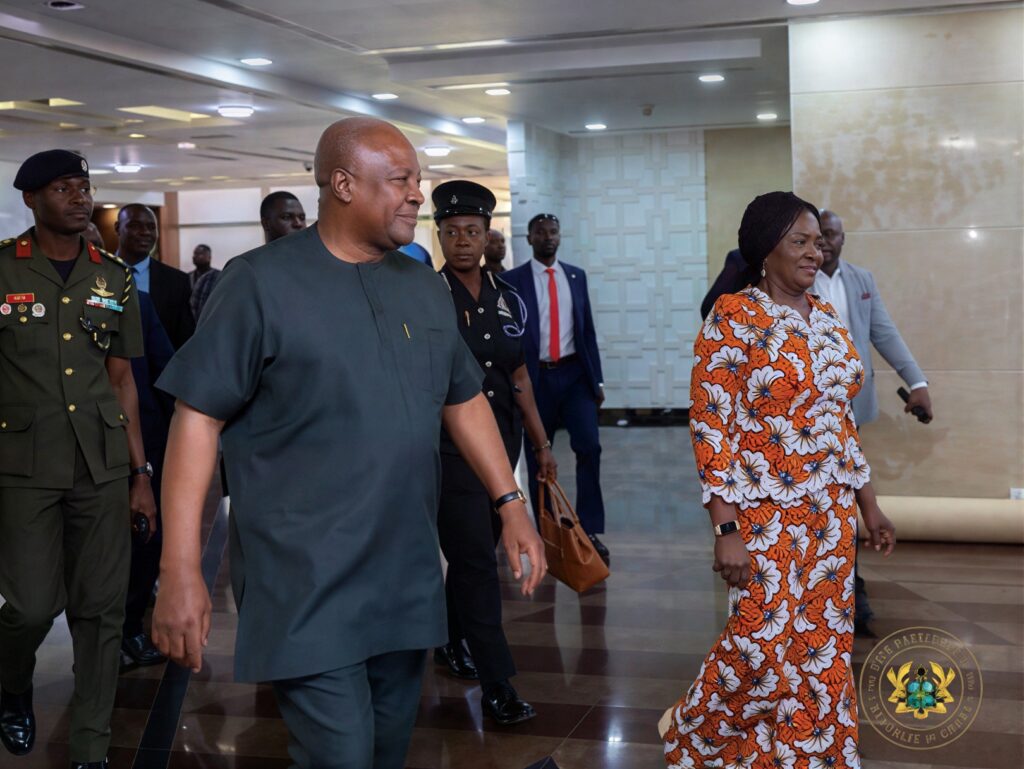
Both government officials and traditional leaders agreed to maintain open lines of communication to address emerging issues before they escalate. The President stressed that the partnership between the state and traditional authorities is essential for sustainable development and lasting peace.
The Eastern Regional House of Chiefs expressed optimism that the current momentum in infrastructure development will be sustained and pledged their full support for government initiatives, including Free Primary Healthcare and industrialization policies.
President Mahama concluded by reaffirming that every region will receive its fair share of infrastructure to promote national unity. The delegation departed the Presidency with assurances that both the Eastern Regional Hospital and the Bunso University project will see accelerated progress.
READ ALSO: Ocloo Announces Planned Demolition Of Unauthorised Sakumo Ramsar Structures