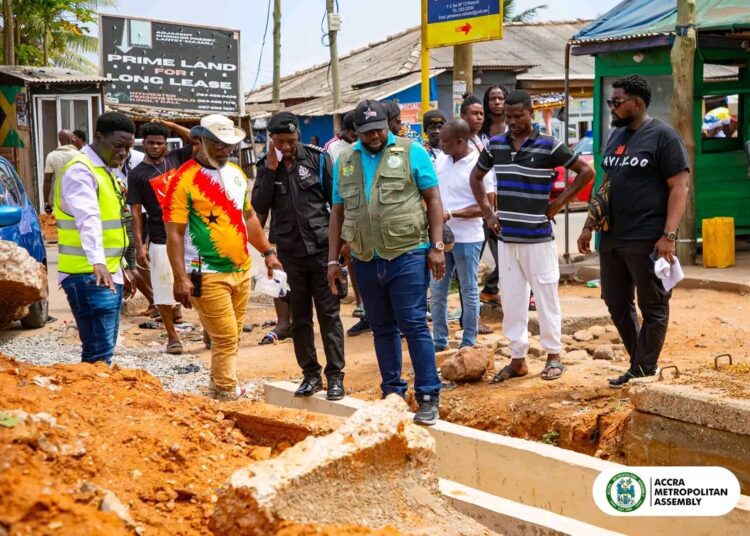
The Mayor of Accra, Michael Kpakpo Allotey, has inspected ongoing drain construction works in the Chorkor Electoral Area as part of intensified efforts to improve stormwater management, reduce flooding, and strengthen sanitation infrastructure across the capital. The inspection highlights renewed attention by city authorities toward long-standing drainage challenges that continue to affect low-lying communities.
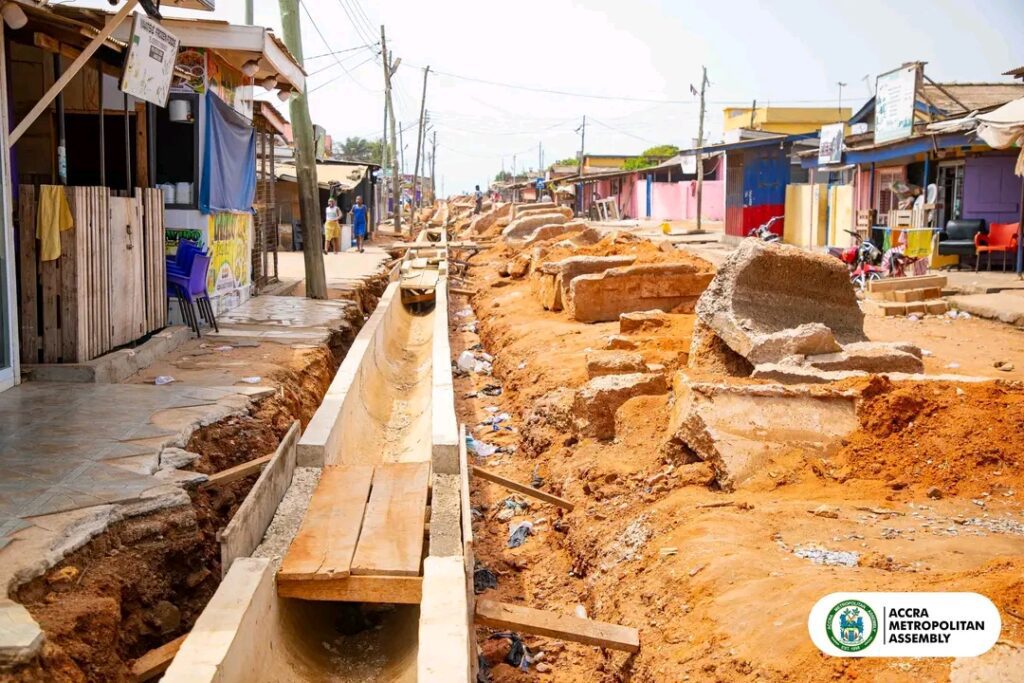
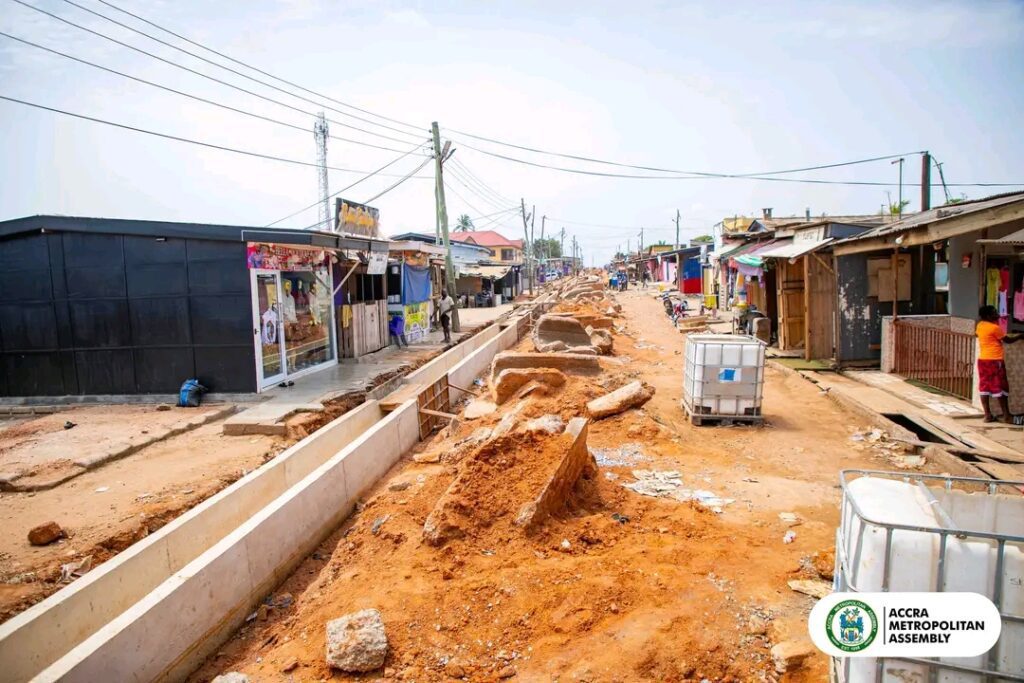
The project, which involves the construction of approximately five kilometres of primary drains, is one of several interventions being rolled out by the Accra Metropolitan Assembly (AMA) to address perennial flooding in parts of the metropolis. Chorkor, known for its dense population and proximity to the coastline, has been particularly vulnerable to flooding during heavy rains, often leading to property damage and public health concerns.
During the inspection, the Mayor observed progress on site and engaged with engineers and workers to assess the pace and quality of the construction. He emphasised that the project is a critical component of the Assembly’s broader strategy to improve urban resilience and ensure that communities are better protected during the rainy season.
Mayor Inspects Drain Construction
Speaking after touring the project site, the Mayor explained that the construction of the drains is aimed at improving the free flow of rainwater, which has long been obstructed by inadequate and poorly maintained drainage systems. He noted that efficient drainage is essential not only for flood prevention but also for maintaining sanitary conditions within communities.

He added that the Assembly is prioritising areas that are most prone to flooding, particularly densely populated neighbourhoods where poor drainage can quickly escalate into serious environmental and health challenges. According to him, Chorkor’s inclusion in the project reflects its strategic importance in the city’s overall drainage network.
The Mayor further indicated that similar drainage works are underway in other parts of Accra as part of a coordinated approach to tackling urban flooding. He expressed optimism that once completed, these projects would significantly reduce the frequency and severity of flooding incidents across the metropolis.
Mayor Urges Proper Waste Disposal
Beyond infrastructure development, the Mayor used the opportunity to call on residents to adopt responsible waste disposal practices. He cautioned against the habit of dumping refuse into drains, describing it as a major contributor to flooding in the city.
According to him, waste materials deposited in drains often accumulate and block the flow of water, leading to overflows during heavy rainfall. He stressed that even well-constructed drainage systems would fail if residents continue to misuse them as dumping sites.
He also highlighted the broader environmental impact of such practices, noting that waste from choked drains is frequently washed into nearby water bodies and beaches. This not only worsens sanitation conditions but also undermines ongoing efforts by the Assembly to restore and maintain the city’s coastline.
To address these challenges, the AMA is intensifying public education campaigns aimed at changing attitudes toward sanitation. The Mayor stated that enforcement measures are also being strengthened to deter individuals who engage in indiscriminate waste disposal.
AMA Expands Sanitation Efforts
The Mayor outlined a multi-faceted approach being adopted by the Assembly to improve sanitation and environmental management in Accra. This includes regular clean-up exercises in flood-prone communities, enhanced waste collection systems, and stricter enforcement of sanitation regulations.
He emphasised that proper waste management must begin at the household level, with residents taking responsibility for how they dispose of refuse. According to him, there is a direct link between poor sanitation practices, blocked drains, flooding, and coastal pollution.
In addition to the Chorkor project, the Assembly is undertaking similar drainage and sanitation interventions in other parts of the city. These efforts are expected to complement each other in building a more resilient urban environment capable of withstanding the impacts of heavy rainfall and rapid urbanisation.
Despite these interventions, the Mayor stressed that infrastructure alone cannot fully resolve the issue. He called for a collective effort involving residents, community leaders, and institutions to maintain clean surroundings and protect public infrastructure.The ongoing drain construction in Chorkor represents a significant step toward addressing one of Accra’s persistent urban challenges.
However, its long-term success will depend on sustained maintenance and behavioural change among residents.As the rainy season approaches, city authorities remain focused on ensuring that critical infrastructure is in place and functioning effectively. For communities like Chorkor, the project offers hope for improved living conditions, reduced flooding risks, and a cleaner environment, provided that both government and residents play their respective roles.
READ ALSO: Walewale Women Topple the Old Rice Economy