
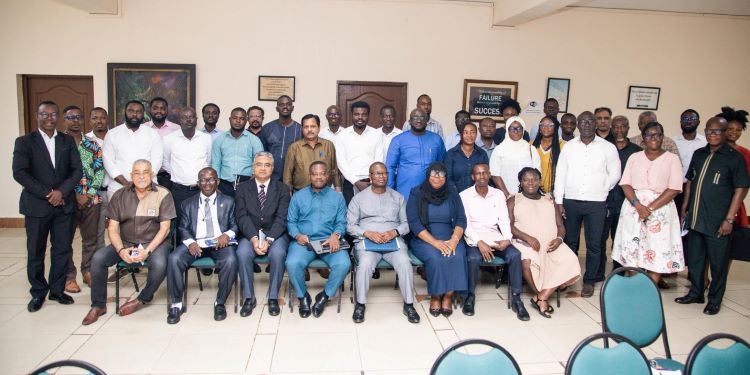
The Association of Ghana Industries (AGI) and the Ghana Revenue Authority (GRA) are intensifying their collaboration to ensure the sustainability of industrial tax incentives. The two bodies recently convened at the Coconut Grove Regency Hotel in Accra for a high-stakes sensitization workshop.
The focus of the engagement was the Upfront VAT Relief policy, a strategic fiscal tool designed to breathe life into the manufacturing sector by addressing the liquidity traps that often stifle industrial expansion. The atmosphere reflected a shared understanding: the survival of this relief depends entirely on the industry’s commitment to radical transparency.
“The AGI and GRA’s sensitisation workshop on the Upfront VAT Relief policy had participation from over 50 member companies. The workshop served as an important platform for dialogue, knowledge-sharing, and reinforcing the need for transparency and compliance”
Association of Ghana Industries
The AGI noted that the Upfront VAT Relief is more than just a bureaucratic checkbox; it is a critical intervention for a sector grappling with high operational costs. Through allowing manufacturers to bypass the immediate VAT payment on specific inputs, the government effectively injects liquidity back into the production cycle.
However, as the workshop made clear, this “breathing room” is not a blank check. The AGI and GRA are now moving toward a “compliance-first” model, where the privilege of tax relief is strictly tethered to the integrity of a company’s financial reporting.
Mr. Seth Twum-Akwaboah, the CEO of AGI, set a pragmatic tone for the meeting. He did not merely advocate for more aid; instead, he challenged his members to protect the tools they already have.

Mr. Twum-Akwaboah described the VAT relief as a “critical policy for easing cash flow constraints,” but his message was tempered with a warning. He noted that the policy’s temporary nature means its extension is not guaranteed if the state perceives it as a source of revenue leakage.
For the AGI, the workshop represented a proactive attempt to police its own ranks, making sure every manufacturer understands the fine print of the relief scheme.
The association’s aim is to eliminate “accidental non-compliance” that could trigger a wider crackdown. The CEO’s remarks underscored this shift in industrial advocacy – from simply demanding better conditions to actively managing the regulatory relationship to ensure long-term stability.
GRA’s Dual Mandate
Representing the state’s fiscal interests, Mr. Francis Appiah-Amoh, the Assistant Commissioner for Programmes and Planning at the GRA, provided the necessary counterweight to the industry’s enthusiasm.
The GRA finds itself in a complex position, as it must act as an enabler of industrial growth while simultaneously serving as the uncompromising guardian of the national purse. Mr. Appiah-Amoh was candid about the risks associated with upfront relief, particularly the potential for it to be weaponized by unscrupulous actors.
The Authority’s primary concern is that a tool meant for growth might be subverted into a “tax avoidance” mechanism. The GRA informed the 50+ companies present that it is watching the implementation of this policy with a high degree of scrutiny.

The message that the government is willing to forego immediate revenue to fuel industrial development, but it will not tolerate the misuse of that generosity, was made abundantly clear. This engagement served as a preemptive strike against the creative accounting that often follows tax incentives.
The heart of the workshop was led by Mrs. Taibatu Ibrahim from the GRA’s Policy and Programming Department. Her presentation moved the conversation from high-level policy goals to the granular realities of implementation and monitoring.
For the manufacturers in the room, this was the most critical segment of the day. Modern tax compliance is no longer a matter of annual filings; it is an ongoing process of data sharing and audit readiness. Mrs. Ibrahim provided clarity on what the GRA expects during its monitoring cycles.
It includes precise documentation of how the relief is applied and the specific industrial inputs it covers. The workshop served to demystify the expectations of the relief scheme, providing a roadmap for companies to align their internal accounting with the GRA’s digital tracking systems.
This level of detail is intended to reduce the friction between the regulator and the regulated, ensuring that audits are clinical rather than confrontational. The dialogue at the Coconut Grove Regency Hotel was a testament to the maturing relationship between Ghana’s private sector and its tax authorities.
Both the AGI and the GRA are moving away from the traditional cat-and-mouse dynamic toward a partnership based on mutual economic interest, and the workshop highlighted that transparency is the only currency that can sustain the Upfront VAT Relief policy in an era of fiscal consolidation.
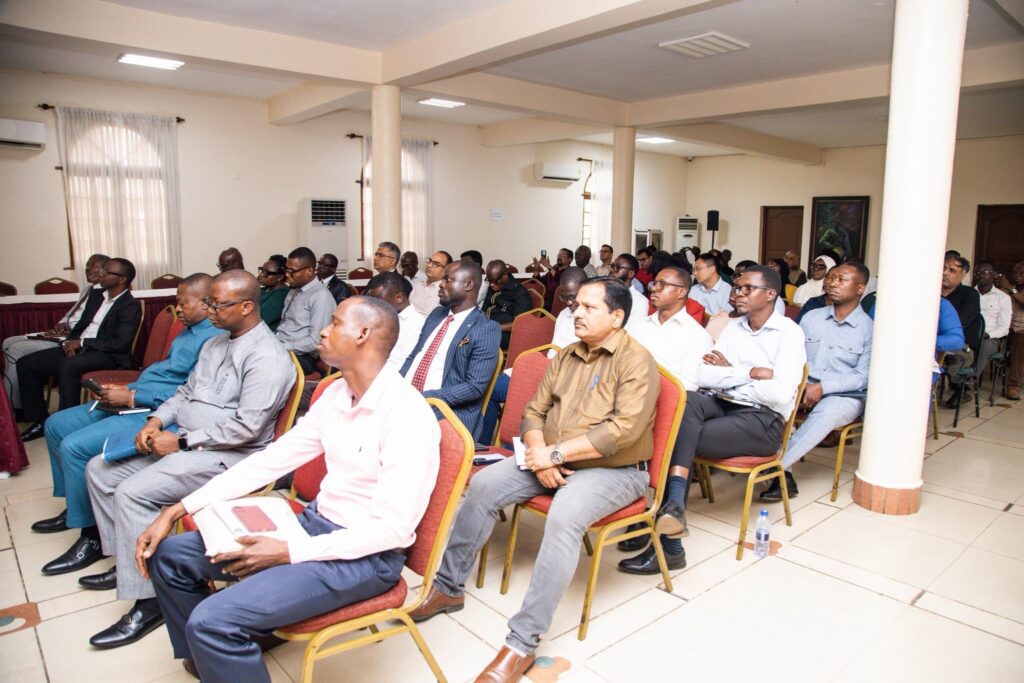
Both organizations reaffirmed their commitment to “continuous engagement,” suggesting that the April workshop is not a one-off event but the start of a persistent monitoring and feedback loop.
As Ghana seeks to bolster its industrial base, the ability to maintain fiscal responsibility while offering targeted relief will be the ultimate test of its economic management. The consensus in the room was that a well-regulated relief scheme is far more valuable than an unregulated one that risks being scrapped due to abuse.
READ ALSO: Belarus Frees Andrzej Poczobut In US-brokered Prisoner Exchange