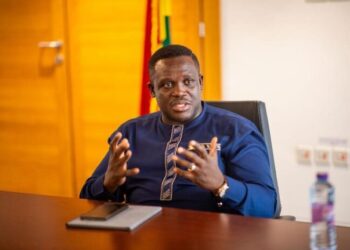
Presidential aide to Dr Bawumia, Dennis Miracle Aboagye, has cautioned politicians against exploiting national utility crises for partisan gain during ongoing public discussions.
He stressed that issues surrounding electricity supply and fuel prices are far too volatile to be manipulated without risking eventual public backlash.
“Dumsor, fuel prices, exchange rates: if there is one lesson I have learnt in Ghanaian politics, it is this: politicians should avoid playing politics with these issues.”
Dennis Miracle Aboagye
Aboagye argued that history has repeatedly shown how such matters ultimately embarrass those who attempt to capitalise on them while in opposition.
He urged the current administration to prioritise the needs of citizens over rhetorical victories during this challenging period.
The aide also revealed that his own daily routine has been severely disrupted by the inconsistent power supply affecting several parts of the country.
He recounted arriving at a media engagement wearing clothes he had not intended to wear after a blackout interrupted his morning preparations.
This experience, he noted, reflects the reality for many Ghanaians who endure unpredictable outages at critical times.
Aboagye highlighted the difficulties faced by students preparing for examinations and business owners forced to dispose of perishable goods.
He cited the case of a cold store operator who lost her entire stock of poultry and sausages due to prolonged outages, describing such incidents as evidence of the seriousness of the crisis.
Aboagye compared the current situation to previous energy challenges, observing that the outages now appear more erratic.
He noted that power could go off as many as five times in a single day at his residence.
The presidential aide insisted that the government has a clear mandate to resolve the crisis and should avoid offering weak or misleading explanations. He expressed frustration at comments from some government officials regarding the technical causes of the outages.
He maintained that the focus must remain on ensuring a stable power supply. And also, politicians shouldn’t engage in blame-shifting.
According to Aboagye, Ghanaians are less interested in historical justifications and more concerned with immediate, practical solutions.
He pointed out that the National Democratic Congress now bears responsibility for managing the energy sector, having pledged to do so.
He reminded officials that the public expects tangible results based on campaign promises.
Aboagye also referenced past statements by the current Energy Minister, who had pledged to stabilise the Electricity Company of Ghana within his first 100 days.
He argued that the administration must be held accountable to such commitments.
Show Us the Plan, Aboagye Demands Clear Roadmap on Energy Crisis
Turning to the technical explanations offered by authorities, Aboagye described them as largely unconvincing and inconsistent.
He questioned claims that nationwide transformer installations alone could explain the widespread and simultaneous outages across multiple regions.

He challenged the logic behind power cuts in one area being attributed to projects in another, calling for a transparent and detailed schedule if thousands of transformers are indeed being installed nationwide.
Aboagye argued that explanations involving faulty equipment or environmental factors do not align with the lived experiences of ordinary Ghanaians.
Instead, he said the crisis demostrate deep-rooted structural issues spanning several decades and administrations.
While acknowledging that the current government inherited many of these challenges, he insisted that it remains duty-bound to deliver a lasting solution.
He also criticised the burden of taxes on citizens who continue to endure what he described as unprecedented instability in the power sector, calling for greater honesty from those managing electricity generation and distribution.
The aide urged authorities to be candid about the complexity of the situation and to present a realistic timeline for recovery.
He suggested that the public would respond more positively to transparency than to explanations that fail to withstand scrutiny.
“If you say you are installing 3,000 transformers, then provide a schedule. You know how long it takes to install each one.”
Dennis Miracle Aboagye
Reflecting on the intensity of public frustration, Aboagye said such emotions are justified given the scale of disruption. He called on the government to stop trivialising the crisis and instead focus on the technical and financial demands of stabilising the grid.
He noted that the government’s mandate ultimately depends on its ability to deliver reliable basic services, particularly electricity.
According to him, the time for political point-scoring has passed, and the focus must now shift to delivering stability.
He reiterated his belief that resolving the energy crisis requires a non-partisan approach to secure the country’s long-term prosperity.
READ ALSO: AMA Announces May 2 Sanitation Day with One-Day Trading Suspension