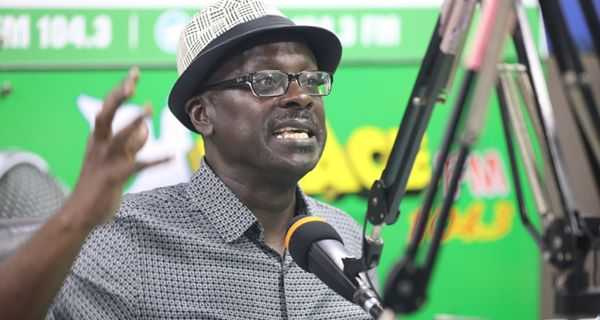
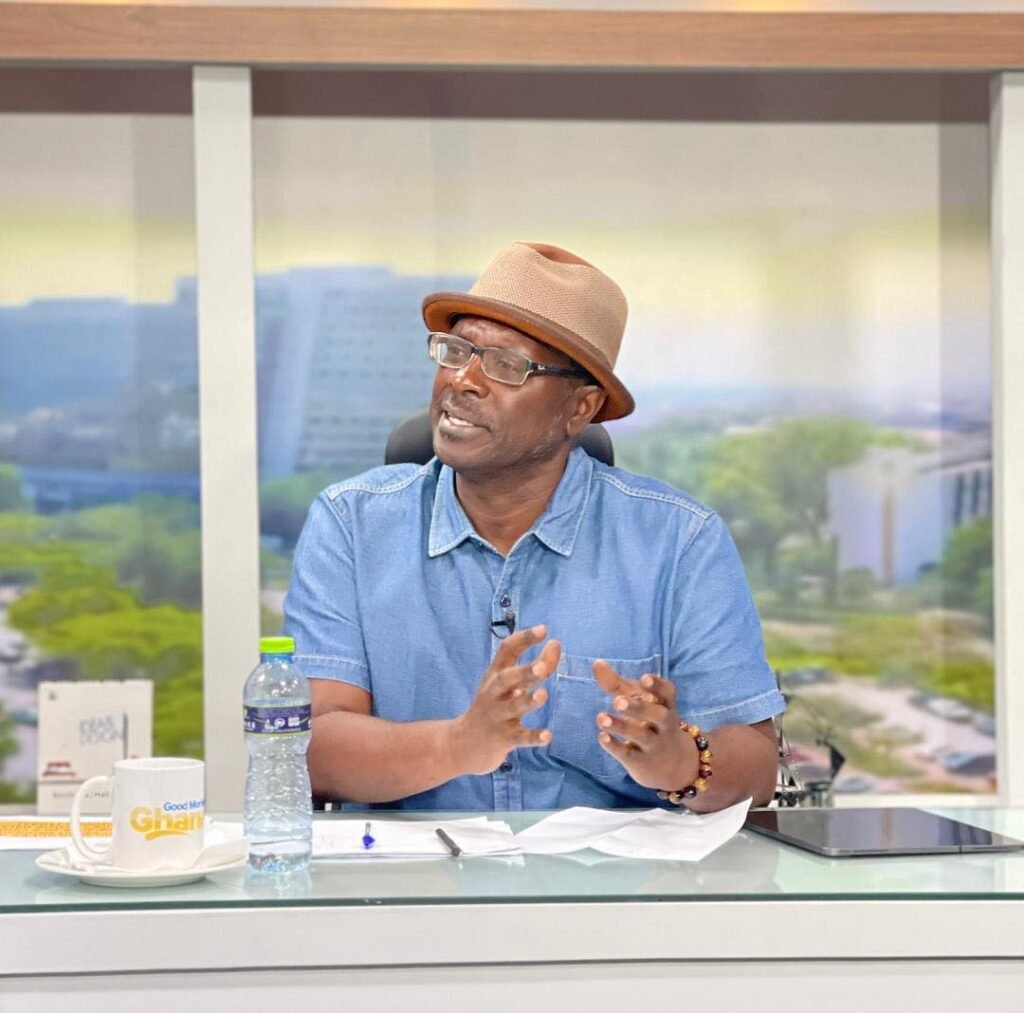
A legal controversy is unfolding within Ghana’s judicial system as Professor Stephen Kwaku Asare, a legal scholar and fellow at the Ghana Center for Democratic Development, warns that recent court rulings are undermining the country’s prosecutorial framework.
Reacting to a series of judicial decisions, Professor Asare argued that the courts are misinterpreting the law on prosecutorial authorization, creating confusion and delays in ongoing cases.
“Not long after one High Court froze the OSP and voided convictions on the theory that it lacked authorization, another court has now struck out an EOCO lawyer from the Buffer Stock case and given the AG a “last chance” to prove authorization”.
Professor Stephen Kwaku Asare, CDD-Ghana Fellow
He suggested that these interpretations are weakening the effectiveness of institutions such as the Office of the Special Prosecutor and the Economic and Organised Crime Office.
He noted that after a High Court ruling questioned the authority of the Office of the Special Prosecutor and affected prior convictions, subsequent rulings are now extending similar scrutiny to other state prosecutors.
According to him, this has triggered a chain reaction across courts, with proceedings being adjourned and legal teams challenged over their authority to prosecute.
Courts Accused of Expanding Authorization Requirements
Professor Asare expressed concern that courts are increasingly acting as what he described as “authorization inspectors,” demanding proof that prosecutors have been duly empowered by the Attorney General before proceeding with cases.

In his view, this approach reflects a misunderstanding of the legal framework governing prosecutions in Ghana. He argued that the insistence on producing documentary proof of authorization in court is not supported by existing law.
Central to Professor Asare’s argument is the Law Officers Act of 1974, which outlines who is permitted to perform the prosecutorial functions of the Attorney General.
He explained that the law provides a broad structure that includes officers within the Attorney General’s Department, individuals appointed under the Criminal Procedure framework, and other public officers who may be authorized to act.
According to him, this framework was deliberately designed to be flexible, allowing prosecutions to proceed efficiently without being constrained by excessive procedural requirements.
“The AG may appoint public prosecutors, by executive instrument, pursuant to section 56 of the Criminal Procedures Act. That pathway is structured and often documented. But it is not exhaustive.”
Professor Stephen Kwaku Asare, CDD-Ghana Fellow
He maintained that once a lawyer appears in court as part of the Attorney General’s prosecutorial team, that appearance carries institutional authority unless there is a clear legal defect.
Dispute Over Proof of Authorization
Professor Asare further argued that the law explicitly removes the need to provide evidence of authorization in court. He stated that while authorization itself is required as a legal condition, the law does not mandate that such authorization be proven as an evidentiary requirement during proceedings.
He contended that courts are conflating two separate issues, namely, whether authorization is necessary and whether it must be demonstrated in court before a case can proceed. By demanding proof of authorization, he said, courts are effectively imposing requirements that contradict the intention of Parliament.
The legal scholar warned that the current trend could have serious consequences for Ghana’s justice system. He indicated that ongoing prosecutions are increasingly being delayed as courts pause proceedings to address authorization challenges.
He described a scenario in which trials risk being transformed into procedural disputes rather than forums for determining guilt or innocence. According to him, this development could encourage defence strategies focused on technical challenges rather than substantive issues, potentially weakening the enforcement of anti-corruption laws.
He cautioned that if the trend continues, it could create a pattern where cases are repeatedly interrupted by disputes over authorization, leading to prolonged litigation and reduced accountability.
Impact on Anti Corruption Efforts
Professor Asare expressed particular concern about the implications for anti corruption institutions such as the Office of the Special Prosecutor and the Economic and Organised Crime Office.
He argued that these institutions rely on coordinated prosecutorial efforts and that the current judicial approach risks undermining their effectiveness.
In his assessment, requiring case by case proof of authorization could disrupt the collaborative nature of modern prosecutions, which often involve multiple agencies working together.
“The Law Officers Act was written to enable prosecutions. The courts are now reading it to disable them. ORAL has been thrown into reverse gear, and the drivers, regrettably, are the courts. But the AG has been the aplanke!!!”
Professor Stephen Kwaku Asare, CDD-Ghana Fellow
The scholar warned that the growing emphasis on authorization disputes could create opportunities for delays that are unrelated to the merits of cases. He indicated that such developments could lead to a situation where prosecutions are stalled not because of weak evidence but due to procedural challenges.
This, he argued, would ultimately undermine public confidence in the justice system and weaken efforts to combat corruption and financial crime.
Call for Correct Interpretation of the Law
Professor Asare called on the courts to revisit their interpretation of the Law Officers Act and align their approach with its intended purpose. He emphasised that the law was designed to facilitate prosecutions and ensure that justice is delivered efficiently.
In his view, courts should focus on whether a prosecutor’s appearance falls within a lawful authorization structure, rather than demanding documentary proof in every instance.
He maintained that a proper understanding of the law would help preserve the balance between legal compliance and practical functionality. The ongoing debate highlights deeper questions about the interpretation of legal provisions and their impact on the administration of justice.
Professor Asare’s analysis suggests that the current approach could have far reaching consequences beyond individual cases, affecting the overall effectiveness of Ghana’s prosecutorial system.
As courts continue to grapple with these issues, the outcome is likely to shape the future of legal practice and the enforcement of accountability measures in the country.
READ ALSO: Ghana Needs Stronger Inflation Data for Economic Stability- First Deputy Governor