
The High Court in Accra has ruled that the Office of the Attorney General must assume control over all criminal prosecutions currently being handled by the Office of the Special Prosecutor, declaring such prosecutions void without proper authorization.
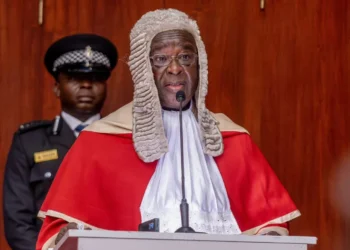
The decision, delivered by Justice John Eugene Nyadu Nyante, establishes that the Office of the Special Prosecutor retains investigative authority but cannot independently prosecute cases unless it secures approval from the Attorney General in line with Article 88(4) of the 1992 Constitution.
The ruling arose from the case The Republic versus the Office of the Special Prosecutor, initiated on the application of Peter Archibold Hyde. The court further awarded costs of GH¢15,000 against the OSP.
Legal analysts say the judgment introduces a new dimension to the ongoing debate over prosecutorial authority in Ghana.
Article 88 at the Center of Legal Interpretation
Central to the court’s decision is the constitutional provision that vests prosecutorial authority in the Attorney General. The ruling reinforces the position that all prosecutions must either be undertaken directly by the Attorney General or by entities acting under his explicit authorization.

The implication is that the Office of the Special Prosecutor must now seek prior approval before initiating or continuing any criminal prosecution.
Reports suggest that until such authorization is obtained, the OSP will be unable to proceed with cases currently before the courts, potentially affecting ongoing investigations and trials.
This interpretation aligns with a strict reading of Article 88, which has increasingly become the focal point of legal disputes concerning prosecutorial powers.
Immediate Impact on Anti Corruption Cases
The judgment is expected to have immediate consequences for cases being handled by the Office of the Special Prosecutor. Ongoing prosecutions may need to be paused or transferred to the Office of the Attorney General, raising concerns about delays and procedural adjustments.
The Office of the Special Prosecutor was established to operate with a degree of independence in tackling corruption related offences, particularly those involving politically exposed persons.
However, the court’s directive introduces an additional layer of oversight, which could reshape the operational framework of the institution. Legal analysts note that while the ruling does not eliminate the OSP’s investigative role, it significantly limits its prosecutorial autonomy.
Connection to Broader Constitutional Challenge
The ruling comes at a time when a separate constitutional case, Adamtey versus Attorney General, is already before the courts. That case, initiated by Noah Ephraem Tetteh Adamtey, challenges the legality of the Office of the Special Prosecutor Act, 2017.

Mr Adamtey’s argument is based on what has been described as a monopoly theory of prosecution, asserting that the Constitution grants exclusive prosecutorial authority to the Attorney General.
According to this view, any law that allows another body to prosecute independently without direct authorization is inconsistent with the Constitution.
The Office of the Attorney General, led by Dominic Ayine, has supported this position in recent filings, arguing that provisions of the Act granting independent prosecutorial powers to the OSP are unconstitutional.
Although the High Court ruling is separate from the Adamtey case, it reinforces similar legal arguments and could influence broader judicial interpretation.
Diverging Legal and Public Reactions
The decision has triggered varied reactions from legal experts and public commentators. Professor H Kwasi Prempeh responded with a cautionary tone, urging the Special Prosecutor not to escalate the matter through appeals or public confrontation.
He suggested that the office should remain calm and continue its work within the constraints of the ruling. Legal scholar Professor Stephen Kwaku Asare took a contrasting view, arguing that no High Court has the authority to strip the Office of the Special Prosecutor of its prosecutorial powers.
He maintained that the institution remains a permanent feature of Ghana’s legal framework. Meanwhile, lawyer Twumasi Ankrah provided a more technical interpretation, stating that the law already subjects the OSP’s prosecutorial powers to Article 88.

He questioned whether the OSP had obtained the necessary authorization before initiating prosecutions, suggesting that the court’s decision essentially enforces an existing legal requirement rather than introducing a new limitation.
“I doubt the judge declared any provision of the Act unconstitutional,” he noted, adding that the ruling appears to focus on compliance with constitutional provisions.
Implications for Governance and Rule of Law
The ruling raises important questions about the balance between institutional independence and constitutional authority. While the Office of the Special Prosecutor was created to strengthen anti corruption efforts, its effectiveness may now depend on coordination with the Attorney General.
Supporters of the decision argue that adherence to constitutional provisions is essential for maintaining the rule of law, even if it requires limiting institutional autonomy.
Critics, however, warn that requiring authorization could undermine the independence of the OSP, particularly in cases involving high level officials.
The debate reflects broader tensions within Ghana’s governance framework, where efforts to strengthen accountability must be balanced against constitutional constraints.
As the legal landscape continues to evolve, the Office of the Special Prosecutor faces a period of uncertainty. The need to secure authorization for prosecutions may require adjustments to its operational procedures and strategic approach.
At the same time, the ongoing Adamtey case could provide further clarity on the constitutional issues at stake. For now, the High Court’s ruling stands as a significant development in Ghana’s legal system, shaping the future of prosecutorial authority and anti corruption enforcement.
The coming months are likely to see continued debate, possible appeals, and further judicial interpretation as stakeholders seek to define the boundaries of power within the country’s legal framework.
READ ALSO: UK Reforms Council Tax System to Support Vulnerable Households