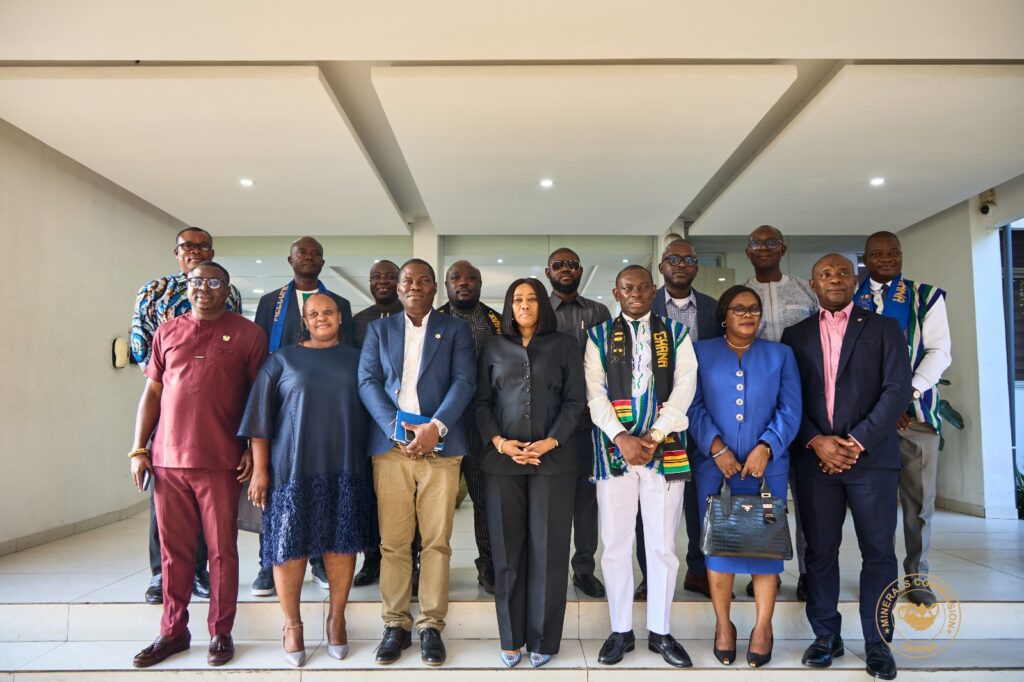
Minerals Commission of Ghana and Sierra Leone’s Public Sector Reform Unit (PSRU) have forged a strategic partnership aimed at harmonizing regulatory frameworks and fostering cross-border institutional strengthening.
This bilateral engagement, spearheaded by the Office of the President of Sierra Leone, seeks to transplant Ghana’s successful governance models into the Sierra Leonean extractive landscape.
By focusing on the digitalization of mineral rights and the enforcement of environmental standards, both nations are positioning themselves to transform subterranean wealth into a catalyst for sustainable macroeconomic stability and public sector efficiency.
This diplomatic and technical exchange serves as a critical bridge for Sierra Leone as it embarks on an ambitious restructuring of its mining administration to mirror Ghana’s proven successes.
“The delegation toured the Commission’s state-of-the-art control room, a 24/7 facility dedicated to tracking earth-moving equipment used in mining operations. The facility remotely monitors equipment through geo-fencing, ensuring machinery remains within designated concessions to prevent illegal activities and environmental degradation.”
Minerals Commission of Ghana

The visiting delegation is specifically scrutinizing the Mining Cadastre Administration System (MCAS), a digital infrastructure that has revolutionized how Ghana manages mineral titles and ensures transparency in the allocation of concessions.
Furthermore, the delegation’s itinerary includes a deep dive into Ghana’s tiered licensing regime and the operational protocols of its 24/7 control room, which utilizes geo-fencing technology to track earth-moving equipment.
This collaboration is not merely a peer-review exercise; it is a foundational step toward establishing a unified West African approach to curbing illegal mining and enhancing the integrity of the resource sector through rigorous digital oversight.
Technological Integration and the MCAS Framework
A primary focus of the tour is the integration of the Mining Cadastre Administration System (MCAS), which serves as the “digital backbone” of Ghana’s regulatory triumphs.
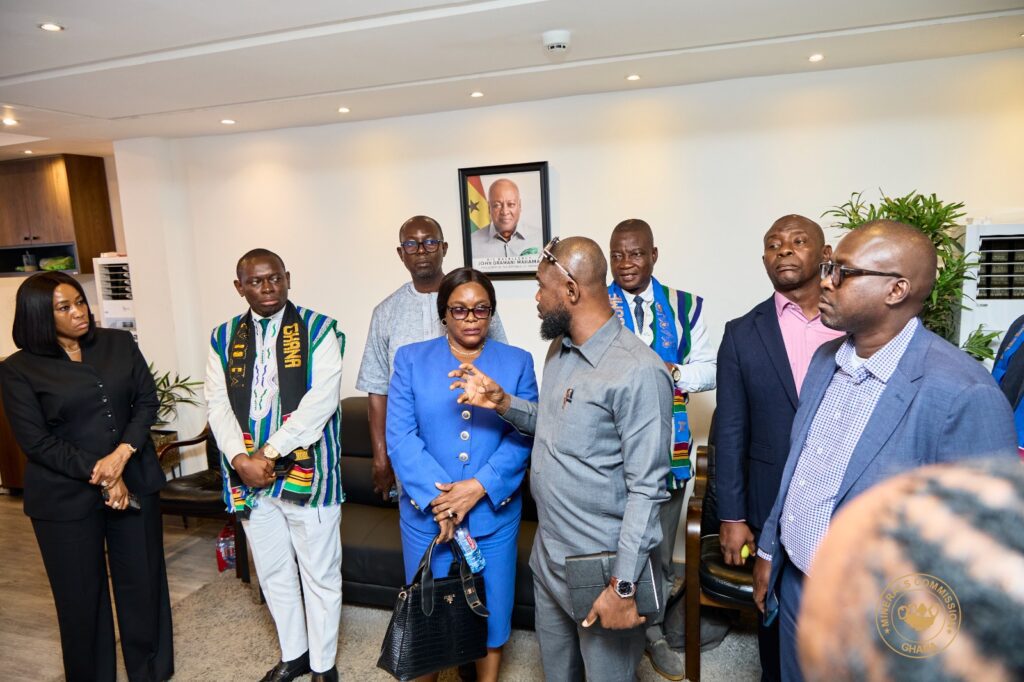
Mr. Sulaiman Phoray-Musa, Director of the PSRU, emphasized that Sierra Leone is “actively restructuring its public sector for greater efficiency,” noting that the Ghanaian model offers a “proven pathway” for national development.
By observing the legal processes for administering mineral rights, the Sierra Leonean team gains a blueprint for eliminating the bureaucratic bottlenecks that often plague resource-rich nations.
The delegation’s visit to the Minerals Commission’s state-of-the-art control room provided a practical demonstration of how technology can mitigate environmental degradation.
The facility’s ability to remotely monitor equipment ensures that machinery remains within designated zones, a system that Madam Victoria Awuni, Deputy CEO for Policy Planning, suggested is “pivotal in enhancing transparency and curbing illegal mining.”
For Sierra Leone, implementing such geo-fencing capabilities could drastically reduce the footprint of unauthorized artisanal mining, which has historically challenged the country’s ecological and fiscal health.
Field Enforcement and Community Engagement Models
Beyond the confines of boardroom discussions, the study tour incorporates a practical field component at an active large-scale mining operation.
This transition from theory to practice allows the Sierra Leonean delegation to witness “firsthand insight into Ghana’s regulatory enforcement and environmental compliance,” according to official reports from the Minerals Commission.
This component is vital for understanding the “community engagement models” that ensure mining companies maintain a social license to operate, a critical factor in preventing local conflicts and ensuring that mining dividends reach the grassroots level.
The partnership also looks at the “legal processes for administering mineral rights,” ensuring that the transition from small-scale to large-scale mining is governed by a predictable and fair legal apparatus.
By studying how Ghana handles the complexities of land tenure and local content requirements, the PSRU can draft reforms that protect indigenous interests while remaining attractive to foreign direct investment.
This balance is essential for Sierra Leone’s goal of “revitalizing the mining sector” as a primary engine for job creation and infrastructural growth.

Long-term Regional Impact and Sustainable Wealth
The synergy between Ghana and Sierra Leone is expected to yield a more resilient West African mining corridor.
By adopting Ghana’s “digital oversight” mechanisms, Sierra Leone can significantly reduce revenue leakages, ensuring that mineral royalties are accurately accounted for and reinvested into public services.
For Ghana, this partnership solidifies its status as a regional regulatory hub, fostering a synchronized environment where cross-border mining entities face consistent standards of accountability and transparency.
The harmonization of mining codes and administrative systems between these two nations could eventually lead to a standardized regional cadastre, making West Africa a more competitive and transparent destination for global mining capital.
This bilateral reform agenda underscores a growing continental recognition that “administrative reform is the bedrock of resource sector integrity,” ensuring that the “mineral wealth” of today becomes the “sustainable development” of tomorrow.
READ ALSO: Ghana Needs Stronger Inflation Data for Economic Stability- First Deputy Governor