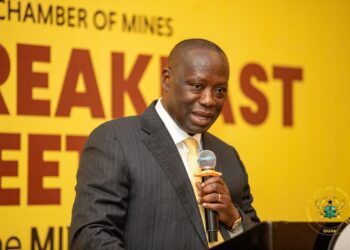

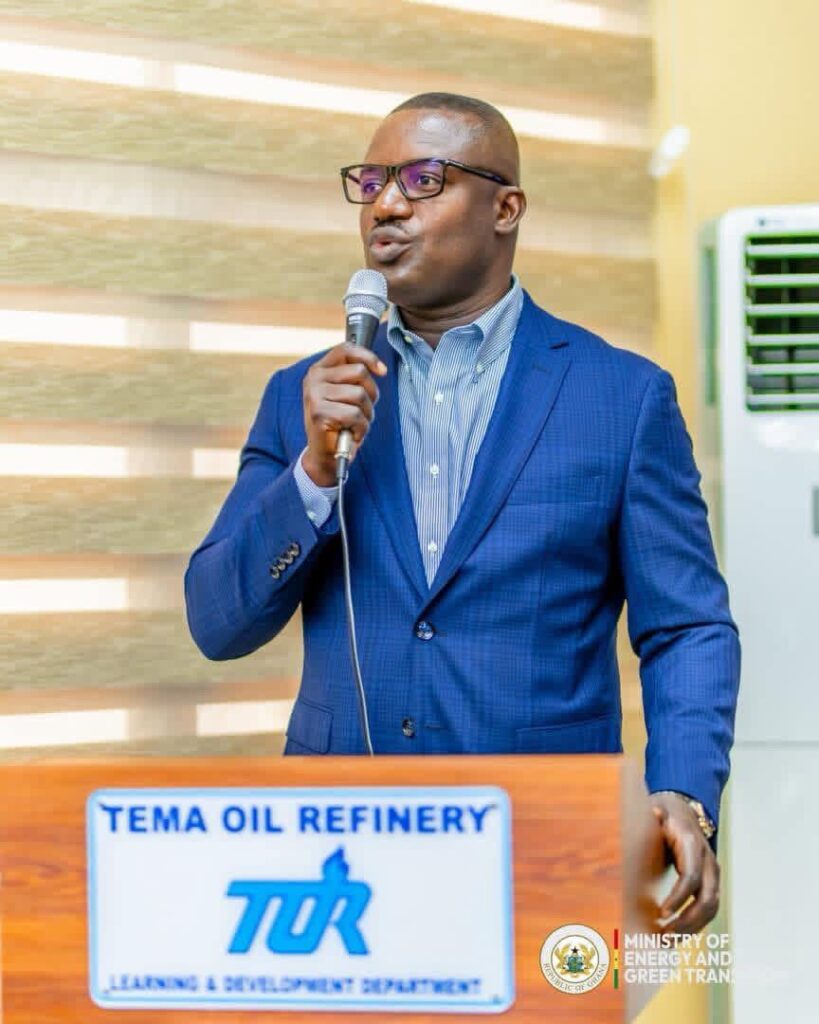
Mr. Isaac Dwamena, the Executive Secretary of the Public Interest and Accountability Committee (PIAC), has highlighted a significant shift in the government’s approach toward the upstream petroleum sector, noting that recent strategic interventions are beginning to restore investor confidence.
After a period of relative stagnation and legal friction, the government has moved to de-escalate tensions by withdrawing several high-profile court cases in favor of out-of-court settlements and diplomatic resolutions.
These actions, according to Dwamena, serve as a “positive signal” to the international community that Ghana is once again a stable and welcoming destination for multi-billion-dollar energy investments.
” Yes, government since coming into office has taken some steps that give some positive signal. The first is the withdrawal of some of the court cases from court and then settling them. I would say one of them is the arbitration. In a Springfield one though the court determined that we, I mean we did not act right.”
Mr. Isaac Dwamena
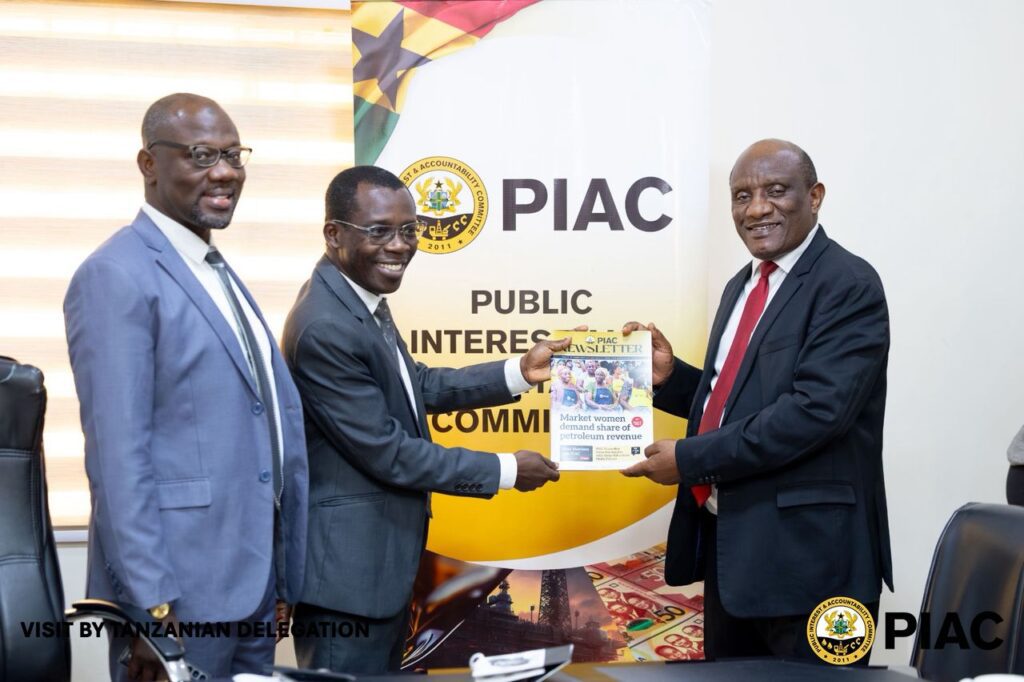
This shift in strategy is most visible in the government’s efforts to mend relationships with key international oil companies (IOCs) such as ENI and Springfield.
Following a period where stakeholders felt disincentivized—highlighted by the ENI-Springfield unitization dispute the Ministry of Energy has spearheaded a “generic” but effective recovery plan to bring partners back to the field.
Mr. Dwamena noted that these efforts were critical, as the country manager for ENI had already relocated to Côte d’Ivoire, signaling a near-exit from the Ghanaian market.
By incentivizing these giants to return, Ghana is not only safeguarding its current production levels but also ensuring that exploratory activities, which had been dormant, can finally resume under a more collaborative framework.
Restoring Investor Confidence and Operational Stability
The petroleum industry is notoriously sensitive to policy inconsistency and protracted legal battles.
For years, the unitization impasse between the indigenous Springfield E&P and the global giant ENI served as a cautionary tale for prospective investors.
However, Dwamena points out that the current administration’s willingness to admit where it “did not act right” and pivot toward arbitration and settlement is a turning point.
This humility and pragmatism are essential for an industry where “the signal you send” today determines the investment decisions of tomorrow.
Restoring these relationships is not merely about optics; it is a mechanical necessity for the survival of the sector. The upstream industry operates on long lead times.
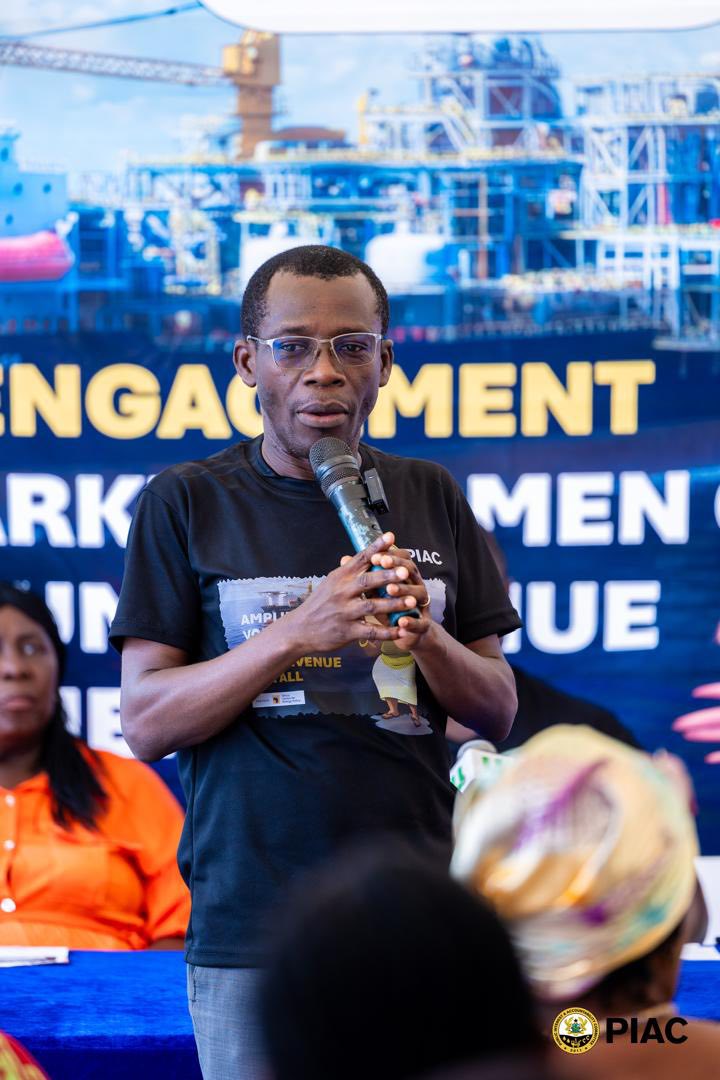
As Mr. Dwamena explained, even after an investor is allotted a block, the approval of work programs, the mobilization of funds, and the procurement of heavy equipment can take anywhere from eight months to a year.
“It will take a bit of time before we see the change we desire,” he remarked, noting that the fruits of these current policy shifts will likely manifest in two to three years.
By securing the commitment of ENI and encouraging Springfield to return to work on their finds, the government is effectively shortening the “stagnant” period that has plagued the industry recently.
Expanding Ghana’s Petroleum Frontier: The Voltaian Basin
While offshore activities remain the backbone of Ghana’s current production, the government is aggressively pursuing a diversification of its petroleum assets.
A major pillar of this strategy is the exploration of the Voltaian Basin, a massive onshore expanse that covers approximately 40% of Ghana’s total landmass, stretching from the south to the north.
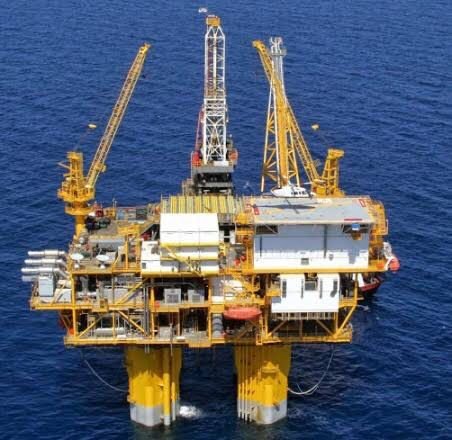
Mr. Dwamena confirmed that work is “progressing steadily” in this region, with the Ghana National Petroleum Corporation (GNPC) currently engaged in intensive reconnaissance activities to determine the commercial viability of the basin.
The potential of the Voltaian Basin is transformative. Unlike the deepwater offshore fields that require specialized, expensive technology often dominated by foreign firms, onshore exploration offers a higher potential for “local content” and indigenous participation.
By proving the existence of hydrocarbons in the Voltaian Basin, Ghana could significantly lower the cost of entry for local investors and create a more integrated energy economy that benefits the northern and middle belts of the country.
This effort to move beyond the three existing fields Jubilee, TEN, and Sankofa Gye Nyame is critical for hitting the long-term target of doubling national oil production and ensuring a steady supply of gas for the country’s power sector.
Global Competitiveness and the Energy Transition
In a global landscape where African nations are competing fiercely for dwindling fossil fuel capital, Ghana’s proactive stance is a strategic necessity. Neighboring Côte d’Ivoire and Namibia have recently seen massive discoveries, making the competition for the attention of IOCs more intense than ever.
If Ghana had allowed ENI to fully exit, it would have sent a “wrong signal” that the country was no longer a competitive player.
Instead, by resolving disputes and offering new incentives, Ghana is positioning itself as a “bridge” for the green transition—using petroleum revenues and gas-to-power projects to fund its eventual shift toward renewable energy.
The “Mobilize Net-Zero II” initiative and the ongoing upgrades at the Tema Oil Refinery (TOR) align with this broader vision.
By stabilizing the upstream sector, the government ensures a consistent flow of raw material for its downstream modernization.
As exploratory activities lead to new finds, the resulting increase in “production numbers” will provide the fiscal space needed for the country to invest in green infrastructure.
The path forward, as Dwamena suggests, requires keeping the “pace and the momentum” to ensure that the petroleum industry remains a robust engine for Ghana’s economic resilience and social development for decades to come.
READ ALSO: We Must All Work Together To Keep Each Other Safe – Shabana Mahmood