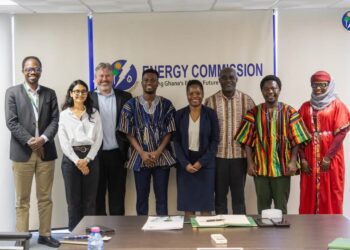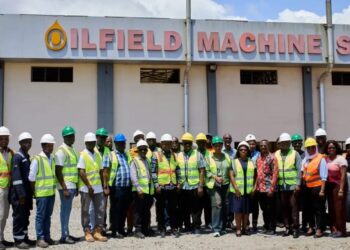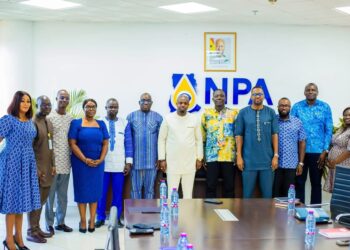
Electricity Company of Ghana (ECG) has intensified its strategic collaboration with state security agencies and local communities within the Tarkwa municipality in the Western Region to decisively tackle the compounding menaces of power theft, structural vandalism, and critical operational challenges.
This inter-agency synergy seeks to establish a fortified front against illegal electrical connections while safeguarding vital national distribution infrastructure.
By bridging the gap between utility management and law enforcement, the electricity distributor aims to curb massive revenue losses and mitigate persistent service disruptions that have historically plagued the Western Central operational enclave.
“Additionally, the company engaged corporate stakeholders, including a mining firm, urging them to settle outstanding debts to support improved operations. These engagements form part of ECG’s broader strategy to enhance security, strengthen partnerships, and ensure stable power supply across the Tarkwa area.”
Electricity Company of Ghana (ECG)
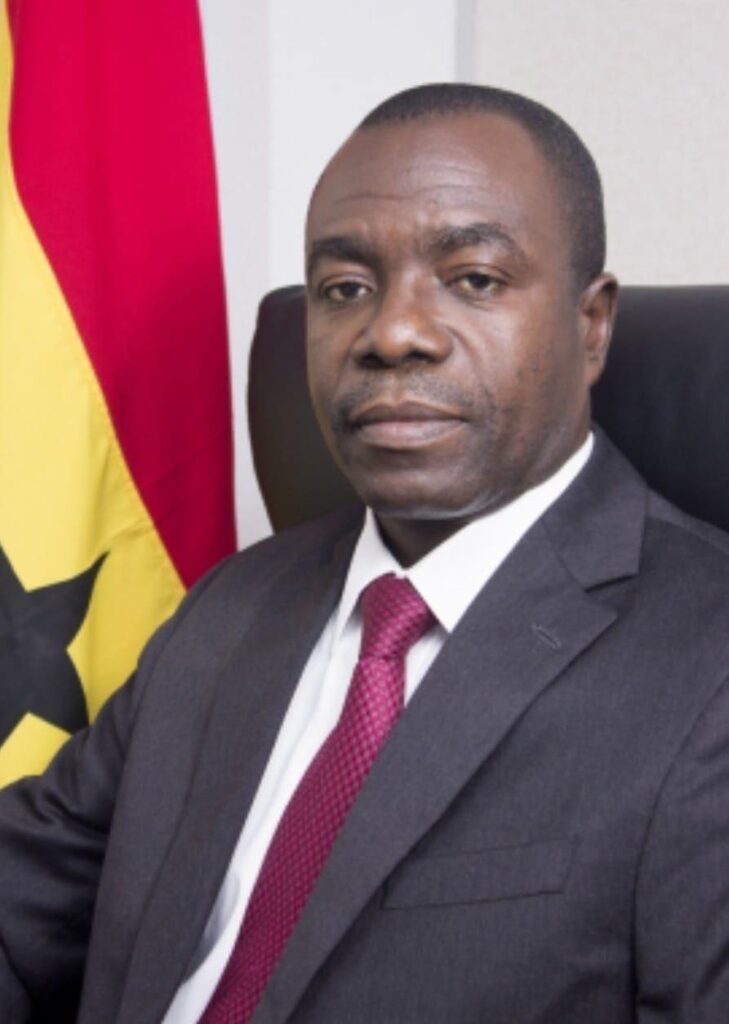
To solidify this operational alliance, top-tier ECG officials recently paid a high-level working visit to the Western Central Regional Police Headquarters to commend the police administration for their unwavering tactical support in combating illicit utility practices.
During the high-profile engagement, the Regional Police Commander, COP Desmond Owusu Boampong, lauded the initiative but heavily emphasized the absolute necessity for the power distributor to drastically improve its rapid response to unplanned outages.
COP Boampong further underscored that accelerated public education campaigns must be prioritized immediately to address the mounting anxieties and growing economic frustrations brewing among local residents.
Mitigating Community Hostilities and Corporate Debts
The urgency of these proactive stakeholder engagements was further pushed to the forefront when the Regional Police Commander disclosed intelligence concerning a brewing demonstration being organized by aggrieved local residents over protracted electricity supply challenges.
To proactively defuse this volatile situation, the power company extended its diplomatic outreach to the leadership of the Brahabebome Community Mine.
The mining community leaders explicitly pledged to prevent any future physical assaults on ECG technicians and utility infrastructure, a breakthrough that followed a comprehensive financial compensation package settled for previous damages inflicted on properties.
Simultaneously, the utility service provider engaged several high-profile corporate stakeholders, including a prominent multi-national mining firm operating within the Tarkwa enclave, urging them to immediately liquidate their heavy outstanding debts.
ECG management noted that the timely settlement of these substantial financial obligations is absolutely critical to injecting the liquidity required to fund network expansions and support overall operational efficiency.
These robust, multi-tier diplomatic and enforcement engagements form a core part of the electricity company’s broader corporate strategy to enhance regional security, strengthen institutional partnerships, and ensure a stable, uninterrupted power supply.
The Socio-Economic Toll of Electrical Instability on Residents
Beyond the immediate operational hurdles faced by the utility provider, a thorough assessment of the Tarkwa municipality reveals that protracted electrical instability wreaks severe havoc on the daily socio-economic lives of local residents.
Continuous, unannounced power fluctuations completely paralyze small and medium-scaled enterprises (SMEs) such as cold-store operators, salons, and local welding shops, forcing many into sudden bankruptcy due to high overhead alternative fuel costs.
The unpredictable nature of the power supply frequently destroys expensive domestic appliances and industrial machinery, leaving heavily strained consumers with uncompensated financial losses.
Furthermore, persistent blackouts severely compromise public safety and healthcare delivery within the municipality.
Local hospitals and clinics operating without automated industrial backup generators face life-threatening challenges in preserving temperature-sensitive vaccines and executing emergency surgical procedures during sudden power outages.
On the communal level, darkened streets significantly elevate security vulnerabilities, providing optimal cover for criminal elements to perpetrate residential burglaries and physical assaults.
This severe disruption to civic life underscores why residents view stable electricity not as a luxury, but as an indispensable catalyst for regional economic survival and basic human security.
Charting a Sustainable Path Toward Energy Security
The ongoing crisis within the Western Region highlights the intricate link between utility financial viability, community cooperation, and national security.
When corporate consumers default on their astronomical power bills, it triggers a catastrophic domino effect that impairs ECG’s capacity to purchase bulk electricity and maintain standard distribution transformers.

“The sustainability of our national grid relies heavily on a culture of prompt bill payment and civic responsibility,” an energy sector analyst remarked, noting that no utility provider can survive when operational theft and corporate debt undermine its financial foundation.
Ultimately, resolving the power challenges in Tarkwa demands a sustained, transparent dialogue alongside strict enforcement of utility regulations.
The written commitments secured from the Brahabebome Community Mine and the tactical alliance forged with COP Desmond Owusu Boampong’s police command represent a vital blueprint for localized conflict resolution.
Moving forward, combining rigorous law enforcement with improved customer response mechanisms will remain the ultimate benchmark for transforming the Western Region’s energy landscape into a resilient and reliable network.
READ ALSO: Boakye Explains Diplomatic Corps Engagement Over Judicial Concerns