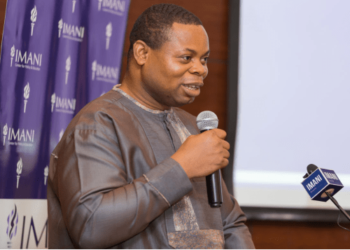
The Managing Director of the Agricultural Development Bank (ADB PLC), Edward Ato Sarpong has described Ghana’s successful exit from the International Monetary Fund (IMF) financial support programme as a defining moment for the country’s economic recovery journey, signaling renewed investor confidence, stronger financial discipline, and a more resilient banking sector.
According to the ADB MD, Ghana’s progress under the IMF-backed reforms demonstrates the country’s commitment to restoring macroeconomic stability, strengthening fiscal governance, and rebuilding confidence within the financial markets.
Speaking on the outlook of Ghana’s economy and the future of the banking industry, the ADB MD noted that the country’s gradual recovery presents a unique opportunity for banks to deepen support for businesses, agriculture, SMEs, and the productive sectors that drive inclusive economic growth.
“The successful completion of Ghana’s IMF programme is more than a policy milestone; it is a strong signal that the country is regaining financial credibility and restoring confidence among investors, development partners, and the business community,” the MD stated.
Mr. Ato Sarpong emphasized that the banking industry now has a critical responsibility to convert the gains from macroeconomic stability into meaningful economic transformation by increasing lending to productive sectors, supporting entrepreneurship, and accelerating financial inclusion.
He explained that improved economic stability, easing inflationary pressures, relative exchange rate stability, and renewed market confidence are expected to create a more enabling environment for businesses and households.
Edward Ato Sarpong further indicated that Ghanaian banks must strategically position themselves to support national development priorities through innovation, digital banking expansion, customer-focused solutions, and sustainable financing initiatives.
“Economic recovery must ultimately translate into real sector growth, job creation, and improved livelihoods for Ghanaians. Banks therefore have a central role to play in supporting this transition,” he added.
The ADB MD also highlighted the importance of maintaining fiscal discipline, strengthening public-private collaboration, and sustaining reforms that enhance investor confidence and economic competitiveness.
He noted that while significant progress has been made, sustaining the gains achieved will require prudent economic management, policy consistency, and continued commitment to structural reforms.
Industry analysts say Ghana’s IMF programme exit is likely to improve market sentiment, enhance access to international capital, and strengthen confidence in the country’s financial system if reforms are sustained.
Edward Ato Sarpong reaffirmed ADB’s unwavering commitment to continue to support Ghana’s economic transformation agenda through strategic financing, agricultural development, MSME support, digital innovation, and customer-centered banking solutions aimed at driving sustainable growth across the economy.