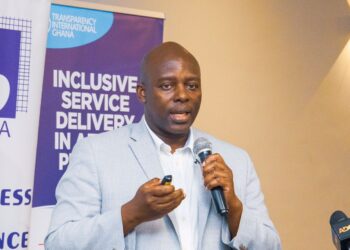
The Acting Director of Amnesty International, Hannah Osei, has spoken on escalating concerns over human rights protections amid growing reliance on capital punishment, especially in contexts involving dissent. Hannah Osei made the remarks on behalf of Amnesty International, highlighting what she described as an emerging pattern of repression during the launch of the Death Penalty Report 2025 in Accra.
She said the continued existence of capital punishment within legal frameworks creates conditions that weaken civic expression and public accountability. From her view, states increasingly rely on harsh punitive systems to shape public behaviour and restrict opposing voices.

A central concern raised by Osei focused on the use of execution as a mechanism of control in several jurisdictions. She argued that political environments marked by fear often develop where capital punishment is applied alongside restrictive governance practices.
Osei further explained that such practices create environments where individuals and communities become less willing to express dissenting views. According to her, this trend undermines democratic engagement and reduces institutional trust across societies.
The Acting Director also addressed the importance of transparency in justice systems, noting that secrecy around capital punishment fuels suspicion and weakens public oversight. From her perspective, the absence of open reporting allows abuses to persist without accountability mechanisms.
“These figures, though alarming, still represent only the minimum confirmed total. The true number is likely far higher, as several states continue to shroud their use of the death penalty in secrecy, painting a deeply troubling picture.”
Hannah Osei

Osei emphasised that human rights protections require consistent legal safeguards that prevent the misuse of state power. She added that the intersection between judicial processes and political pressure remains a growing concern for global human rights monitoring bodies.
In addition, she drew attention to the implications for civic participation, stating that fear-based governance systems often discourage free expression. The Acting Director noted that sustainable governance depends on safeguarding speech rather than restricting it through punitive measures.
She also highlighted the importance of institutional reform to protect public freedoms and strengthen accountability structures.
Global Death Penalty Surge Spurs Reform Calls
The Acting Director of Amnesty International, Hannah Osei, drew attention to wider global trends in capital punishment, focusing on legal reform and abolition efforts across different regions. Hannah Osei stated this position during the report launch, presenting findings compiled by Amnesty International on global execution patterns.
Osei reported that recorded executions reached 2,707 globally in 2025, marking the highest level documented since 1981. She explained that the figures represent only confirmed cases, while many additional incidents remain unverified due to limited transparency in several jurisdictions.
“These figures, though alarming, still represent only the minimum confirmed total. The true number is likely far higher, as several states continue to shroud their use of the death penalty in secrecy, painting a deeply troubling picture.”
Hannah Osei
From her analysis, the rise in executions signals renewed reliance on punitive state measures at a time when reform movements are gaining momentum. She added that judicial systems in some regions are increasingly influenced by political and security considerations.
Osei also highlighted that certain countries accounted for a significant proportion of global executions, raising questions about proportionality and fairness in sentencing practices. She stressed that the concentration of executions in specific jurisdictions points to uneven application of justice.
The report further indicated that Africa recorded 771 death sentences during the period under review, a rise compared to the previous year. Osei explained that this increase was linked to insecurity, conflict conditions, and expanded use of military courts in several states.

Despite these developments, she pointed to areas of progress where reform efforts continue to advance. According to her, some states have moved toward limiting the application of capital punishment and strengthening judicial safeguards.
“As of 2025, the report confirms that no death sentences were recorded in Ghana, and it is among the countries considered abolitionist in practice.”
Hannah Osei
Osei noted that Ghana’s position demonstrates a long-standing preference for restraint in the use of capital punishment within judicial practice. From her perspective, this creates a foundation for deeper legal reform and eventual full abolition.
She further emphasised that legislative reforms already undertaken in Ghana show gradual movement away from capital punishment in ordinary criminal law. The Acting Director added that these changes reflect sustained advocacy from legal experts and civil society actors.
Osei concluded that global abolition efforts require continued collaboration between governments, institutions, and advocacy groups.
READ ALSO: DR Congo on High Alert as Ebola Risk Rises