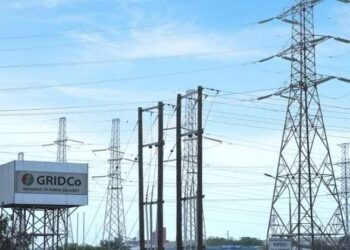

Electricity Company of Ghana (ECG) has assured UNICEM Cement Ghana Limited of immediate technical interventions designed to rectify the persistent voltage fluctuations crippling the manufacturer’s operations within the Ashanti Region.
This crucial strategic commitment developed during an official state-level facility assessment led by the power distributor’s newly installed regional executive hierarchy along the critical Bekwai–New Edubiase economic corridor.
By dedicating institutional resources toward stabilizing its local high-capacity distribution networks, the state utility provider aims to resolve systemic power quality challenges that have repeatedly disrupted commercial manufacturing output.
“The visit followed concerns raised by UNICEM over unstable power supply and voltage quality, which the company said were disrupting production activities. After inspecting the facility and assessing the situation firsthand, Ing. Ohenese acknowledged the power challenges and reaffirmed ECG’s commitment to stabilizing the sub-transmission network to ensure reliable electricity supply to the plant.”
Electricity Company of Ghana (ECG)

Ing. Kofi Apau Ohenese, the newly appointed Ashanti Sub-Transmission General Manager for the Electricity Company of Ghana, spearheaded the delegation to the cement plant to observe the operational impacts of unstable electricity firsthand.
The high-level factory inspection served as a direct regulatory response to formal grievances raised by UNICEM executives, who emphasized that substandard voltage quality and unpredictable outages were severely hamstringing their automated assembly systems.
Recognizing the urgent economic stakes, Ing. Ohenese reaffirmed that his technical teams are actively deploying corrective grid mechanisms to significantly mitigate interruptions and bolster operational continuity for all heavy industrial consumers situated across the Ashanti territory.
The Financial Nexus of Industrial Power Quality
UNICEM Cement Ghana Limited stands as one of the power distributor’s most lucrative industrial consumers in the region, contributing roughly GH¢9 million in monthly electricity payments.
Company officials strongly reiterated during the technical engagement that a highly dependable, unfluctuating power supply remains absolutely vital to sustaining their daily cement output, mitigating escalating operational expenses, and supporting Ghana’s booming infrastructure sector.
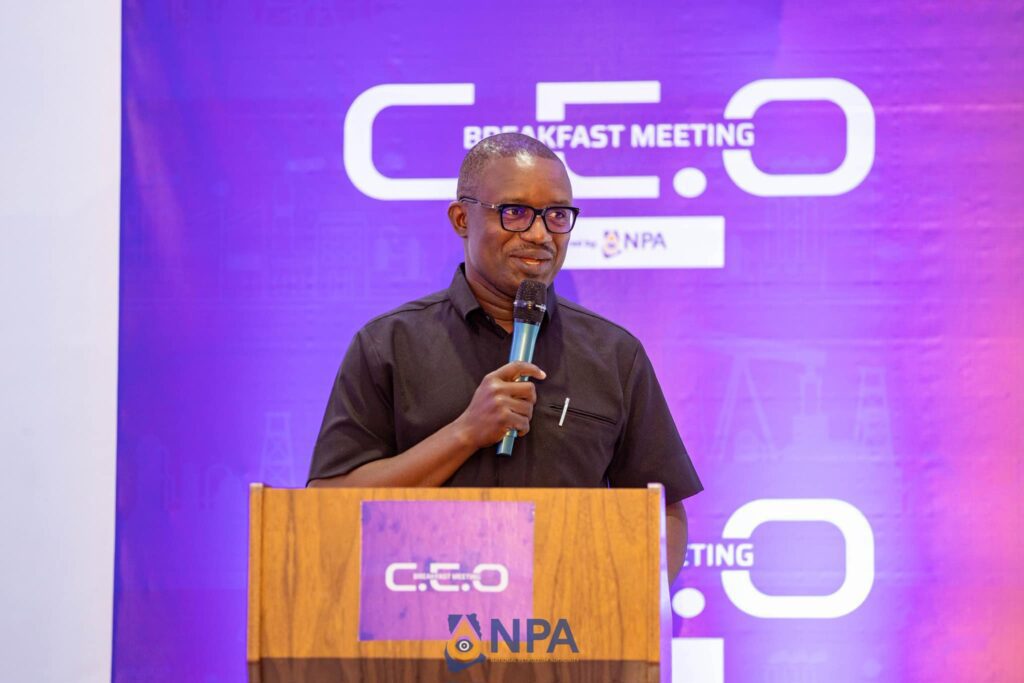
To ensure an immediate, holistic resolution to these engineering hurdles, the specialized state utility delegation also included the Manager of Network Maintenance, Ing. James Mensah Yevunya, alongside Collins Manu, the Communications Officer for the Ashanti Sub-Transmission Unit.
According to official regional updates, this proactive factory visitation reflects a much broader corporate master plan executed by the utility provider to systematically reinforce existing electrical infrastructure, minimize unplanned industrial downtime, and build healthier long-term corporate relationships with key economic stakeholders.
Industrial manufacturers require immense bulk energy inputs, meaning that any collaborative technical evaluation remains an important milestone toward bridging the gap between grid capacity and consumer demands.
How Power Instability Cripples Industrial Production
When heavy industrial production plants experience erratic power, the immediate consequences extend far beyond simple illumination losses.
Modern cement manufacturing plants rely on highly synchronized, automated assembly lines governed by sensitive Programmable Logic Controllers (PLCs), variable speed drives, and complex supervisory control systems.
Even a momentary voltage sag or transient spike can trigger automated safety shutdowns across the entire facility, causing massive operational delays.
Furthermore, industrial machinery subjected to constant voltage fluctuations suffers from severe thermal stress and accelerated mechanical degradation.
Electric motors running on unstable voltage experience high current imbalances, which leads to overheating, insulation breakdown, and premature component failure.

For a continuous-process manufacturer like a cement plant, an unexpected breakdown of a primary kiln or grinding mill requires days of specialized maintenance, inflating capital expenditure and driving up unexpected operational replacement costs.
Beyond mechanical deterioration, grid instability severely diminishes raw material utilization and product quality control.
In cement production, precise thermal and mechanical processing phases must occur uninterrupted; a sudden loss of optimal power quality can ruin entire batches of chemical mixtures mid-process, turning valuable material into scrap and requiring extensive manual cleanups.
These compounded inefficiencies inevitably reduce a factory’s total annual capacity, compromise supply chain commitments to the local construction industry, and force companies to heavily invest in expensive secondary backup generation infrastructure.
READ ALSO: Shatta Wale’s ‘SAFA’ Album Surpasses 100 Million Streams on Audiomack