• About
  • Advertise
  • Privacy Policy
  • Contact
Wednesday, May 20, 2026
  • Login
The Vaultz News
  • Top Stories
  • News
    • General News
    • Education
    • Health
    • Opinions
  • Economics
    • Economy
    • Finance
      • Banking
      • Insurance
      • Pension
    • Securities/Markets
  • Business
    • Agribusiness
    • Vaultz Business
    • Extractives/Energy
    • Real Estate
  • World
    • Africa
    • America
    • Europe
    • UK
    • USA
    • Asia
    • Around the Globe
  • Innovation
    • Technology
    • Wheels
  • Entertainment
  • 20MOBPL2DNew
  • Jobs & Scholarships
    • Job Vacancies
    • Scholarships
No Result
View All Result
The Vaultz News
  • Top Stories
  • News
    • General News
    • Education
    • Health
    • Opinions
  • Economics
    • Economy
    • Finance
      • Banking
      • Insurance
      • Pension
    • Securities/Markets
  • Business
    • Agribusiness
    • Vaultz Business
    • Extractives/Energy
    • Real Estate
  • World
    • Africa
    • America
    • Europe
    • UK
    • USA
    • Asia
    • Around the Globe
  • Innovation
    • Technology
    • Wheels
  • Entertainment
  • 20MOBPL2DNew
  • Jobs & Scholarships
    • Job Vacancies
    • Scholarships
No Result
View All Result
The Vaultz News
No Result
View All Result
in Extractives/Energy

Africa Losing Its Mineral Gains through Bilateral Agreements – Pauline Anaman

Bless Banir Yarayeby Bless Banir Yaraye
May 20, 2026
Reading Time: 4 mins read
Pauline Anaman, a prominent Transactions Lawyer and Green Transition Strategist

Pauline Anaman, a prominent Transactions Lawyer and Green Transition Strategist

Pauline Anaman, a prominent Transactions Lawyer and Green Transition Strategist, has highlighted a critical economic paradox arguing that Africa is forfeiting trillions in potential wealth by prioritizing raw mineral exports over integrated industrial value chains, a failure perpetuated by restrictive bilateral agreements.

While the raw extraction of minerals yields a modest $11 billion, the strategic shift toward processing these resources into finished products, such as electric vehicles, could catapult this value to an estimated $1.7 trillion.

“Africa is losing all of that through bilateral agreements. Since 2009, we’ve had the Africa Mining Vision, which has envisaged that Africa would develop and industrialise through its minerals. We are still discussing issues that were identified by the Africa Mining Vision as far back as 2009, way before minerals became critical.”

Pauline Anaman

This staggering disparity underscores the continent’s long-standing struggle to break free from colonial-era economic models.

Despite the ambitious Africa Mining Vision (AMV) launched in 2009, which sought to catalyze industrialization through mineral resources, progress remains stifled.

ADVERTISEMENT

Governments continue to lock themselves into outdated bilateral contracts that prioritize immediate, low-value investment over long-term development.

557193813 25406060215648372 5730393682350256233 n
Pauline Anaman, a prominent Transactions Lawyer and Green Transition Strategist

These agreements frequently lack provisions for technology transfer or local processing, essentially ensuring that Africa remains a perpetual supplier of cheap raw materials while importing the expensive finished technologies it should be producing domestically.

The Stranglehold of “Stabilization”

The core of this economic deprivation lies in the fine print of mining contracts, specifically the ubiquitous “stabilization clauses.”

These clauses, often embedded within bilateral deals, act as legal straitjackets that freeze tax regimes, royalty structures, and environmental regulations for decades.

By insulating multinational corporations from changes in host-country laws, these agreements effectively remove a government’s sovereign right to adjust policies as economic conditions evolve.

As observed in industry analysis, these rigid contracts prevent African states from capturing windfall revenues when commodity prices surge, nor do they allow for the introduction of modern sustainability standards.

Consequently, while foreign firms enjoy guaranteed, protected profits, local communities often bear the brunt of environmental degradation and infrastructure deficits, receiving little of the wealth generated from their own soil.

The Myth of Sovereignty in Negotiation

A fundamental barrier to reclaiming mineral gains is the persistent information asymmetry during the negotiation process.

Many African states enter these bilateral agreements without comprehensive geological data or sufficient technical expertise to match the high-powered legal and economic teams deployed by global mining giants.
ADVERTISEMENT
701746681 28087316164191267 8789395668782837538 n
AETC Energy Conference

This capacity gap is exactly what the AMV sought to bridge through enhanced digitization and better data management.

Without accurate mapping of reserves and integrated, transparent mineral supply chains, states cannot effectively dictate terms that favor local beneficiation.

 As Pauline Anaman emphasized, the vision of the AMV relies on “the use of technology and digitisation to achieve some key milestones, such as having geological data that would improve our negotiation capacity at the table.”

Until this capacity is built, the continent remains vulnerable to deals that prioritize external investor interests over domestic industrial growth.

Breaking the Cycle of Fragmentation

Furthermore, Africa’s path to industrialization is hindered by internal fragmentation. Neighboring countries frequently engage in a “race to the bottom,” competing against one another by offering progressively lower royalties and tax exemptions to attract investors.
702084036 1386897376817281 3380315002022326185 n
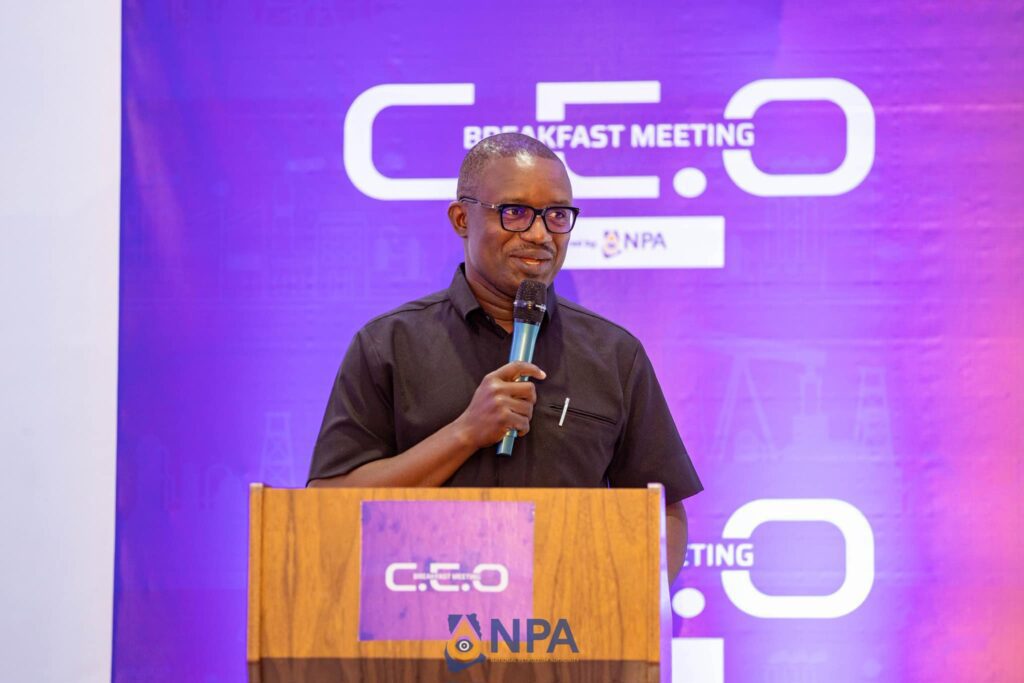
Minister of Energy and Green Transition, Hon. Dr. John Abdulai Jinapor

This uncoordinated approach erodes the collective bargaining power of the continent, allowing multinational entities to exploit divisions and play states against each other.

To reverse this trend, regional cooperation is essential. The integration of mineral supply chains would allow countries to pool resources, share infrastructure, and collectively mandate value addition.

By shifting from a model of isolated, competitive extraction to one of collaborative, integrated industrialization, Africa can finally move beyond the limitations of current bilateral agreements and claim its rightful place in the global green energy transition.

READ ALSO: Clydestone Suspends Dividend After 88% Profit Crash

Sign Up to Our Newsletter

Fresh updates, Straight to your inbox

Share1Tweet1ShareSendSend
Please login to join discussion
Previous Post

Boakye Explains Diplomatic Corps Engagement Over Judicial Concerns

Next Post

Addressing Energy Emission Requires Transition Technologies – Expert

Related Posts

Pauline Anaman, a prominent Transactions Lawyer and Green Transition Strategist
Extractives/Energy

Addressing Energy Emission Requires Transition Technologies – Expert

May 20, 2026
Hon. John Abdulai Jinapor
Extractives/Energy

Reliable Energy Vital for Africa’s Economic Transformation – John Jinapor

May 20, 2026
Refined Gold
Extractives/Energy

Ghana’s Q1 Mineral Royalties Hit ₵2 billion

May 19, 2026
Hon. John Jinapor
Extractives/Energy

Ghana Champions Regional Power Interconnection at 2026 Africa Energy Conference

May 19, 2026

Sign Up to Our Newsletter

Fresh updates, Straight to your inbox

Recent News

download 63

Lai Seeks Cooperation In Promoting Peace In Taiwan Strait

May 20, 2026
UK's Foreign Secretary, Yvette Cooper

UK Heads New Global Effort to Safeguard Women and Girls

May 20, 2026
Pauline Anaman, a prominent Transactions Lawyer and Green Transition Strategist

Addressing Energy Emission Requires Transition Technologies – Expert

May 20, 2026
Pauline Anaman, a prominent Transactions Lawyer and Green Transition Strategist

Africa Losing Its Mineral Gains through Bilateral Agreements – Pauline Anaman

May 20, 2026
Henry Nana Boakye, NPP National Organiser

Boakye Explains Diplomatic Corps Engagement Over Judicial Concerns

May 20, 2026
Next Post
Pauline Anaman, a prominent Transactions Lawyer and Green Transition Strategist

Addressing Energy Emission Requires Transition Technologies - Expert

The Vaultz News

Copyright © 2025 The Vaultz News. All rights reserved.

Navigate Site

  • About
  • Advertise
  • Privacy Policy
  • Contact

Follow Us

Welcome Back!

Login to your account below

Forgotten Password?

Retrieve your password

Please enter your username or email address to reset your password.

Log In
No Result
View All Result
  • Top Stories
  • News
    • General News
    • Education
    • Health
    • Opinions
  • Economics
    • Economy
    • Finance
      • Banking
      • Insurance
      • Pension
    • Securities/Markets
  • Business
    • Agribusiness
    • Vaultz Business
    • Extractives/Energy
    • Real Estate
  • World
    • Africa
    • America
    • Europe
    • UK
    • USA
    • Asia
    • Around the Globe
  • Innovation
    • Technology
    • Wheels
  • Entertainment
  • 20MOBPL2D
  • Jobs & Scholarships
    • Job Vacancies
    • Scholarships

Copyright © 2025 The Vaultz News. All rights reserved.

This website uses cookies. By continuing to use this website you are giving consent to cookies being used. Visit our Privacy and Cookie Policy.

Discover the Details behind the story

Get an in-depth analysis of the news from our top editors

Enter your email address