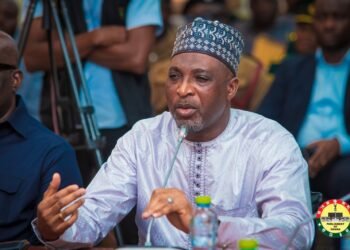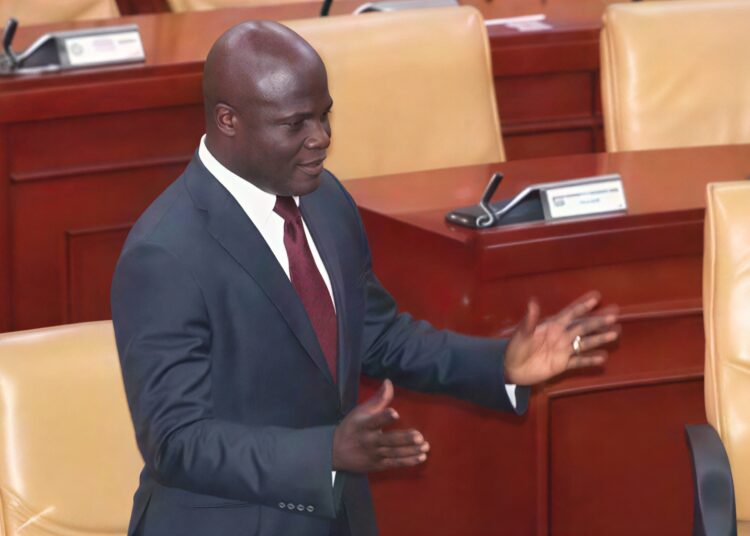
Minister of Local Government, Religious Affairs And Chieftaincy, Honourable Ahmed Ibrahim has outlined the reasons behind the stalled redevelopment of major market projects in Kumasi and Takoradi, pointing to significant financial constraints and inherited contractual challenges.
According to the Minister of Local Government, the projects remain incomplete due to the non-payment of interim certificates to contractors by the previous administration.
This led to a complete halt in construction during the 2024 demobilisation period, when contractors exited the sites following Ghana’s entry into a debt restructuring programme that constrained public spending.
The affected markets, particularly the Kejetia Phase Two project, are considered critical to urban trade and economic activity.
Their prolonged delay has disrupted livelihoods, with traders facing unsafe working conditions and loss of income.
“This situation has created considerable challenges, including the following: congestion and unsafe trading conditions, loss of income for traders and associated businesses, under-utilization of already invested public resources and slower economic activity within key urban centers.”
Hon. Ahmed Ibrahim
Honourable Ahmed Ibrahim emphasised that these projects are strategic national investments intended to support small-scale enterprises and improve commercial infrastructure.
However, he noted that financial audits have revealed that suspension related claims have significantly increased the overall contract value.
“The debt restructuring policy of the then government led to the accumulation of huge suspension costs claimed by the contractors, leaving critical components of the project uncompleted”
Hon. Ahmed Ibrahim
Honourable Ahmed Ibrahim explained that while Phase One of the Kejetia redevelopment was successfully completed at a cost of 197 million euros, Phase Two has faced persistent delays.
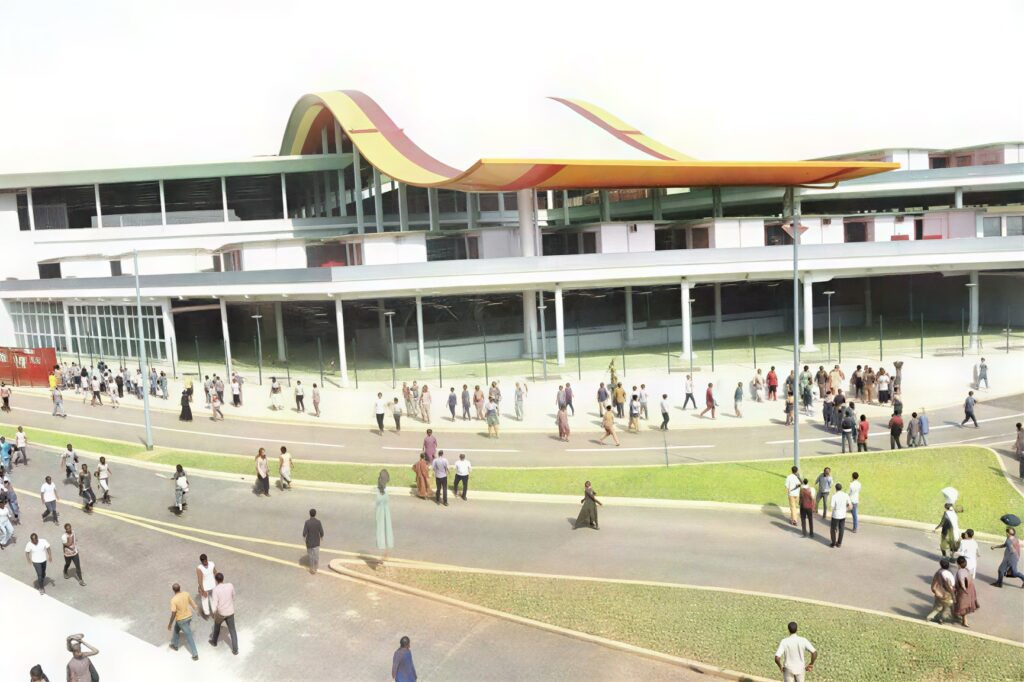
Initially budgeted at 248 million euros in 2018, the second phase reached only 58 percent completion before work was suspended.
He added that the government is now engaged in negotiations with international contractors and consultants to determine a viable path forward.
Authorities are also working to verify outstanding claims and restructure financial commitments to enable the resumption of work.
Honouravle Ahmed Ibrahim maintained that the current administration inherited the challenges and is committed to transparency as it works to resolve the funding gap and complete the projects for public benefit.
Project Costs Surge To €305 Million Amid Prolonged Suspension
The cost of the Kejetia Phase Two project has risen sharply from its original 248 million euros to 305 million euros, reflecting a 57 million euro increase attributed to years of inactivity and mounting suspension claims.
Ahmed Ibrahim confirmed that contractors have declined to return to site until outstanding payments are addressed and new terms are agreed upon. The suspension has resulted in additional costs related to idle labour, equipment maintenance, and accrued interest.
This has created a financial deadlock between the Government of Ghana and the Brazilian contractors responsible for the project.
The Minister also explained that it was necessary to provide clarification on these matters, as people may question why the costs have risen so sharply.
“Akufo-Addo’s 248 million was not completed, but the cost has now ballooned to 305 million. If you do not sit down to discuss with the contractor, a time will come when they will ask us why.”
Hon. Ahmed Ibrahim
He noted that the first phase of the Kejetia project, initiated under former President John Dramani Mahama, was completed within budget and timeline, underscoring the contrast with the challenges facing Phase Two.
The Minister reiterated that the cost escalation was not a result of deliberate government action but stemmed from earlier failures to honour payment obligations.
He stressed that the government is pursuing both financial and diplomatic solutions to resolve the impasse and prevent further penalties.
According to the Minister, traders have expressed concern over the delays, but he has assured the public that completing the projects remains a top priority.
He added that the government is committed to full disclosure as it works to bridge the funding gap and restart construction.
Final assessments indicate that the Kejetia Phase Two project remains at approximately 58% completion.
The Ministry of Local Government is expected to re-engage consultants to validate claims and facilitate the resumption of work in the coming months.
READ MORE: Fourteen CSOs Join Supreme Court Suit Challenging OSP’s Prosecutorial Powers