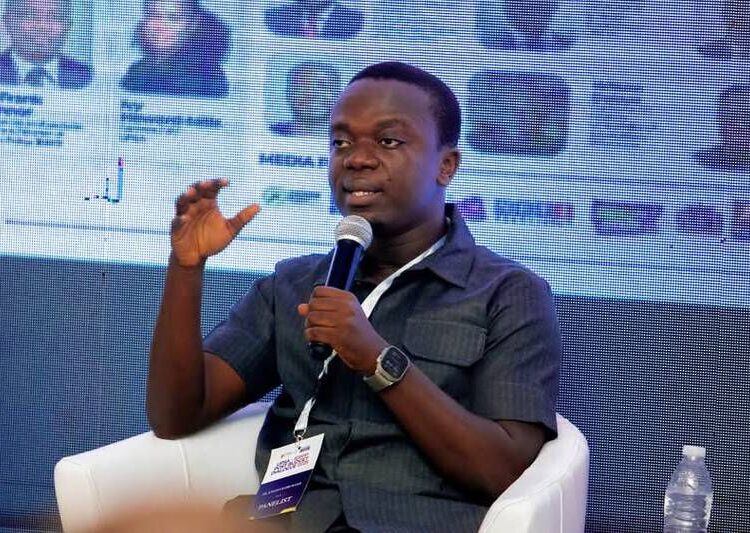
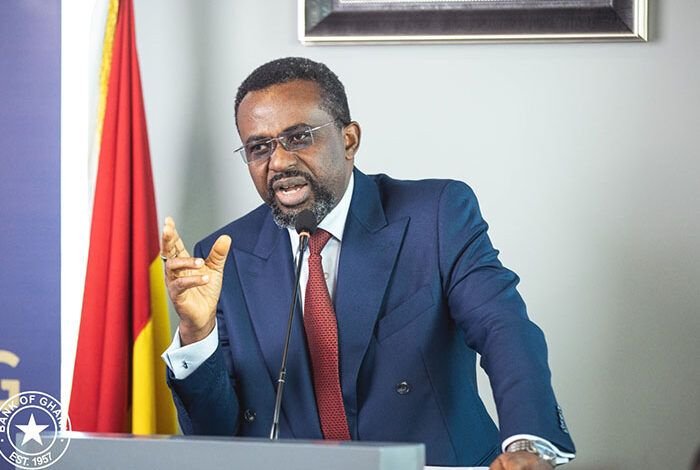
Dr. Kwasi Nyame-Baafi, the Director of the Institute for Economic Research and Public Policy (IERPP), has raised a critical alarm regarding the rapid depletion of Ghana’s national gold reserves, warning that the country could face a total exhaustion of these assets within the next two to three years.
According to the expert, the government’s current strategy of liquidating bullion to artificially prop up the cedi and suppress inflation is a “short-term stabilization tool” that is fundamentally unsustainable.
He cautions that the persistence of this trend will leave the nation without a strategic buffer, potentially exposing the economy to severe external shocks once the vaults run dry.
“In about two or three years, there will be no more gold reserves to sell if the current trend of reliance on these assets to stabilize the economy continues. We’ve already sold about 50% of our gold reserves already. How many times can we keep selling our gold reserves just to ensure that we have artificially low inflation rates?”
Dr. Kwasi Nyame-Baafi
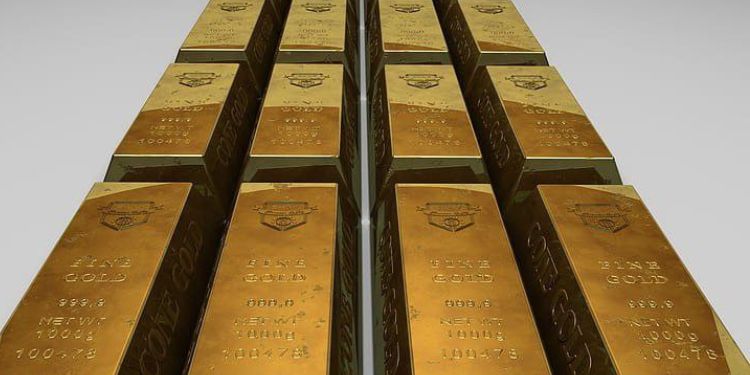
Expanding on this fiscal distress, Dr. Nyame-Baafi revealed that Ghana has already liquidated approximately 50% of its gold reserves in an aggressive bid to maintain economic indicators.
While these interventions have contributed to a surface-level appearance of stability, the IERPP Director argues that the underlying costs are being masked from official figures and will eventually manifest as a systemic crisis.
He maintains that the current reliance on “demand suppression and reserve usage” does not address the structural weaknesses of the Ghanaian economy, which remains vulnerable due to a lack of investment in core productive sectors.
The Mechanics of “Artificial” Stability

The IERPP Director expressed deep skepticism regarding the quality of Ghana’s recent economic gains, noting that “inflation control should not come at the expense of long-term economic capacity.”
By selling off gold to fund monetary policy, the Bank of Ghana is effectively engaging in what Dr. Nyame-Baafi describes as an “accounting trick” to maintain policy solvency.
He argues that this “trade-off” has lasting consequences for job creation and growth, as the capital is being used for consumption-based stabilization rather than being channeled into agriculture or industry.
The warning suggests that the stability currently enjoyed by the market is a borrowed reality, purchased with the nation’s finite mineral wealth.
Economic Fallout and the “Reserves Gap”
Should Ghana exhaust its gold reserves as predicted, the impact on the nation’s creditworthiness and currency sovereignty would be catastrophic.
Gold serves as a Tier-1 reserve asset; without it, the Bank of Ghana loses its primary hedge against “geopolitical disruptions and currency crises.”
Thorough research into such depletion scenarios suggests that the country would likely see a “valuation shock,” where the absence of a gold-backed buffer leads to a rapid depreciation of the Cedi.
Furthermore, the loss of these reserves would weaken the country’s position in international debt negotiations, as bullion acts as a critical collateral asset that instills investor confidence in the nation’s balance sheet.
A Call for Productive Transformation
To avert this looming deadline, Dr. Nyame-Baafi insists that the government must pivot away from “short-term stabilization tools” toward a model of “strengthened production.”
He posits that a truly resilient economy is built on a robust export base and industrial strength rather than the “interventions” currently favored by monetary authorities.
“A stronger and more resilient economy must be built on investment in productive sectors such as agriculture, industry, and exports,” he noted, emphasizing that the current path is a countdown to a fiscal vacuum.
Without a drastic shift in policy, the IERPP warned that the “underlying cost” of today’s low inflation will be a bankrupt future for Ghana’s extractive legacy.
READ ALSO: MoFAD Familiarisation Tour Exposes Need For Internal Reform