

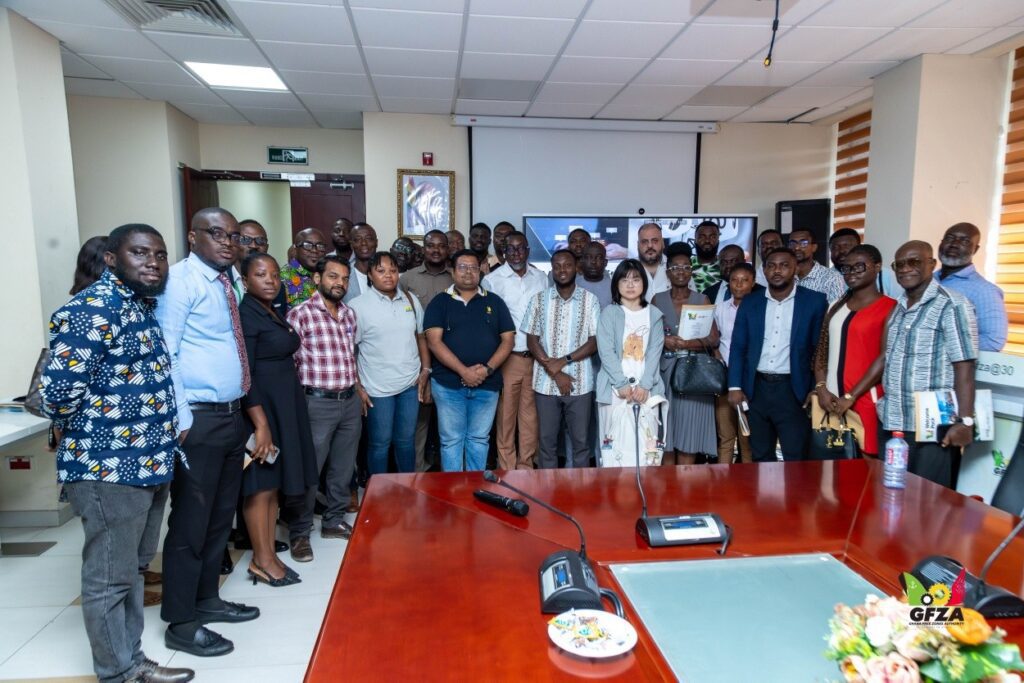
The Ghana Free Zones Authority (GFZA) has formally onboarded 30 newly licensed enterprises into its operational ecosystem to accelerate national export-led industrialization. During a high-stakes orientation session held at the Authority’s Head Office, the GFZA moved to institutionalize a culture of strict regulatory compliance among the latest cohort of investors.
Organized by the Compliance Department, the induction served as a platform to align the new corporate entities with the sophisticated operational framework of the Free Zones Scheme.
It provided a comprehensive breakdown of regulatory requirements and support services needed to ensure that these 30 firms can immediately transition from licensing to high-efficiency production, bolstering Ghana’s capacity to compete within the global trade landscape.
“The Chief Executive Officer of the Authority, Dr. Mary Awusi, congratulated the newly licensed companies and encouraged strict adherence to the rules and standards governing the Scheme, reaffirming the Authority’s commitment to sustaining a business-friendly environment through an open-door management policy”
Ghana Free Zones Authority
Dr. Awusi’s address to the newly licensed companies underscored the non-negotiable nature of the rules and standards that govern the Scheme. For the GFZA, the success of the Free Zones programme is contingent upon a predictable and transparent business environment, which requires every participant to operate with technical precision and legal integrity.
The CEO’s emphasis on an “open-door policy” signaled a move toward a more interactive partnership between the state and the private sector, where operational hurdles are addressed through direct communication rather than bureaucratic delay.

A critical pillar of the orientation involved the technical integration of these 30 enterprises with the Customs Division of the Ghana Revenue Authority (GRA). Because Free Zones operate as “extraterritorial” entities for trade purposes, the mechanics of import and export documentation are far more complex than standard commercial activities.
The Customs team provided a detailed roadmap of the procedures required to maintain the tax-exempt status of raw materials while ensuring that finished goods meet international export standards.
According to the GFZA, this briefing was essential for the new enterprises to understand the granular requirements of “cargo handling, trade facilitation, and the specific documentation protocols that prevent delays at the nation’s ports.”
The interaction with Customs officials highlighted the government’s intent to streamline trade facilitation measures. For the newly licensed firms, mastering these procedures is a functional necessity for maintaining profitability.
If a company fails to comply with import-export documentation, it risks losing the very incentives that make the Free Zones Scheme attractive. The GFZA and GRA proactively removed the friction that often characterizes the early stages of industrial investment by clarifying these operational expectations from day one.
Departmental Synergy and Investor Support
The orientation was further enriched by a multi-departmental briefing that illustrated the total institutional support available to the new enterprises. Representatives from the Monitoring, Immigration, and Transport departments explained how their specific functions are designed to shield investors from unnecessary administrative burdens.
For example, the Immigration Department’s role in facilitating work permits for expatriate staff and the Transport Department’s oversight of logistical permits are key components of the GFZA’s “ease of doing business” strategy.
This departmental synergy ensures that investors have a single point of contact for the various regulatory requirements that cross multiple state agencies. Furthermore, the involvement of the Management Information Systems (MIS) and Registry departments moved discussions toward a more digitized, data-driven operational environment.
The GFZA is increasingly leveraging technology to track compliance and monitor the performance of enterprises in real-time. For the 30 new companies, this means they are entering an ecosystem that values efficiency and digital transparency.
The Marketing and Corporate Affairs teams also outlined how the Authority assists firms in promoting their products within international markets, particularly focusing on the opportunities provided by the African Continental Free Trade Area (AfCFTA).
The inclusion of the AfCFTA department in the orientation highlighted the broader strategic context of the Free Zones Scheme, as Ghana is positioning itself as the gateway to the continental market, and the newly licensed enterprises are expected to be the frontline actors in this expansion.
The presentations provided a roadmap for how these firms can leverage the rules of origin and tariff concessions available under the AfCFTA agreement to export Ghanaian-made goods across Africa.
This global export mandate is the primary reason for the GFZA’s existence, and the 30 new firms represent a significant injection of fresh industrial capacity toward this goal.
The orientation also addressed the financial mechanics of the Scheme through the Credit Control department, ensuring that firms understand their financial obligations to the Authority.
The GFZA noted that this level of transparency is vital for the long-term sustainability of the Scheme, as it ensures that the GFZA has the resources necessary to continue providing high-quality support services to its growing portfolio of investors.

At the end of the session, the 30 newly licensed enterprises had been provided with a complete owner’s manual for navigating the Ghanaian industrial landscape, from local customs clearance to continental trade diplomacy.
Under the leadership of Dr. Mary Awusi, the Authority successfully transitioned these firms from mere applicants to active participants in the nation’s export economy, integrating the expertise of the Customs Division with the specialized support of the Authority’s various departments to create a high-performance environment where industrial growth is underpinned by strict compliance.
As these companies begin their operations, they do so with a clear understanding of the operational framework, the regulatory expectations, and the institutional support that will determine their success.
READ ALSO: Ghana’s Inflation Risks Trigger BoG Policy Caution