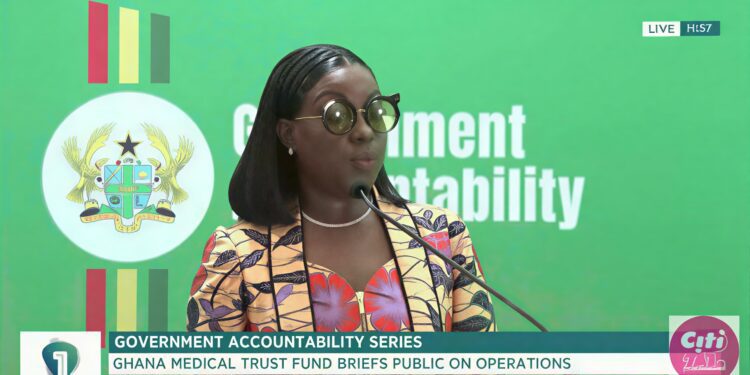
The Ghana Medical Trust Fund, popularly known as Mahama Cares, has outlined significant progress in its mission to expand access to specialised healthcare across the country. The Administrator of the Fund, Adjoa Obuobia Darko-Opoku, presented the update during the Government Accountability Series, stressing transparency and national engagement in healthcare reforms.
She stated that the platform signals government’s commitment to accountability in public service delivery, while highlighting the strategic direction of the initiative. The initiative was established to address financial and structural gaps in specialist healthcare provision across Ghana.
It focuses on supporting patients with chronic conditions such as cancer, kidney failure, cardiovascular disease, stroke, and diabetes. According to the Administrator, the Fund was influenced by a national vision by the President of Ghana which prioritises dignity in healthcare access.
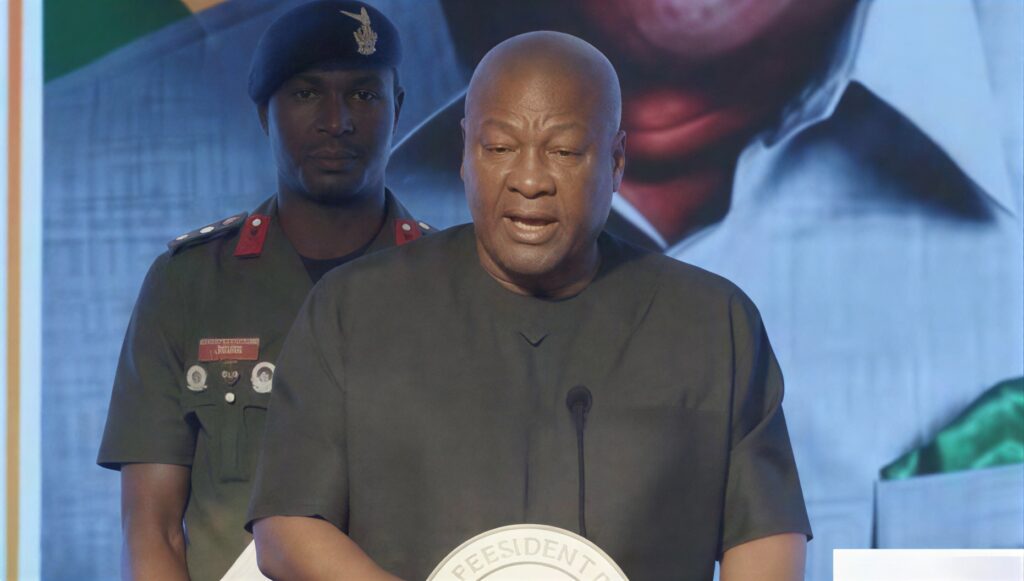
She explained that the President envisioned a Ghana where a diagnosis of kidney failure, cardiovascular disease, stroke, or diabetes would not become a poverty sentence for families. The Fund operates under a legal framework introduced in 2025 to strengthen healthcare equity.
The structure was designed to ensure that specialist care becomes accessible beyond major urban centres. Funding for the initiative draws from multiple sources, including statutory allocations, voluntary contributions, institutional support, and public donations.
This structure was introduced to secure long-term sustainability for specialist medical interventions. The Administrator also acknowledged contributions from national leadership towards the Fund’s establishment and growth.
She confirmed that salary contributions from leadership figures and corporate bodies had strengthened early implementation capacity.
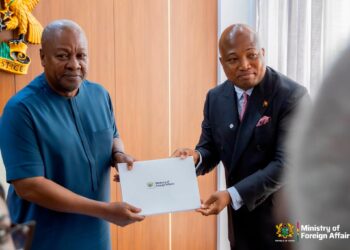
“At this juncture, I wish to express our profound gratitude to His Excellency President John Dramani Mahama, who led by example by donating six months of his salary to the Trust Fund. We are equally grateful to government appointees who collectively donated portions of their salaries in solidarity with the national cause. We also sincerely thank corporate Ghana, philanthropic organisations, and individual citizens who have contributed to the Trust Fund.”
Adjoa Obuobia Darko-Opoku
Obuobia Darko-Opoku indicated that the Trust Fund is financed through 20 percent of the National Health Insurance levy, government budgetary allocations, voluntary contributions, grants, investments, and donations from institutions and individuals.
Mahama Cares Defines Four Strategic Healthcare Pillars
The Ghana Medical Trust Fund has clarified its mandate and operational structure within the country’s healthcare financing system.
“The mandate of the Ghana Medical Trust Fund is clear: to mobilize resources to finance and support the provision of specialized medical care for the treatment of persons with chronic non-communicable diseases.”
Adjoa Obuobia Darko-Opoku
She explained that the Fund operates through four strategic pillars. These include financial support for patients with chronic conditions such as cancer, kidney disease, cardiovascular diseases, stroke, and other complex illnesses. The second pillar focuses on investment in medical equipment and infrastructure to improve access to specialist care nationwide.

The third pillar targets specialist workforce development through training for doctors, nurses, pharmacists, and allied health professionals. The fourth pillar supports medical research to improve prevention, diagnosis, and treatment of chronic diseases.
On its relationship with the National Health Insurance Authority, she noted that the system is structured as a three-tier healthcare pyramid. Primary healthcare forms the base, the National Health Insurance Authority sits at the middle, while the Ghana Medical Trust Fund occupies the apex, focusing on specialised and tertiary care.
She emphasised that while the NHIA provides general financial risk protection, the Trust Fund goes further under Act 1144. Its mandate includes patient support, infrastructure development, equipment investment, specialist training, and research.
She added that a joint technical committee has been established to strengthen coordination between both institutions. This collaboration is intended to streamline services and ensure patients receive appropriate care without duplication across the system.
Healthcare Expansion Efforts Reveal Critical Gaps and Reform Priorities
The Ghana Medical Trust Fund has recorded early institutional progress since its operational rollout in 2025. Key governance structures were established to guide implementation and ensure accountability in programme delivery.
The secretariat began full operations in September 2025, followed by the inauguration of the Board of Trustees in October the same year. Several sub-committees were also established to oversee technical, financial, audit, and resource mobilisation functions.

These governance systems were introduced to strengthen coordination and support the national healthcare transformation agenda. They have contributed to faster decision-making and structured implementation of planned interventions.
A nationwide needs assessment conducted across major health facilities revealed significant gaps in specialist healthcare capacity. The study covered teaching hospitals, regional hospitals, and referral centres across newly created regions.
Findings showed severe shortages in diagnostic equipment, including limited MRI and mammogram machines across the country. Specialist availability also remained concentrated in a few urban centres, limiting access for many patients.
In the northern sector, the assessment identified only a small number of cardiologists serving large population groups. This highlighted the unequal distribution of healthcare professionals and infrastructure across regions.
The Administrator noted that the findings will guide future investment and infrastructure development priorities.
READ ALSO: Government Calls For Contract Renegotiation To Fast Track Road Completion By 2027