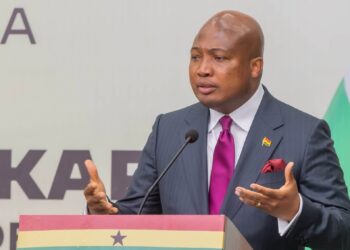
The Effutu Member of Parliament and Minority Leader, Alexander Kwamena Afenyo-Markin, has criticised the current administration for what he describes as an inability to fully capitalise on the goodwill that accompanied its assumption of office. He argued that early macroeconomic stabilisation efforts had already created a foundation for continuity and stronger economic performance.
He explained that fiscal measures undertaken prior to the transition helped to restore investor confidence and improve key economic indicators. According to him, expectations were high that the new administration would consolidate those gains to drive growth and expand employment opportunities.
Afenyo-Markin stressed that unemployment remains a major national concern, calling for sustained attention to private sector development. He maintained that industrial policy interventions designed to stimulate production should have been preserved and strengthened.
He pointed to programmes such as the One District One Factory initiative, which he said contributed to expanding industrial activity and creating jobs. He added that policy continuity in such areas would have deepened productivity and supported entrepreneurship.
Hon. Alexander Afenyo-Markin“Because in Ghana today, our main problem is unemployment. The Akufo-Addo administration’s decision to encourage private sector participation, to provide tax incentives, and to allow them to invest in the economy has made them more competitive. However, the challenges meant our friends should have used the opportunity to do some cleanup and continue.”
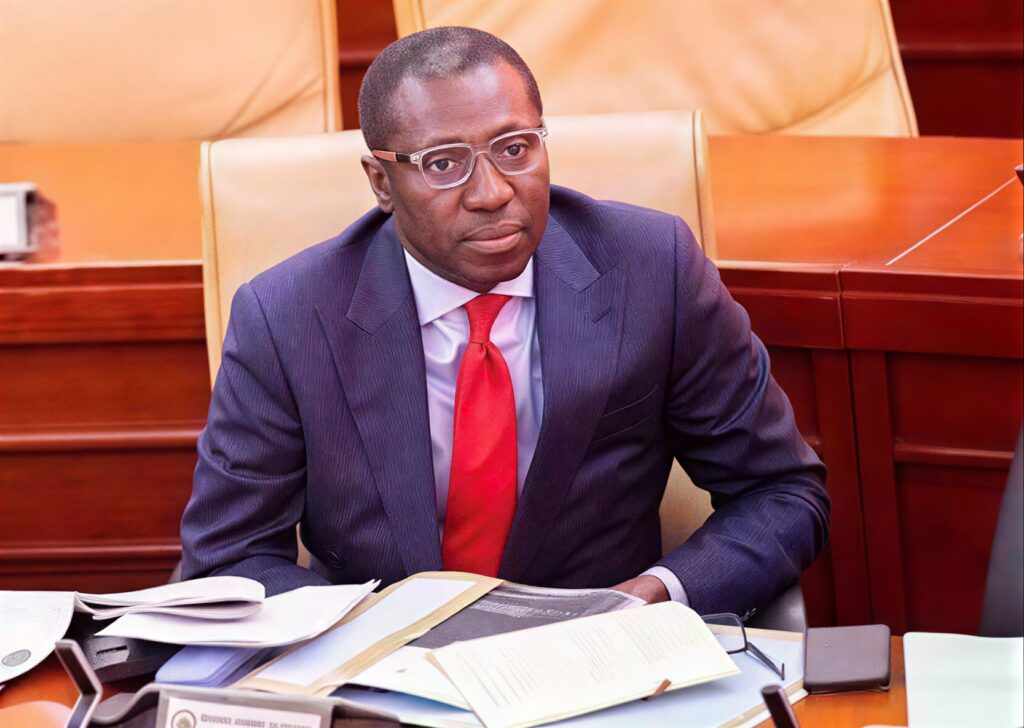
The Minority Leader further argued that inconsistencies in trade and industry policy have weakened investor confidence and slowed industrial expansion. He noted that several local businesses are operating without clear policy direction to support long-term growth.
He also suggested that the weakening or discontinuation of key private sector initiatives has created gaps in industrial planning. He said stakeholders in manufacturing have consistently raised concerns about stalled projects and limited government engagement.
Afenyo-Markin added that uncertainty around private sector policy direction has contributed to reduced investment momentum. He further noted that growing reliance on public sector employment continues to strain national revenue and limits fiscal space for development projects.
Weak Agricultural Investment Deepens Farmer Policy Concerns
The Effutu MP has raised concerns about what he describes as inadequate investment in the agricultural sector, arguing that budgetary allocations do not match the challenges faced by farmers.
“I’m not interested in the stories that are told in the media to sway opinions. I am interested in the budget. If the government wants to show that it has taken agriculture seriously, it must be reflected in the budget. Go and look at the 2025 budget, go and look at the 2026 budget. There is no serious investment in the agriculture sector. As we speak today, it is cheaper to import rice than to buy locally produced rice.”
Hon. Alexander Afenyo-Markin
He explained that this situation has reduced demand for local produce and disrupted farming cycles in several communities. He added that many farmers continue to struggle with access to reliable and stable markets.

Afenyo-Markin warned that weak investment and limited incentives could undermine agricultural productivity over time. He pointed to challenges facing maize and rice farmers, particularly in relation to pricing and market access.
He also highlighted concerns in the cocoa sector, noting that farmers have expressed dissatisfaction with pricing stability and policy consistency. He said fluctuations in farmgate prices continue to affect income security and long-term planning.
The Minority Leader referenced engagements with farmers across multiple regions, stating that feedback consistently reflects concerns about market instability. He added that unpredictable pricing structures have weakened confidence in agricultural policy direction.
He observed that previous administrations maintained more stable farmgate pricing even during periods of global market volatility. According to him, this approach supported production continuity and strengthened farmer confidence.
Afenyo-Markin concluded that agricultural policy requires stronger alignment between production incentives and market conditions. He emphasised that sustained investment and predictable pricing frameworks are essential for improving output and ensuring food security.
Energy Sector Reforms Face Scrutiny Over Increased Tariffs
The Effutu MP has also questioned the direction of energy sector reforms, particularly in relation to electricity distribution, metering systems, and revenue collection. He stated that earlier efforts to reduce technical and commercial losses have not been fully sustained.
Afenyo-Markin explained that metering and accountability reforms were intended to improve monitoring of electricity consumption and enhance efficiency. He noted that these measures were also expected to strengthen financial discipline within the sector.
He indicated that the sector’s challenges are driven more by consumption inefficiencies and weak payment compliance than by generation capacity. He stressed that addressing these structural issues remains critical to long-term stability.

“They said they would reform the energy sector, but what has happened instead is an increase in tariffs. So far, tariffs have gone up by as much as 32 percent and 30 percent. Recently, there was a reported reduction of 4 percent. However, beyond the 30 percent tariff hike, they also introduced the one cedi per litre at the pump, the Dumsor levy.”
Hon. Alexander Afenyo-Markin
The Minority Leader noted that recent tariff adjustments have increased cost pressures on households and businesses. He said these changes have not been matched by equivalent improvements in operational efficiency within the sector.
He further explained that new levies introduced in the energy space were intended to support debt repayment obligations. However, he pointed out that concerns remain about their long-term sustainability and broader economic impact.
Afenyo-Markin argued that prepaid metering systems require urgent strengthening to improve accountability and reduce revenue losses. He stated that inefficiencies in billing and monitoring continue to undermine sector performance.
He added that earlier reform programmes aimed at reducing distribution losses have lost momentum. He called for renewed focus on enforcement and compliance to improve efficiency.
The Minority Leader concluded that unresolved structural challenges continue to affect service delivery and financial stability in the energy sector. He maintained that stronger regulatory oversight and operational reforms are necessary to ensure reliable electricity supply and sustainable revenue generation.