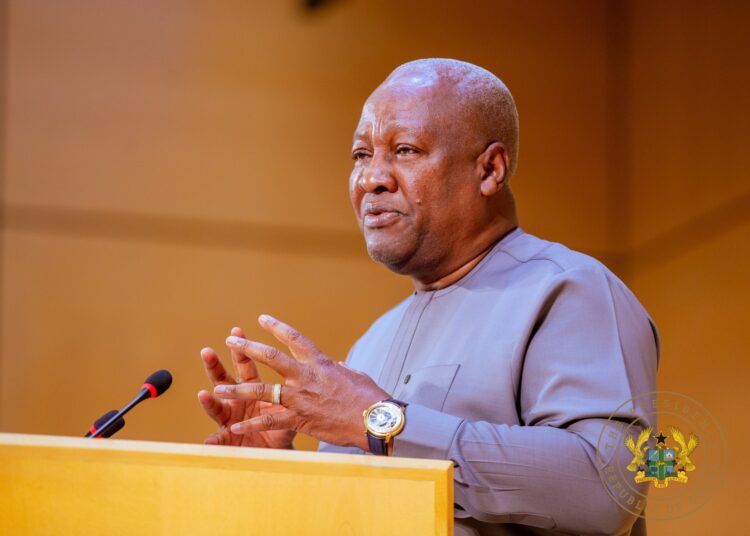
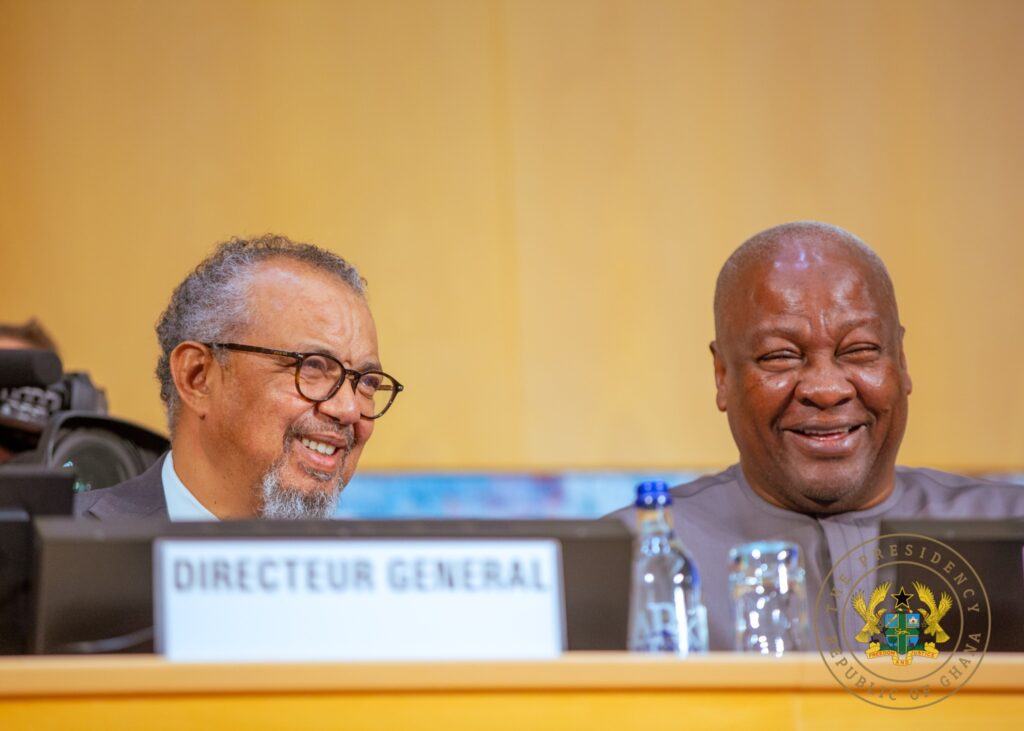
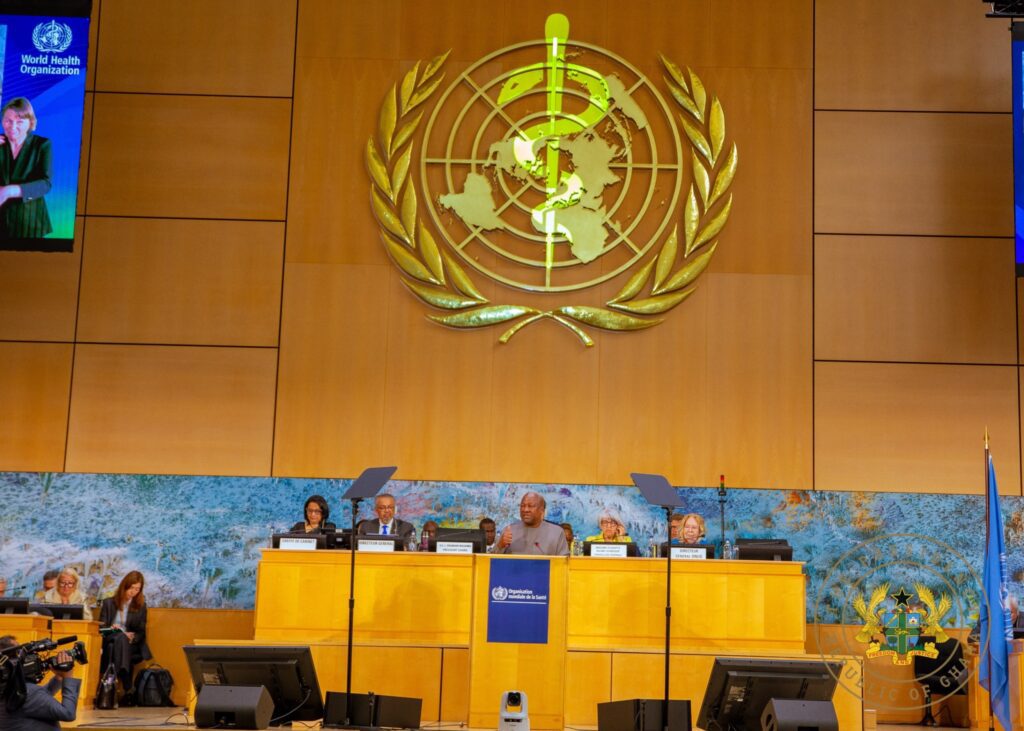
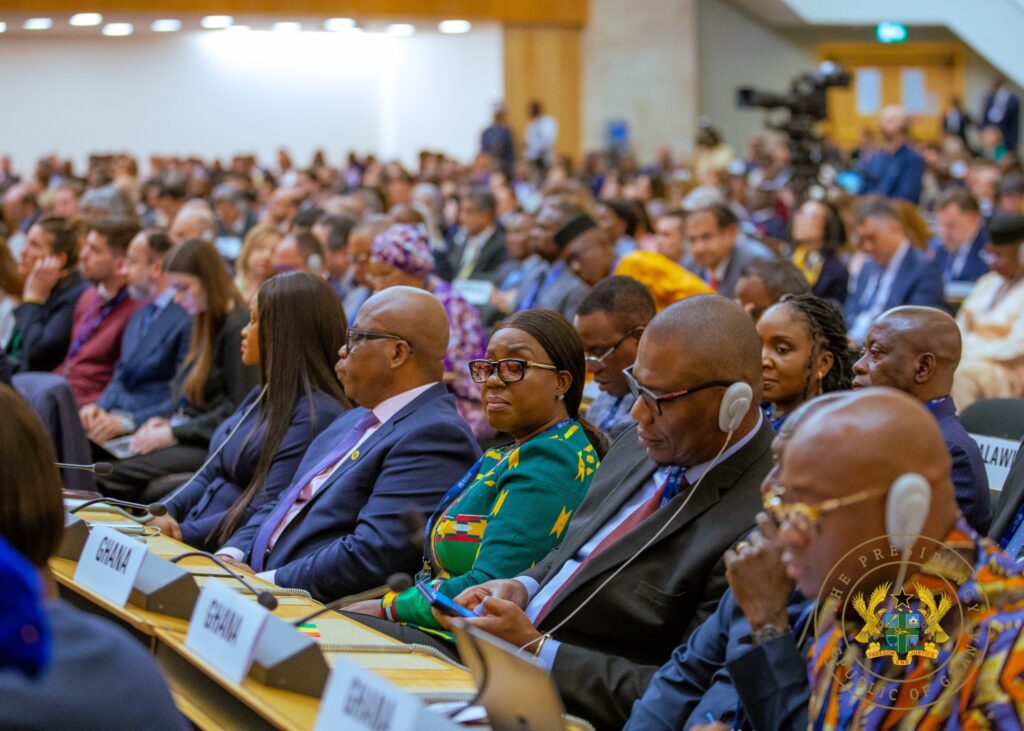
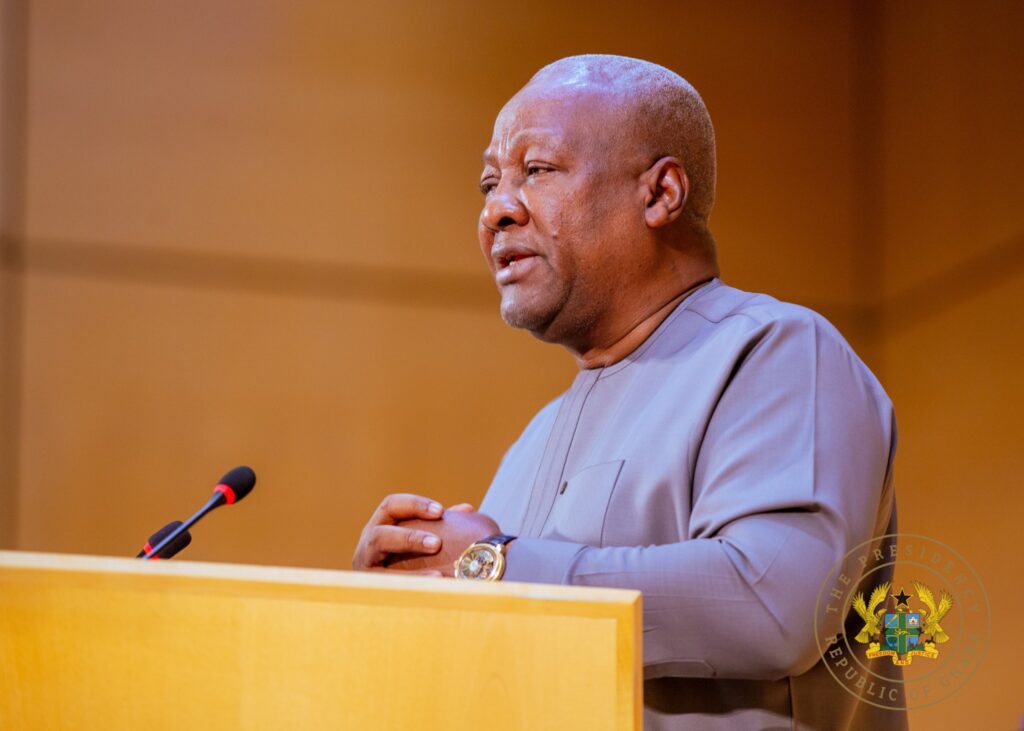
President John Dramani Mahama has called for a shift from global health discussions dominated by declarations to one grounded in implementation, using his address at the Accra Reset High-Level Geneva Convening in Switzerland to argue for a more practical and sovereignty driven approach to international cooperation.
Speaking after delivering a keynote at the 79th World Health Assembly in Geneva, President Mahama framed his remarks around a historical reflection on the 1955 Bandung Conference.
He described how 29 nations representing 1.5 billion people gathered in Indonesia, which later became a defining moment in global politics, giving rise to the Non-Aligned Movement.
According to him, the movement was built on the principles of sovereignty, the equality of races, anti-colonialism, non-aggression, South-South cooperation, and peaceful coexistence.
He noted that although the Bandung Conference produced no binding treaty or formal budget, it carried a powerful ideological influence that came to be known as the Bandung spirit. That spirit, he said, symbolised self determination and equality among nations at a time when global powers were competing for dominance.
However, President Mahama introduced a second and less widely discussed dimension of Bandung’s legacy, one that focused not on political declarations but on institutional development.
He referenced a state-owned vaccine institute established in Bandung years before the conference, later known as Bio Farma, which has grown into a major vaccine producer in Southeast Asia.
“Today, Bio Pharma is the largest vaccine producer in Southeast Asia, supplying 150 countries with vaccines. This establishment developed a novel polio vaccine. They secured a good certification and transferred the technology to India.”
President John Dramani Mahama
For President Mahama, the contrast between the political Bandung and the scientific Bandung illustrates two possible paths for global cooperation.
One is characterised by speeches and resolutions, while the other is driven by investment and tangible outcomes. He argued that closing the gap between these two realities is central to the purpose of the Accra Reset initiative.
Moving From Talk to Implementation
President Mahama stressed that the Accra Reset is designed to bridge the distance between high-level declarations made at international forums and the practical systems required to deliver results on the ground.
He said the initiative responds directly to concerns raised when it was first introduced in Davos in January, where questions were asked about whether it was another talk-driven platform and how it would be funded and implemented.
According to him, those questions have been addressed through action over the past months. He explained that a high-level panel has been established as part of the initiative.
The panel, consisting of 18 experts from six continents, is co chaired by individuals with experience in major health and crisis responses. It operates as an independent body and reports directly to heads of state rather than the institutions it evaluates.
Under the guidance of Special Advisor Michel Sidibe, the panel began its substantive work in Geneva. President Mahama emphasised that it is not ceremonial, but intended to provide technical oversight and accountability in global health reform processes.
He also highlighted the establishment of the Reform Interlochen Observatory, referred to as RIO. The mechanism is designed to monitor coordination between major global health institutions such as the Global Fund, Gavi and the World Health Organization.
He noted that fragmented planning between such institutions often results in inefficiencies that ultimately burden recipient countries. President Mahama described RIO as a tool to ensure coherence in global health planning so that international strategies align more effectively with realities in regions such as Africa and Asia.
Strengthening Negotiation and Global Health Agency
A third pillar of the Accra Reset, according to President Mahama, is the Sankuri Institute of Global Negotiators, launched in Kigali. He said the initiative was created in response to challenges faced by developing countries during international procurement and negotiation processes.
He argued that too often, countries in the Global South arrive at negotiation tables with goodwill but limited technical capacity, resulting in agreements that impose restrictive conditions.
The institute, he said, is intended to build expertise so that negotiators from developing countries can engage on equal footing when discussing issues such as technology transfer and voluntary licensing.
President Mahama acknowledged that reform efforts alone are not sufficient unless matched by a shift in the broader global health architecture. He observed that much of the current system was designed in 1948, during a period when many African countries were still under colonial rule.

This, he suggested, raises questions about its relevance to present-day global health challenges.
He added that the Accra Reset is supported by a coalition of leaders from Africa, Latin America and Asia, including a presidential council featuring figures such as former Nigerian President Olusegun Obasanjo, former Liberian President Ellen Johnson Sirleaf and former Norwegian Prime Minister Gro Harlem Brundtland.
He described them as leaders with practical experience rather than symbolic roles. President Mahama also pointed to Ghana’s domestic commitment, noting that the 2026 national budget allocates 34 billion cedis, equivalent to 3.4 billion dollars, to the health sector.
A Call to Ground Global Commitments in Real Lives
Towards the end of his address, President Mahama shifted focus to the human impact of global health systems. He questioned how international reforms translate into everyday realities for health workers, particularly those in rural areas.
“While we talk and plan here in Geneva, all the health workers in the CHIPS compounds in the northern region of Ghana want to know is, when these reforms we talk about will make a difference in the healthcare outcomes of the communities they serve.”
President John Dramani Mahama
Instead, they focus on whether essential medical supplies arrive on time and whether patients, such as expectant mothers, can be safely transported to hospitals within critical timeframes.
He argued that global health discussions must remain connected to these frontline realities, warning that policy documents and technical language often fail to reflect the lived experiences of health workers and communities.
President Mahama concluded by invoking the principle of Sankofa, a Ghanaian concept that encourages revisiting the past to recover valuable lessons. He said what must be reclaimed is a sense of agency among developing nations in shaping global systems.
He called for a renewed spirit of Bandung that prioritises sovereignty and collective progress. According to him, global progress depends on cooperation rather than isolation, and meaningful reform requires shared responsibility between countries and institutions.
As discussions continued in Geneva, he urged participants to ensure that commitments made in international forums ultimately translate into improved health outcomes for communities worldwide.
READ ALSO: GSE Defies Bear Pressure With Surprise Market Index Rise