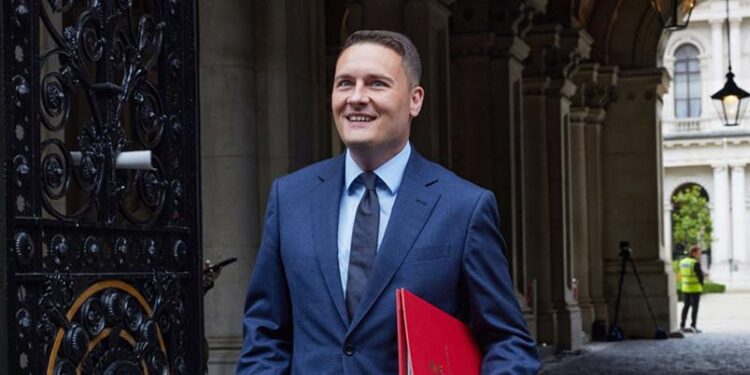
Former Health Secretary Wes Streeting has called for fresh measures to encourage businesses to hire more young people, suggesting that targeted reductions in employers’ National Insurance contributions could help tackle rising youth unemployment while also signalling support for new oil and gas drilling in the North Sea.
The intervention marks the latest effort by Streeting to distance himself from key policies pursued by Prime Minister Keir Starmer’s government since leaving the cabinet earlier this month.
In recent weeks, Streeting has increasingly positioned himself as an alternative voice within Labour, outlining different approaches to employment, energy policy and taxation as debate continues over the party’s future direction.
His latest remarks come shortly after the publication of a review led by former Labour Minister Alan Milburn into the growing number of young people who are not in education, employment or training, commonly known as NEETs.
The review highlighted persistent barriers facing younger workers and examined how employers could play a greater role in helping them enter the labour market.
According to Streeting, “we have to make it easier for businesses to employ young people and for businesses to take that risk on someone.”
“I think we should be thinking actively about how to incentivise, whether that’s through targeted reduction in employers’ National Insurance or other kinds of recruitment and retention incentives.”
Wes Streeting
The proposal marks a notable departure from one of Labour’s flagship economic policies since returning to government. Following its election victory in 2024, the government increased the rate of National Insurance paid by employers from 13.8 per cent to 15 per cent and lowered the threshold at which the tax applies from £9,100 to £5,000.
The measure was intended to raise an estimated £25 billion annually to support public services, with the National Health Service among the biggest beneficiaries.
As Health Secretary at the time, Streeting oversaw the NHS, while additional funding from the tax increase was directed toward healthcare services.
Despite advocating targeted relief for employers, Streeting stopped short of proposing cuts to NHS funding or wider reductions in public spending.
Also, businesses pointed to increases in both employers’ National Insurance contributions and the minimum wage as factors influencing recruitment decisions.
However, Milburn warned against attributing the challenge solely to recent government policies. The Low Pay Commission, which monitors the impact of wage regulations, concluded that there was no straightforward relationship between tax and wage increases and youth employment outcomes.
Milburn also emphasised that the problem predates the current government by many years. “The NEET problem was not triggered two years ago,” he said. “It’s been going on since time immemorial.”
Economic Growth, Youth Jobs and Energy Security at Heart of Policy Debate

The government has defended its approach, arguing that substantial protections for younger workers are already built into the National Insurance system. Employers generally do not pay National Insurance contributions for workers under the age of 21 unless their earnings exceed £50,000 a year.
Ministers have also highlighted a broader package of reforms aimed at improving opportunities for young people. The government has pledged what it describes as the biggest youth employment reforms in a generation, intending to help hundreds of thousands of young people secure work.
Among the measures is a youth jobs grant programme that will provide employers with £3,000 for every person aged 18 to 24 they recruit after that individual has spent at least six months on benefits while actively seeking employment.
While youth employment was a central focus of Streeting’s comments, he also used the opportunity to challenge Labour’s position on North Sea oil and gas exploration, signalling support for projects that could generate additional tax revenue for the Treasury.
Labour’s 2024 manifesto pledged to stop issuing new licences for oil and gas exploration, arguing that additional drilling would not significantly reduce energy bills, improve energy security, or help address climate change.
That policy has come under renewed scrutiny as global energy markets remain uncertain, driven in part by geopolitical tensions and conflicts that disrupt supply chains.
The Starmer-led government is currently considering applications linked to the Jackdaw and Rosebank oil and gas fields.
Wes Streeting suggested he believes approval is likely. He also argued that while new licences might not directly lower household energy bills, they would still provide economic benefits. “The granting of those licences will not necessarily translate into cheaper bills, but it will translate into higher tax receipts,” he added.
Meanwhile, Keir Starmer has maintained that oil and gas extraction in the North Sea will continue regardless of decisions on individual projects.
READ ALSO: PSG Beat Arsenal to Retain the Champions League Title