
President John Dramani Mahama has called for accelerated African integration, arguing that no country on the continent can successfully navigate today’s complex economic and geopolitical environment in isolation.
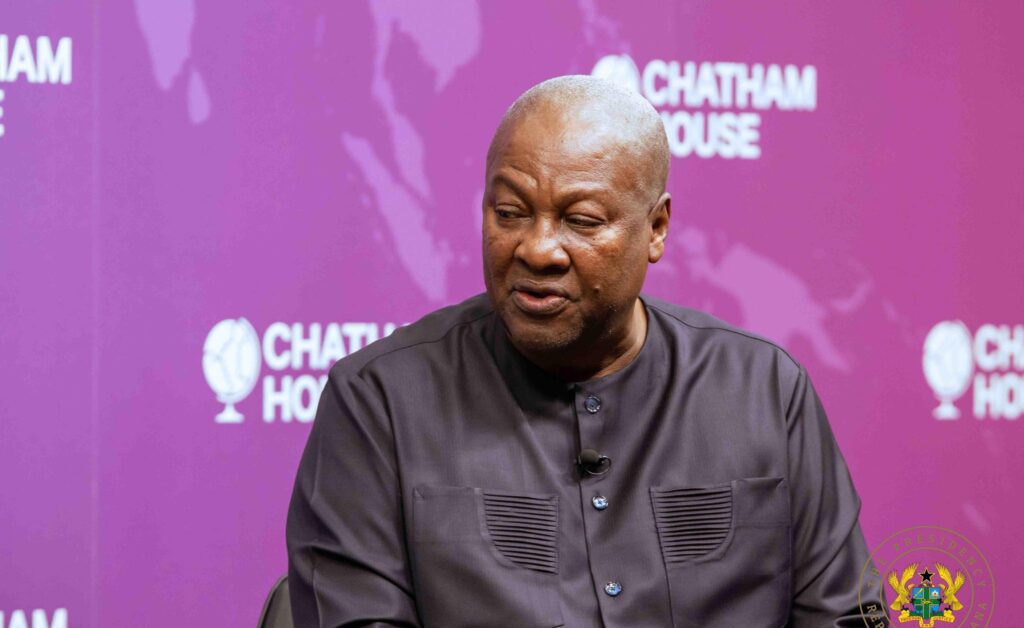
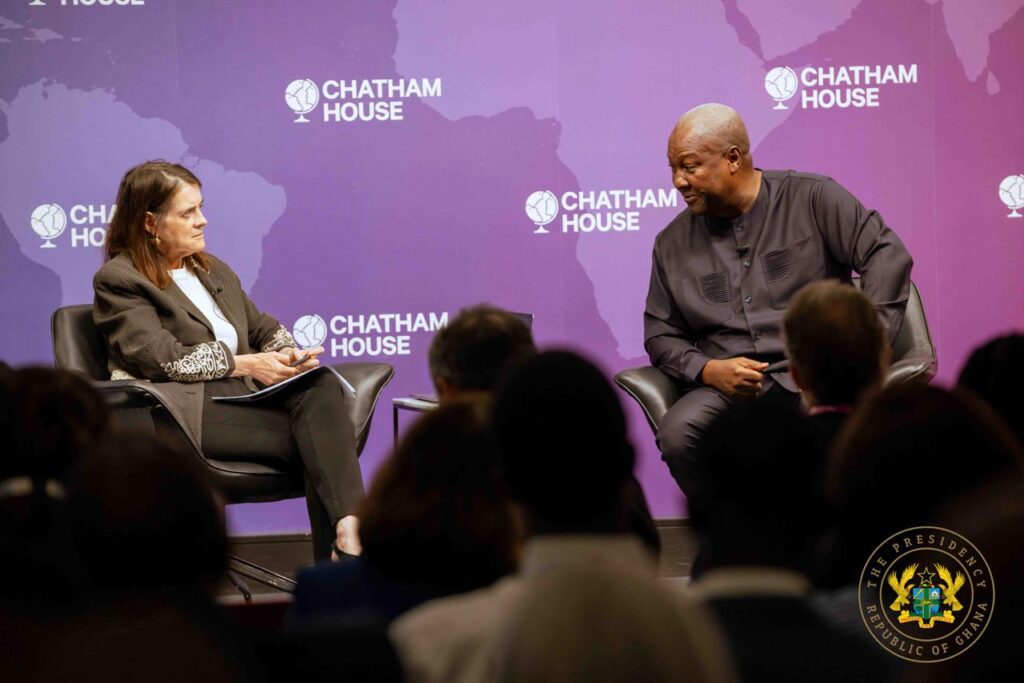
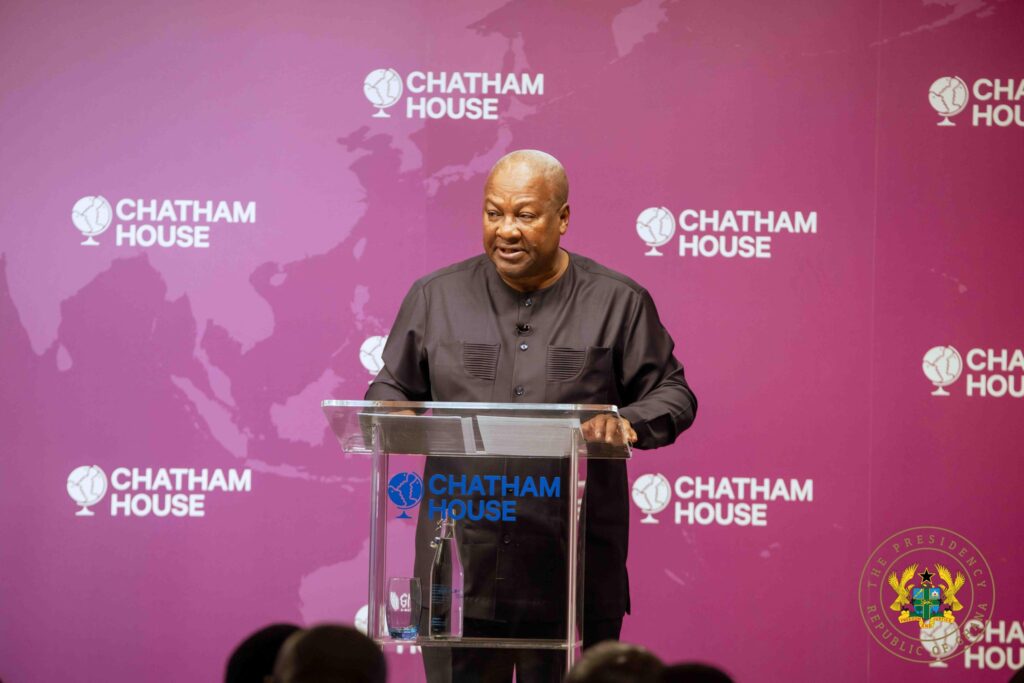
Speaking at Chatham House in London on the theme “Navigating a Changing Global Order: Ghana’s Strategic Priorities,” the President said African unity has moved beyond being a political aspiration and must now be viewed as an economic and strategic necessity.
He noted that the world is experiencing profound changes marked by supply chain disruptions, shifting trade alliances, and rising economic nationalism. In response to these developments, he said African countries must strengthen cooperation and build greater economic resilience through regional integration.
“Ghana views African integration not merely as an aspiration, but as an economic and geopolitical necessity. In a world marked by supply chain fragmentation, shifting trade blocks, and rising economic nationalism, Africa must strengthen its internal economic resilience”
President John Dramani Mahama
AfCFTA Key to Africa’s Economic Transformation
The President identified the African Continental Free Trade Area as one of the most important economic initiatives on the continent and a critical vehicle for achieving greater integration.
He described the agreement, which is headquartered in Accra, as one of the most consequential economic transformation projects of the current generation.
President Mahama said successful implementation of the AfCFTA has the potential to significantly increase trade among African countries, strengthen industrial production, deepen regional value chains, and reduce the continent’s vulnerability to external economic shocks.
He stressed that greater intra African trade would help create new opportunities for businesses, stimulate industrial growth, and improve economic resilience across the continent.
According to him, the agreement offers Africa an opportunity to reshape its economic future by creating a larger and more integrated market capable of supporting sustainable development.
Ending Dependence on Raw Commodity Exports
President Mahama also expressed concern over Africa’s continued dependence on exporting raw materials while importing finished products at significantly higher value.
He argued that the current model has limited the continent’s ability to maximize the benefits of its natural resources and has contributed to persistent economic vulnerabilities.
“For too long, African economies have remained overly dependent on exporting raw commodities while importing finished products at significantly higher value. That model is neither sustainable nor strategically viable”.
President John Dramani Mahama
The President indicated that Ghana remains committed to policies that promote industrial transformation, value addition, export diversification, and stronger regional economic cooperation.

He explained that increasing local processing and manufacturing capacity would allow African countries to retain more value within their economies, create jobs, and strengthen competitiveness in global markets.
The shift toward industrialisation, he noted, is essential if Africa is to achieve long term economic growth and reduce its exposure to fluctuations in global commodity markets.
African Unity a Strategic Imperative
President Mahama emphasized that the changing global landscape makes closer cooperation among African countries more important than ever.
He argued that regardless of a country’s size, population, or natural resource wealth, no African nation can effectively confront current geopolitical and economic challenges on its own.
“In today’s global environment, no African country, regardless of size or resource, can effectively navigate geopolitical and economic complexities in isolation”.
President John Dramani Mahama
He added that African unity should no longer be viewed solely through a political lens but as a strategic requirement for economic development and international influence.
According to him, stronger regional cooperation will enable African countries to negotiate from a position of greater strength and improve their ability to respond to global uncertainties.
Pursuing Balanced Global Partnerships
While advocating greater African integration, President Mahama also highlighted the importance of maintaining strong international partnerships.
He said Ghana continues to value its longstanding relationships with traditional partners while simultaneously expanding cooperation with emerging economies and new centres of global influence.
“Our foreign policy approach is guided neither by ideological rigidity nor by dependence but by strategic pragmatism rooted in Ghana’s national interest”.
President John Dramani Mahama
He added that countries capable of building relationships across geopolitical divides will be better positioned to succeed in an increasingly fragmented international environment.
According to him, Ghana seeks partnerships that support industrialisation, expand market access, facilitate technology transfer, create opportunities for young people, and drive economic transformation.
Commitment to International Cooperation
President Mahama reaffirmed Ghana’s commitment to multilateral engagement, peaceful coexistence, and international cooperation. He argued that preserving global stability should not be the sole responsibility of major world powers, but a shared obligation involving both developed and developing nations.
“The preservation of global stability cannot depend solely on the actions of major powers,” he said. He added that middle powers and developing countries also have a responsibility to uphold cooperation, restraint, and respect for international law.
The President said a more balanced and inclusive global order would require active participation from countries across all regions of the world. President Mahama’s address outlined Ghana’s vision for navigating a changing global environment through stronger African integration and pragmatic international engagement.
His remarks highlighted the importance of the African Continental Free Trade Area, industrial transformation, and regional cooperation as tools for strengthening economic resilience.
At the same time, he emphasized the need for balanced global partnerships and a commitment to multilateral cooperation, arguing that Africa’s future prosperity will depend on both continental unity and constructive engagement with the wider world.