
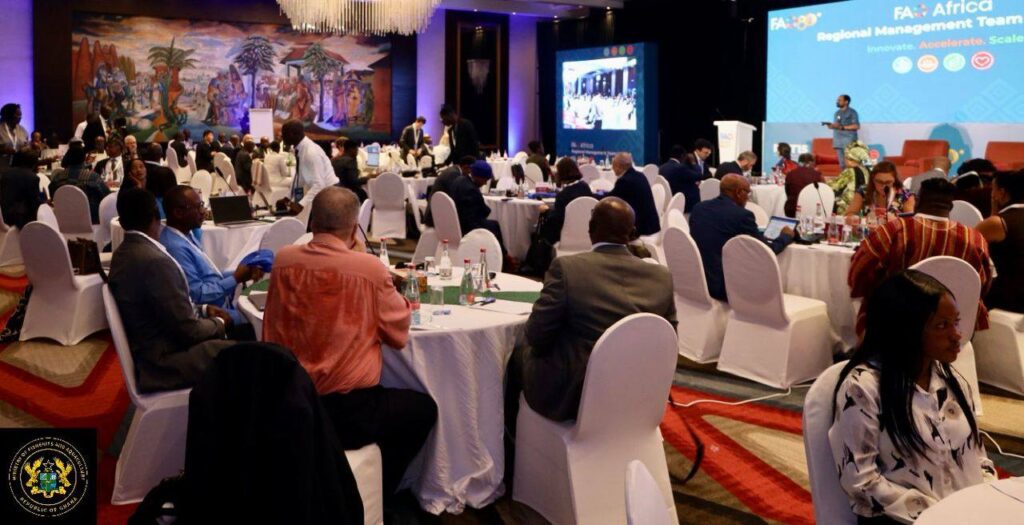
Ghana has taken center stage in the continental campaign to restructure maritime governance and agricultural supply chains, hosting the 15th Regional Management Team Meeting of the Food and Agriculture Organization (FAO) in Accra.
The high-level summit brought together African sector ministers, FAO central leadership, and sub-regional coordinators to forge a unified strategy capable of insulating African food systems from compounding macroeconomic and climate shocks.
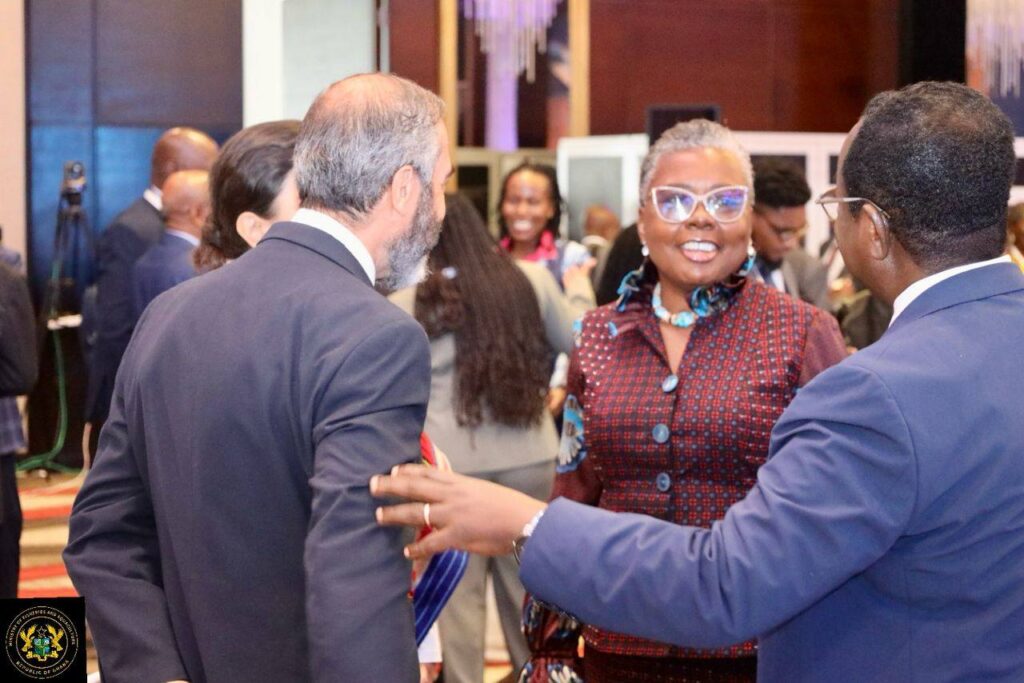
Addressing the assembly, Ghana’s Minister for Fisheries and Aquaculture Development, Hon. Emelia Arthur, delivered a definitive policy address calling on continental leaders to transition from theoretical agricultural capacity to active operational execution.
“While our continent is blessed with abundant natural resources, a youthful population and immense entrepreneurial energy, we must confront the realities of hunger, poverty and climate-related challenges through bold, coordinated and transformative action”
Hon. Emelia Arthur, Minister for Fisheries and Aquaculture Development
Leveraging its position as the host nation, Ghana is spearheading a regional coalition to optimize the continent’s massive maritime real estate, protect artisanal fishing communities, and build resilient post-harvest infrastructures, especially as African nations face the triple threat of systemic rural poverty, accelerating climate disruptions, and acute food insecurity.
The central theme of Hon. Arthur’s address focused on eliminating the gap between Africa’s vast natural resource endowments and its actual output metrics. For decades, regional development reports have highlighted the continent’s expansive coastline, arable land, and youthful, highly entrepreneurial demographic profile.
However, Hon. Arthur challenged the delegation to confront the stark contradictions of persistent domestic hunger and structural economic vulnerabilities by replacing passive optimism with aggressive, coordinated state actions.
She noted that the Ministry’s framework rejects traditional, siloed approaches to agricultural management, advocating instead for a deeply integrated sub-regional defense system. With climate variability directly altering marine migration patterns and disrupting traditional farming calendars, isolated national policies are no longer capable of securing domestic food supplies.
This shift toward high-yield performance requires a substantial reallocation of state capital toward modernizing rural infrastructure, subsidizing sustainable technology, and establishing regional trade channels that allow food-surplus zones to efficiently supply deficit areas across the continent.
The Axim Precedent
To demonstrate how localized state interventions can drive broader macroeconomic stability, the Minister highlighted the operational success of the fish processing center located in Axim.
Developed through a direct technical partnership between the Ministry of Fisheries and Aquaculture Development (MoFAD) and the FAO, the facility serves as a proven blueprint for sustainable post-harvest management, upgrading traditional processing methods to minimize post-harvest losses, elevate hygiene standards, and increase the market value of processed fish products.
The socio-economic impact of the Axim facility extends directly to gender-focused economic empowerment. In Ghana’s coastal economies, women form the absolute backbone of the post-harvest supply chain, managing the processing, smoking, and commercial distribution of landing catches.
The joint MoFAD-FAO initiative has insulated vulnerable households from seasonal income volatility by providing these women with modern processing technology, proper cold-storage options, and structured market access.
The Ministry intends to utilize the Axim model as a scalable framework for coastal development across the sub-region, establishing similar processing enclaves along the West African coast to capture higher margins within the domestic supply chain, reduce reliance on frozen fish imports, and guarantee long-term income security for artisanal fishing households.
Beyond domestic processing, the Ministerial brief outlined an aggressive strategy to reclaim African sovereign waters from predatory external forces. The Blue Economy – encompassing sustainable shipping, aquaculture, marine biotechnology, and regulated commercial fishing – represents an unexploited multibillion-dollar frontier for continental growth.
However, realizing this economic potential is fundamentally impossible without a decisive, heavily militarized campaign against Illegal, Unreported, and Unregulated (IUU) fishing.
IUU fishing operations, frequently conducted by heavily subsidized foreign industrial fleets, systematically deplete West African fish stocks, destroy marine habitats through outlawed trawling practices, and deprive coastal nations of vital export revenues and domestic food security.
Hon. Arthur called for an immediate expansion of sub-regional maritime surveillance, shared intelligence databases, and unyielding regulatory enforcement mechanisms to expel illegal operators from African economic zones.
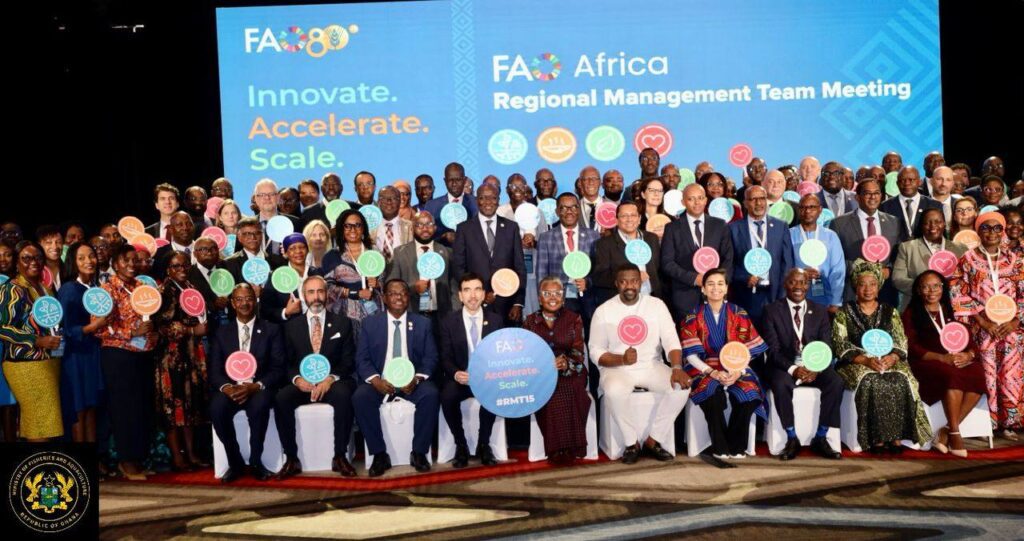
The Accra summit concluded with a binding institutional commitment between MoFAD, fellow regional ministers, and the top tier of the FAO administration.
Recognizing that many well-intentioned agricultural policies fail during the implementation phase due to bureaucratic friction and weak oversight, the stakeholders agreed to restructure the administrative architecture of regional development programs.
READ ALSO: Kofi Kinaata Drops Energetic New Anthem for Black Stars World Cup Campaign