The Bank of Ghana (BoG) has launched a sweeping crackdown on the persistent issuance of dud cheques, introducing tougher sanctions that could see repeat offenders banned from accessing cheque books and fresh credit facilities for up to three years.
The revised regulatory directive signals the central bank’s determination to restore confidence in Ghana’s payment system and curb a practice that has continued to undermine trust in cheque transactions despite previous interventions.
Under the new framework, individuals who repeatedly issue dud cheques will face severe restrictions that could significantly affect their banking activities and financial reputation.
Three-Year Ban for Persistent Offenders
The most striking feature of the revised directive is the punishment reserved for third-time offenders. Customers who issue dud cheques repeatedly will be prohibited from obtaining new cheque books for three years and will also lose access to new credit facilities within Ghana’s banking and financial system.
The Bank of Ghana stressed that these sanctions are intended to discourage reckless financial behavior and protect the integrity of cheque transactions.
While affected customers will continue to receive funds into their accounts and conduct electronic transactions, their ability to access key banking services will be significantly curtailed.
“All Banks and Specialised Deposit Taking Institutions will be notified about this ban,” the notice stated.
Financial institutions have also been directed to inform affected customers within five working days after receiving notice from the central bank and immediately recall all unused cheque books in their possession.
Public Naming of Offenders
In a move likely to send shockwaves across the business community, the Bank of Ghana disclosed that the names of customers who become third-time offenders will be published.
The public disclosure measure is expected to serve as a powerful deterrent and reinforce accountability among cheque users.
Customers who fail to surrender their unused cheque books within ten working days after notification will face even harsher consequences.
Such individuals will be reported directly to the central bank, prohibited from operating current accounts, and placed on a high-risk list of cheque issuers maintained by the Bank of Ghana.
Industry observers believe this measure could have long-lasting implications for the financial standing and credibility of affected individuals and businesses.
Why BoG Is Tightening the Rules
The central bank explained that the revised directive became necessary because previous measures had failed to eliminate the problem.
According to BoG, despite directives issued in March 2021 and October 2025, the situation remains troubling.
The regulator noted that it has “observed with grave concern the high issuance of dud cheques by some customers of Banks and Specialised Deposit-Taking Institutions (SDIs).”
The central bank warned that the continued circulation of dud cheques has weakened public confidence in cheques as a trusted means of payment.
With businesses and individuals increasingly concerned about payment reliability, BoG believes decisive action is needed to restore trust and ensure the smooth functioning of the financial system.
The newly revised directive takes immediate effect and supersedes the earlier directives issued in 2021 and 2025.
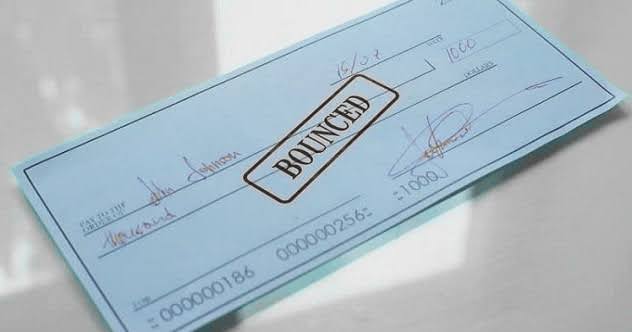
Financial Penalties Begin from the First Offence
The sanctions do not begin only after repeated violations. Even first-time offenders will face financial penalties.
Banks and specialised deposit-taking institutions are required to impose a levy equivalent to 10 percent of the face value of a dud cheque issued for the first time. In addition, the customer will receive an official warning notification.
The offence must also be reported to both the Credit Reference Bureaus and the Bank of Ghana.
Furthermore, the offender will be placed under surveillance for at least one year.
The central bank indicated that warning notifications may be delivered through SMS, email, or any other established communication channel between the bank and the customer.
Importantly, the warning must clearly outline the additional sanctions that could apply if the offence is repeated.
For customers who issue a second dud cheque within one year of the first offence, financial institutions must impose a levy equivalent to 15 percent of the cheque’s face value and issue another warning.
Strict Reporting Obligations for Banks
The revised framework also places significant responsibilities on banks and specialised deposit-taking institutions.
BoG has directed all financial institutions to continue reporting customers who issue dud cheques to Credit Reference Bureaus in accordance with Section 25(c) of the Credit Reporting Act, 2007 (Act 726).
Banks and SDIs must also submit monthly reports on dud cheque incidents to the Bank of Ghana by the tenth day of the following month using the prescribed reporting format.
Even when no incidents occur, institutions are required to file nil returns.
The central bank warned that any failure to submit returns, or the submission of inaccurate or incomplete returns, will attract sanctions under Section 93 of the Banks and Specialised Deposit-Taking Institutions Act, 2016 (Act 930).
Protecting Confidence in Ghana’s Financial System
The latest directive underscores the Bank of Ghana’s commitment to safeguarding confidence in the country’s payment ecosystem.
As the regulator intensifies efforts to eliminate the issuance of dud cheques, customers and businesses are being urged to exercise greater financial discipline and ensure sufficient funds are available before issuing cheques.
With tougher penalties, public disclosure, credit restrictions, and enhanced surveillance now firmly in place, the era of leniency toward dud cheque offenders appears to be coming to an end.
READ ALSO: Investors Pull Back as GSE Activity Slumps