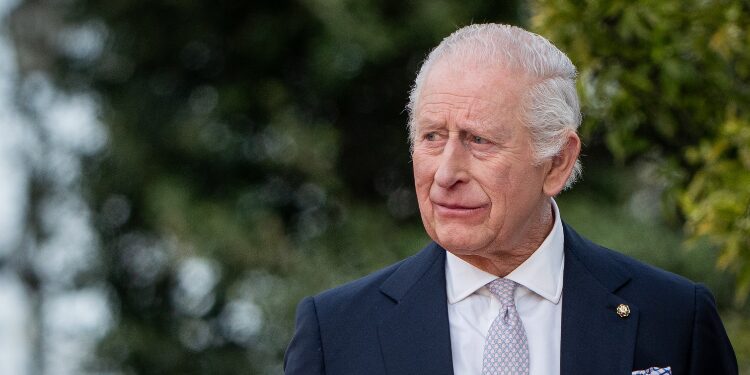
King Charles III has become the first reigning British monarch to publicly disclose how much tax he pays, revealing that he voluntarily paid £12.9 million in income and capital gains tax during the 2024–2025 financial year in a landmark move aimed at strengthening transparency and public accountability within the monarchy.
The unprecedented disclosure, contained in the Royal Household’s latest annual report and financial accounts, places the King among the United Kingdom’s top 100 taxpayers.
The announcement also revealed that the Prince of Wales, Prince William, voluntarily paid £7.76 million in tax over the same period, extending the transparency initiative to the next heir to the throne.
Buckingham Palace described the publication of the tax figures as an effort to increase transparency and “encourage wider understanding of our accountability.”
Since King Charles ascended the throne in 2022 following the death of Queen Elizabeth II and Prince William became heir to the throne, the combined tax payments voluntarily made by father and son have exceeded £50 million, according to the newly released accounts.
Although the report confirms the total amounts paid, it does not provide a detailed breakdown explaining precisely how the tax liabilities were calculated.
Much of the monarch’s taxable income comes from the Duchy of Lancaster, a private estate established centuries ago to provide Britain’s sovereign with an independent source of income to support both official duties and certain private expenditures. During the 2025–2026 financial year, the Duchy generated approximately £25.2 million for the King.
Additional taxable income comes from the King’s personal investments and savings, along with revenues generated by his privately owned estates at Balmoral in Scotland and Sandringham in eastern England.
Prince William’s finances are similarly supported through the Duchy of Cornwall, the historic estate traditionally held by the heir to the throne. Covering around 130,000 acres and valued at more than £1 billion, the Duchy provides funding for the Prince’s official engagements, household operations and family life.
Explaining the disclosure, Prince William’s Private Secretary, Ian Patrick, noted that the Prince pays income tax at the highest rate on any net surplus remaining after legitimate operational expenses have been deducted.
“Prince William pays income tax at the highest rate on any net surplus after those costs have been met. Those costs are independently audited to ensure that any deductions are appropriate.”
Ian Patrick
He added that, “the prince recognises the interest in these arrangements and the importance of appropriate transparency.”
The financial report also revealed another notable decision by the Prince of Wales. Prince William has chosen to forgo the £1.5 million annual rental income generated by the now-closed Dartmoor Prison. Instead, he has instructed that the money be redirected toward supporting local communities around Princetown, particularly rural development initiatives. The prison has remained vacant since 2024 after high levels of naturally occurring radon gas were discovered within the facility.
Beyond personal taxation, the annual accounts provide a wider picture of royal finances at a time when public scrutiny of the monarchy’s funding continues to intensify.
Royal Funding, Public Spending and Palace Plans Take Centre Stage

Alongside the historic tax disclosures, the Royal Household confirmed that King Charles and Queen Camilla will continue living at Clarence House rather than relocating permanently to Buckingham Palace once the palace’s decade-long refurbishment is completed.
Officials said remaining at Clarence House would allow Buckingham Palace to accommodate greater public access while also generating additional revenue through expanded visitor programmes.
This decision means King Charles will become the first British monarch since Queen Victoria to choose not to reside primarily at Buckingham Palace.
The refurbishment project, costing just under £370 million, is expected to conclude in March next year. Once completed, annual public funding through the Sovereign Grant will fall from £137.9 million to £99.9 million, where it will remain fixed for five years under a revised funding formula.
The Sovereign Grant finances the operational costs of the monarchy, including staffing, maintenance of official residences, state receptions, security-related improvements and travel for official engagements.
According to King’s Keeper of the Privy Purse and Treasurer, James Chalmers, “it is important to emphasise that the Sovereign Grant does not provide personal income to members of the Royal Family,”adding, “it funds the work of the institution not private lives or private wealth.”
“Expenditure is governed by the same standards and disciplines as any publicly funded body, with strict value-for-money requirements, detailed planning, multi-year strategies, independent audit, and Treasury oversight.”
The additional funding will support major conservation work on historic royal buildings, strengthen cybersecurity across royal residences and finance green energy improvements, including an £11 million project to replace ageing boilers at Windsor Castle.
The annual report also detailed spending on royal travel during the past year. Prince William’s three-day visit to Saudi Arabia in February was the most expensive overseas engagement, costing just over £130,000, narrowly exceeding the £126,946 spent on King Charles and Queen Camilla’s four-day state visit to Italy.
Meanwhile, the Royal Family undertook 177 helicopter journeys, costing more than £733,000, while the King’s final major journey aboard the Royal Train, which is scheduled to be retired by 2027 as a cost-saving measure, cost £48,460.
READ ALSO: ADB Strengthens Partnership with Traditional Leaders to Drive Economic Growth