
Ghana Chamber of Mines has renewed its call on Government to allocate at least 30 per cent of mineral royalty receipts directly to mining host communities to accelerate local development and strengthen the social licence of mining operations.
This bold recommendation seeks to address historical imbalances in revenue distribution by ensuring that areas directly impacted by extraction receive a predictable and statutory share of the wealth generated beneath their soil.
By re-routing nearly a third of total royalties to these localities, the Chamber aims to replace standard corporate philanthropy with structured, long-term state funding designed to foster economic resilience and improve the well-being of residents.
“The Chamber therefore urged Government to intensify efforts to formalise the small-scale mining sector and improve compliance with fiscal and regulatory obligations to ensure that the country’s mineral wealth delivers maximum benefits to all stakeholders.”
Ghana Chamber of Mines

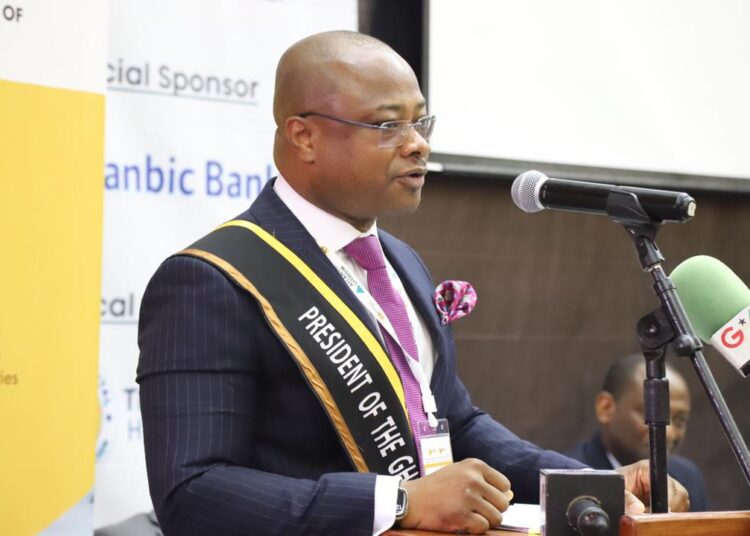
The Immediate Past President of the Ghana Chamber of Mines, Mr. Michael Edem Akafia, noted that while mining communities bear the direct impacts of mineral extraction and contribute significantly to national economic growth, the proportion of mineral revenues that reaches these communities remains inadequate.
He stressed that increasing the share of royalties allocated to mining areas would support investments in critical infrastructure, education, healthcare, livelihood enhancement and environmental management, thereby ensuring that the benefits of mining are more equitably shared.
The advocacy comes at a vital time when operational frictions between local populations and formal mining entities emphasize the need for real, tangible development to maintain peace and corporate access.
Driving Infrastructure Growth and Social Advancement
Securing a fixed 30 per cent portion of mineral royalties would fundamentally change the structural development of resource-rich areas across Ghana.
Host environments routinely deal with degraded road networks, inadequate medical installations, and over-burdened educational facilities due to rapid population growth driven by industrial activities.
A dedicated royalty stream allows local authorities to plan and execute multi-year infrastructure upgrades without waiting for delayed budget disbursements from the central government in Accra.
This consistent funding means towns can construct modern hospital wings, equip vocational training centers, and expand clean water grids to handle the specific health and demographic pressures brought on by large-scale extraction.
Beyond physical structures, these resources offer a path toward long-term livelihood security and comprehensive environmental recovery.
Mining communities often face reduced agricultural productivity and land degradation, which can severely threaten traditional farming and fishing.
Channelling royalty revenues into local development funds makes it possible to finance advanced environmental management, reclaim legacy mining sites, and establish alternative livelihood initiatives for displaced workers.
Giving communities the financial means to support agro-processing, small business grants, and targeted educational scholarships ensures that local economies remain vibrant and self-sustaining long after the commercial life cycle of the nearby mines has concluded.
Capital Inflows and Legislative Reform for Resource Equity
The critical demand from the Chamber occurs after a period of exceptional fiscal growth within the extractive industry, providing a perfect opportunity for systemic reform.
During the 2025 financial year, the mining and quarrying sector generated an impressive GH¢24.22 billion in total fiscal revenue for the state, which marks a notable 10.61 per cent growth compared to the GH¢21.90 billion recorded during 2024.
Total taxes attributable to the sector grew to GH¢23.11 billion from GH¢20.87 billion, while corporate income tax payments rose from GH¢13.58 billion to GH¢14.69 billion.
Crucially, mineral royalty receipts climbed from GH¢4.90 billion to GH¢5.41 billion, meaning that a 30 per cent allocation would instantly deploy more than GH¢1.62 billion directly into community development projects.

To ensure that these significant funds are managed properly, the Chamber emphasizes that new regulatory frameworks must be established alongside increased funding.
Mr. Akafia called on Parliament to enact a Mineral Revenue Management Act to establish a transparent and accountable framework for the collection, allocation and utilisation of mineral revenues.
He noted that such legislative action must introduce strict reporting rules, transparent revenue-sharing ratios, and clear provisions for inter-generational equity.
This legal foundation would prevent the mismanagement of resources and assure host communities that their shared mineral wealth is being used efficiently to build lasting assets for both current and future generations.
Economic Balancing and the Small-Scale Mining Conundrum
The overall contribution of the mining sector extends deeply into the macroeconomy, reinforcing its status as Ghana’s primary economic engine.
Producing member companies of the Chamber spent an estimated US$7.14 billion directly within the domestic economy in 2025, distributing US$4.20 billion to local suppliers, US$2.14 billion to state taxes, US$720.12 million to worker salaries, and US$88.60 million to direct community social investments.
Furthermore, mineral export receipts surged by 77.99 per cent to reach US$21.36 billion from US$11.98 billion in 2024, pushing the sector’s share of gross merchandise exports to 68.22 per cent.

These figures prove that while the industry successfully powers national economic growth, the communities where this wealth is extracted need a stronger, structural share of the revenue.
Achieving true fiscal equity, however, requires addressing structural issues within the domestic gold production sector.
The Chamber expressed serious concern over the low fiscal contribution of the small-scale mining subsector, despite its growing share of national gold production.
Even though small-scale mining produced more than half of the nation’s total gold output in 2025, its formal contributions through corporate income taxes, royalties, and employee payroll taxes remained minimal.
To correct this imbalance, the Chamber has strongly urged the government to intensify formalisation initiatives and improve compliance across small-scale operations, ensuring that all forms of mineral extraction actively support the host communities that protect them.
READ ALSO: lack Stars Suffer First Defeat But Make Knockout Round