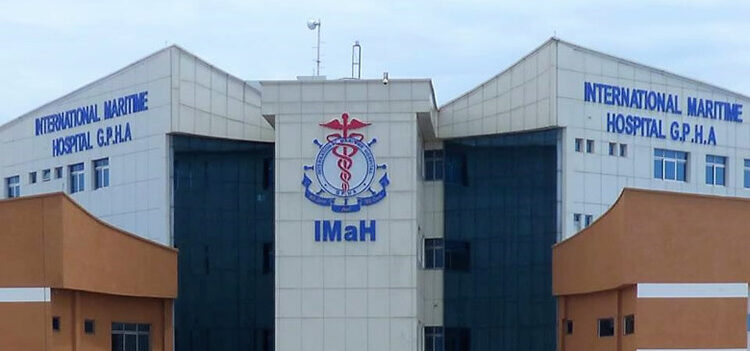
The Chief Executive Officer of the International Maritime Hospital, Dr Vitus Victor Anaab Bisi, has appealed for the replacement of ageing medical equipment across the facility, telling Parliament’s Health Committee during a monitoring visit that a decade of continuous use, compounded by the hospital’s coastal location, has pushed much of its capital equipment to the end of its useful life.
Briefing committee members on the state of the facility, Dr Bisi said the hospital is grappling with an inadequate staff mix alongside a growing list of critical, capital-intensive equipment that has simply aged out of reliable service, describing ten years as a long time in the working life of medical machinery.
“After a decade of continuous use, much of our critical medical equipment has reached the end of its useful life. Replacing these obsolete systems is no longer optional—it is essential to safeguarding quality healthcare and saving lives.”
Dr. Vitus Victor Anaab Bisi, CEO, International Maritime Hospital
He said the visit offered a timely opportunity to place these concerns directly before the lawmakers responsible for health sector oversight, rather than allowing them to be addressed only through internal hospital channels.

Imaging, Transport and IT Systems Flagged as End-of-Life
Walking the Committee through specific equipment concerns, the CEO pointed first to the hospital’s MRI machine and its fleet of ambulances, both now a decade old.
He said the facility’s IT servers have similarly reached end of life, with vendors no longer offering support, forcing the hospital to manage on existing infrastructure until it can acquire a newer, larger server capable of handling the expanded modules added to its Hospital Management Information System.
He extended the same concern to the hospital’s Central Sterile Services Department, disclosing that one of its two sterilisers is currently non-functional, while the oxygen plant is also in need of replacement. The digital X-ray machine, he added, has likewise reached end of life, though the hospital’s technical staff have managed to keep it operational through ongoing maintenance.
Gastroscopes and patient monitors were also named as items requiring outright replacement rather than further repair, with Dr Bisi stressing that continuing to patch up such equipment carries growing risk for both patients and staff.
Coastal Location Drives Up Infrastructure Maintenance Costs
Beyond clinical equipment, Dr Bisi raised the high cost of maintaining the hospital’s general infrastructure, singling out the air conditioning systems, which he said have never been replaced since the facility opened. He credited the hospital’s engineering team for keeping the units running through sheer technical skill, but stressed that a full replacement is overdue, particularly given the corrosive effect of a decade spent operating next to the sea.

“For 10 years we have been sitting next to the sea, and you can imagine what that does to equipment.”
Dr. Vitus Victor Anaab Bisi, CEO, International Maritime Hospital
The CEO also acknowledged the hospital’s limited visibility to the public, noting that Committee members would have passed only a billboard or two on their way in, with none visible from the Sakumono beach road approach. He said the hospital is working to improve its signage, but that the cost of doing so remains a constraint on an already stretched maintenance budget.
Idle Cath Lab Cited as Major Missed Opportunity
The most pointed appeal centred on the hospital’s cardiac catheterisation laboratory, which Committee members had inspected near the Accident and Emergency unit during the visit. Dr Bisi explained that the lab is functional but currently unused by the hospital, a situation he described as a significant challenge requiring the Committee’s direct support to resolve.
He proposed that the hospital either be equipped with its own cath lab or supported to operate the existing one independently, arguing that doing so would deliver far greater benefit given that cardiac catheterisation has been identified as a government priority area.
He noted that four cath labs have so far been established across the country’s teaching hospitals, and made the case that the International Maritime Hospital should be added to that list, warning that without government backing, the facility risks losing the opportunity altogether if a private operator eventually moves the existing lab elsewhere.
He argued that leaving a functioning cath lab idle, while cardiac patients are referred elsewhere or left without timely intervention, represents an inefficient use of an asset the hospital already has in place, and urged the Committee to treat the matter as a priority rather than a routine maintenance request.
Health Committee Visit Part of Wider Oversight Role
The monitoring visit forms part of Parliament’s ongoing oversight of public health institutions, giving lawmakers direct sight of infrastructure and equipment gaps that facilities like the International Maritime Hospital say are constraining service delivery despite continued clinical demand along the coastal corridor the hospital serves.
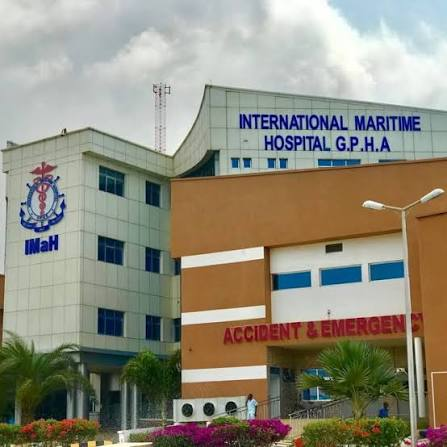
Committee members were taken through the affected departments during the tour, giving them a first-hand view of the equipment Dr Bisi described as overdue for replacement.
Committee Urged to Prioritise Hospital’s Equipment Needs
With the case laid out in detail, Dr Bisi’s central message to the Committee was one of urgency: that ageing MRI, ambulance, sterilisation, oxygen and IT infrastructure can no longer be sustained through maintenance alone, and that the hospital’s idle cardiac catheterisation lab represents a readily available asset that government support could quickly put to use.
Attention will now turn to how the Health Committee responds to these appeals, and whether the International Maritime Hospital secures the backing needed to replace its obsolete equipment and activate its cath lab in the near term.
READ MORE : Weija Children’s Hospital to Open Following EOCO-Brokered Deal