The Premier League will introduce a significant change to its laws for the 2026/27 season, with a new goalkeeper injury trial aimed at reducing time-wasting and preventing teams from exploiting stoppages for tactical gain.
Approved by the International Football Association Board (IFAB), the initiative will be implemented across England’s professional men’s and women’s competitions. It forms part of a wider effort by football authorities to improve the pace of matches and increase effective playing time.
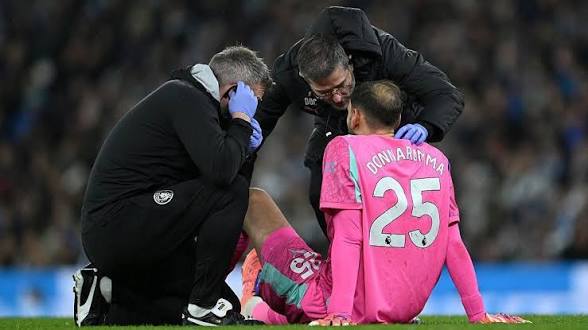
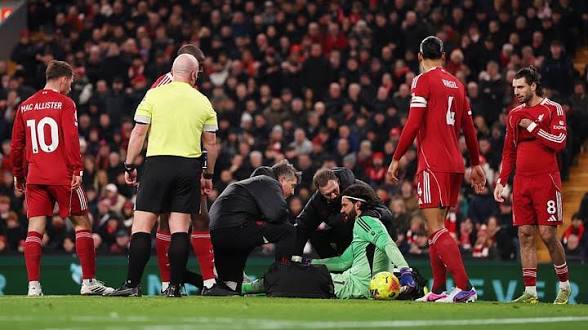
Under the trial, when play is halted because of a goalkeeper injury, the goalkeeper’s team must immediately send one outfield player off the pitch. That player will not be allowed to return until at least one minute of play has elapsed after the match restarts.
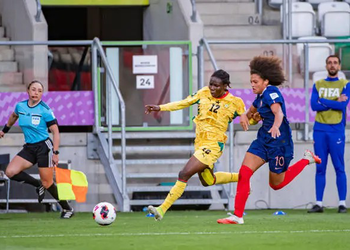
Outfield players who get treated on the field are required to leave the pitch for at least a minute until the next break in play, a new rule that debuted at the just ended 2026 FIFA World Cup in North America.
With goalkeepers who occupy a more delicate position on the field, it is impossible for them to vacate their goal for a minute and instead an outfield player will leave the field of play in place of the shot stopper.
The proposal by the league authorities has been jointly backed by Professional Game Match Officials Limited (Pro Ref), the Football Association, the Premier League, the English Football League, Women’s Super League Football, and the National League. Football authorities believe the measure addresses a growing concern over unnecessary stoppages that interrupt the rhythm of games.
Although the rule represents a notable departure from traditional match management, officials insist its purpose is not to discourage legitimate treatment for injured goalkeepers. Instead, it is designed to remove any competitive advantage that may arise from deliberately prolonged stoppages.
Targeting a Growing Tactical Trend
In recent years, it has become increasingly common for goalkeepers to remain on the ground after seemingly minor incidents, allowing teammates to gather around the technical area while coaches deliver instructions. Such pauses have also been used to slow opponents during periods of sustained pressure or to run valuable seconds off the clock late in matches.
The new trial directly targets that tactic. By forcing an outfield player to leave the field temporarily, teams will effectively play with 10 outfield players for at least one minute after play resumes. That numerical disadvantage creates a potential cost that could discourage unnecessary injury stoppages.
Managers will be responsible for selecting which outfield player leaves the pitch. The chosen player must exit immediately and can only return after the required one-minute period has expired.
There are, however, important exceptions. The rule will not apply if the goalkeeper requires immediate treatment after being fouled, if both the goalkeeper and an outfield player are injured following a collision, or if the goalkeeper is bleeding and needs medical attention.
The exceptions are intended to ensure that genuine injuries continue to receive appropriate medical care without placing teams at an unfair disadvantage.
Wider Push to Speed Up Matches
The goalkeeper injury trial is only one element of a broader campaign to reduce time-wasting across English football.
Last season’s introduction of the eight-second limit for goalkeepers holding the ball was generally viewed as a positive step toward increasing ball-in-play time. Building on that momentum, officials will now introduce additional measures for the new campaign.
Referees will use a visible five-second countdown when players delay taking throw-ins or goal kicks. If a throw-in is excessively delayed, possession may be awarded to the opposing team. Similarly, an unnecessary delay over a goal kick could result in the referee awarding a corner kick to the opposition.
Substitutions will also come under greater scrutiny. Players leaving the pitch will have just 10 seconds to do so, with excessive delays potentially leading to the incoming substitute waiting an additional minute before entering the field.
Taken together, these changes reflect a clear shift in how football authorities want matches to be managed. Rather than relying solely on yellow cards or warnings, the new measures introduce immediate sporting consequences for delaying tactics.
Whether the goalkeeper injury trial succeeds will largely depend on how consistently it is enforced and whether clubs adapt their behaviour. Teams may initially question whether playing temporarily with one fewer outfield player is too severe a consequence, especially if a goalkeeper suffers a genuine knock that does not fall under the listed exemptions.
However, the principle behind the trial is difficult to dismiss. Football has long faced criticism for stoppages that disrupt the spectacle and frustrate supporters. If the rule discourages tactical gamesmanship without compromising player welfare, it could prove to be one of the most influential law experiments in recent seasons.
English football will monitor the trial throughout the campaign in collaboration with IFAB before deciding whether the measure should become a permanent feature of the Laws of the Game. If successful, it could provide a blueprint for competitions around the world seeking to preserve the flow and integrity of the sport.
READ ALSO: France Wildfire Stabilises But Danger Still Looms