United Kingdom recorded the largest increase in reported antisemitic incidents last year among countries with the world’s biggest Jewish populations outside Israel, according to a major international report that warns anti-Jewish hatred has become entrenched across several democracies despite efforts to combat discrimination.
The report, published by the J7 Large Communities’ Task Force Against Antisemitism, paints a troubling picture of rising hostility towards Jewish communities across seven countries that together account for more than 90% of the global Jewish diaspora.
Researchers found that while some countries experienced slight declines in reported cases compared with 2024, overall levels of antisemitism remained significantly higher than before the Hamas attacks on Israel on 7 October 2023 and the subsequent war in Gaza.
Among the seven countries examined that is Argentina, Australia, Canada, France, Germany, the United Kingdom and the United States, the UK registered the largest year-on-year increase in reported antisemitic incidents during 2025. Cases recorded in Britain rose by five percent compared with the previous year, making it one of only three countries, alongside Argentina and Germany, where incidents continued to climb.
The findings highlight growing concerns that antisemitism has become a persistent challenge rather than a temporary spike linked to geopolitical events. Across all seven countries, reported antisemitic incidents have increased by 136 percent since 2022, while violent incidents have risen by 97 percent over the same period.
Researchers also warned that 2025 was the deadliest year for Jewish communities living outside Israel in more than three decades. Twenty people were killed in antisemitic attacks across the countries covered by the report, marking the highest annual death toll since the 1994 bombing of a Jewish community centre in Buenos Aires, Argentina.
Some of the most devastating attacks occurred in Australia, where 15 people, including a 10-year-old girl, were killed after two gunmen opened fire during a Hanukkah celebration on Sydney’s Bondi Beach. The attack has been described as the deadliest antisemitic assault on the Jewish diaspora this century.
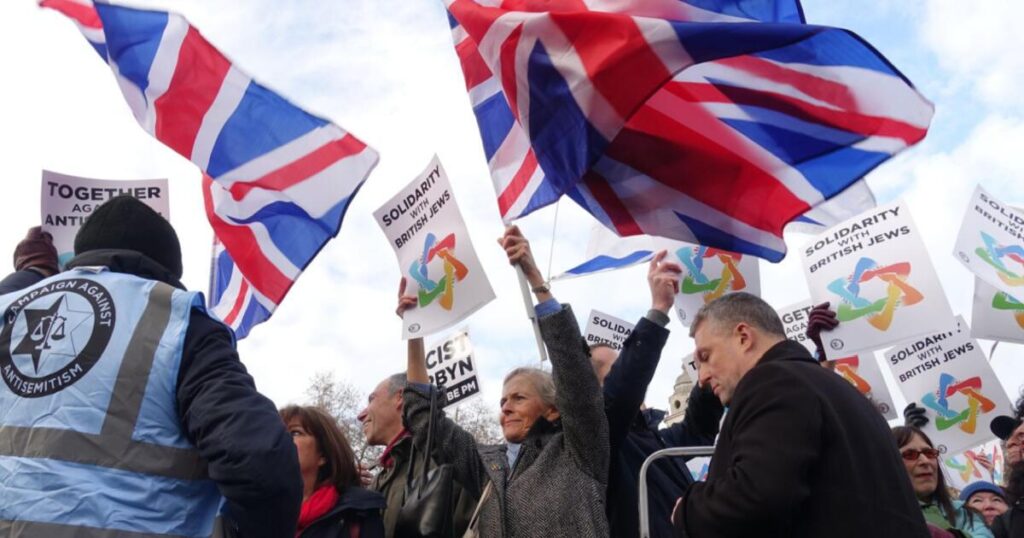
United Kingdom also suffered deadly violence. Melvin Cravitz and Adrian Daulby were killed during an attack on Heaton Park Synagogue in Manchester on Yom Kippur, the holiest day in the Jewish calendar, while the United States recorded multiple fatal incidents, including the fatal shooting of two Israeli embassy staff outside an event for young diplomats at a Jewish museum in Washington, D.C., and the killing of a grandmother in Boulder, Colorado, during an attack involving Molotov cocktails at a gathering supporting hostages held in Gaza.
Although reported incidents declined slightly in the United States, Australia, Canada and France compared with 2024, the report stressed that every country remained well above pre-October 2023 levels, suggesting that heightened hostility toward Jewish communities has become deeply embedded.
The J7 Task Force, which brings together organisations representing the seven largest Jewish diaspora communities, argued that governments must move beyond reactive responses and adopt long-term strategies to protect Jewish citizens from discrimination and violence.
The report also identified digital platforms as a major driver of contemporary antisemitism, highlighting the role of social media and artificial intelligence in spreading hate speech, conspiracy theories and extremist content capable of encouraging real-world violence.
Marina Rosenberg of the US-based Anti-Defamation League, one of the organisations behind the report, warned that online rhetoric often serves as the first stage in the pathway to violent attacks.
“Violent antisemitic attacks don’t just start with violence. They often start with words on social media. Social media has been used in the past few years as a place for radicalisation for different groups and individuals, including those that later go on a violent spree against a synagogue or a school and now AI is part of it.”
Marina Rosenberg
The findings have renewed calls for governments and technology companies to strengthen efforts to prevent online hate from escalating into physical violence.
Calls Grow for Tougher Action as UK Tackles Antisemitism Surge
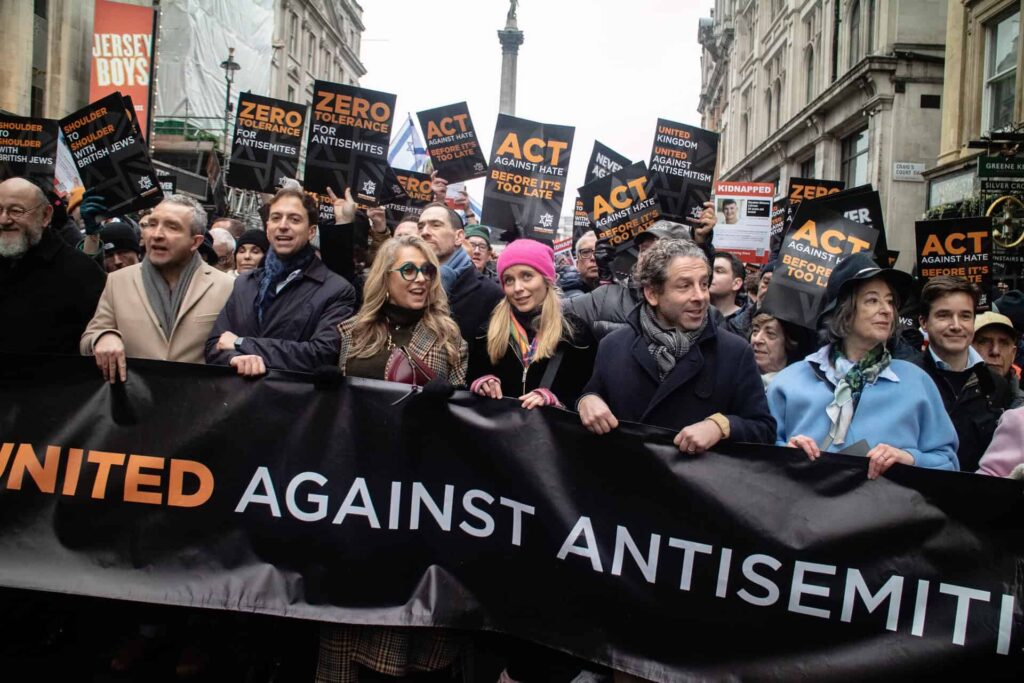
The publication of the report has intensified pressure on British government to expand measures aimed at protecting Jewish communities and addressing the broader rise in antisemitism.
In a joint statement, the J7 Large Communities Task Force Against Antisemitism warned that governments must treat the current situation as a long-term security and human rights challenge rather than a series of isolated incidents.
“Antisemitism in our seven countries is no longer a surge; it is our new normal. Governments must stop reacting after Jews are attacked and start acting before, with real security funding, stronger laws and social media platforms that enforce their own rules.”
J7 Large Communities Task Force Against Antisemitism
Moreover, Lord Mann,UK government’s independent adviser on antisemitism has urged policymakers to adopt a “clear, calm and methodical” approach to combating anti-Jewish hatred, warning that governments which fail to confront the issue risk allowing prejudice to become more deeply rooted in society.

Angela Rayner, the Secretary of State for Housing, Communities and Local government, also condemned the findings, describing the increase in antisemitic incidents as deeply alarming.
“I am appalled by the horrific rise of antisemitism in the UK. It is intolerable. Across government, we’re also working with international partners, including the J7, to strengthen the global fight against antisemitism and stand up for Jewish communities wherever they face discrimination, abuse or violence.”
Angela Rayner
The British government recently announced a £251 million funding package to help police forces strengthen security around Jewish communities across England, reflecting growing concern over attacks targeting places of worship, schools and community institutions.
Community leaders have welcomed the additional investment but insist that security funding alone will not be sufficient to reverse current trends.
A spokesperson for the Board of Deputies of British Jews noted that the organisation is urging the government to implement broader reforms designed to protect Jewish communities and confront antisemitism across public life.
The group called on the government to deliver measures that would “strengthen Jewish community security, tackle antisemitism in schools, universities and public life, and ensure social media companies are held accountable for the spread of anti-Jewish hatred.”
READ ALSO