PETROSOL Platinum Energy PLC has made a striking entrance into Ghana’s corporate debt market after investors submitted bids worth GH₵178.07 million for its maiden GH₵100 million bond issuance.
The strong response resulted in a 178% subscription, signalling significant investor appetite for the indigenous oil marketing company and its growth strategy.
PETROSOL listed its Series 1 and Series 2 Notes on the Ghana Fixed Income Market (GFIM) of the Ghana Stock Exchange, marking a major milestone in the company’s efforts to deepen its access to long-term capital.
Investors Push PETROSOL Beyond GH₵100m Target
The bookbuild for the maiden issuance attracted combined bids of GH₵178.074 million against the GH₵100 million target.
The performance means PETROSOL secured demand significantly above the amount it initially sought, giving the company a powerful debut on Ghana’s corporate bond market.
The four-year Tranche 01 emerged as the stronger performer, attracting GH₵114.277 million in bids against its GH₵50 million target.
That represented an impressive 229% subscription, with participation from 66 underlying investor clients.
The five-year Tranche 02 also exceeded expectations, recording GH₵63.797 million in bids against a GH₵50 million target.
The tranche therefore achieved a 128% subscription, supported by 18 underlying investor clients.
Demand exceeding supply across both tranches represents an important development for PETROSOL, particularly as Ghana continues to work toward developing a deeper and more diversified corporate bond market.
Strong Vote of Confidence in PETROSOL
The successful issuance represents more than just a fundraising exercise for the company.
It provides a strong indication that investors are willing to back PETROSOL’s business model, governance reforms and expansion plans.
PETROSOL Board Chairman Daniel Acheampong said the listing was the result of nearly three years of deliberate preparation by the company’s Board and Management.
According to him, the company focused on strengthening governance, reporting and financial discipline before approaching the capital market.
He said the strong subscription across both tranches demonstrated that investors had recognised the work undertaken by the company.
The company’s preparation included restructuring its Board, appointing independent non-executive directors in 2024 and converting into a public limited liability company in October 2025.
PETROSOL also established Board committees covering Audit and Risk, Remuneration and Nominating functions while migrating to full International Financial Reporting Standards reporting.
PETROSOL Targets Expansion and Lower Costs
The company intends to use the proceeds primarily to strengthen working capital and improve the efficiency of its fuel procurement operations.
PETROSOL plans to shift more of its fuel procurement from credit purchases to cash purchases.
The strategy is expected to help reduce cost of sales and improve margins, while potentially allowing the company to offer greater value to consumers.
Part of the funds will also support the expansion of PETROSOL’s retail network of service stations.
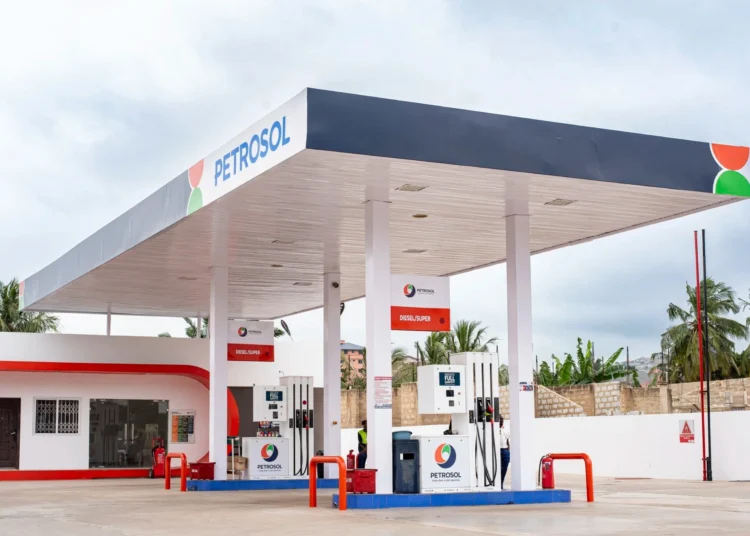
The company currently operates 109 fuel stations across 13 regions of Ghana, having grown from just four stations in 2014.
This expansion strategy could further increase the visibility of the PETROSOL brand while giving the company greater access to retail customers across the country.
CEO: Capital Market Access Was Long-Term Goal
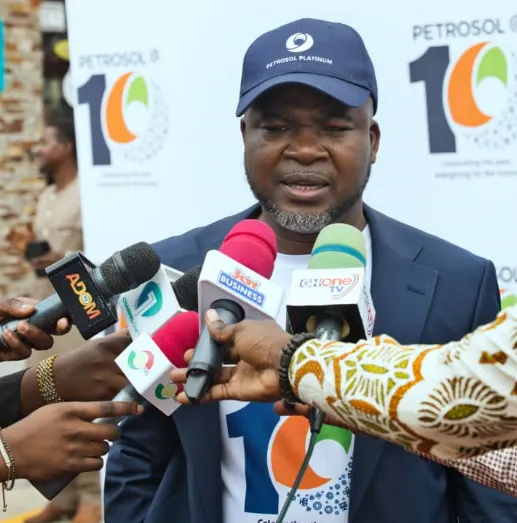
PETROSOL Chief Executive Officer Michael Bozumbil described the successful issuance as a major vote of confidence from the investment community.
He noted that the company had grown from a small petroleum business consulting practice into one of Ghana’s respected oil marketing brands.
Bozumbil said accessing the capital market had always been part of PETROSOL’s long-term strategy and was viewed as the natural next step for a business seeking sustainable growth.
The CEO also reaffirmed Management’s commitment to deploying the funds strictly for the purposes communicated to investors.
The proceeds will therefore focus on working capital enhancement, cash-based fuel procurement and retail network expansion.
Major Players Supported the Transaction
The successful bond issuance was backed by a team of established financial and professional institutions.
Absa Bank Ghana Ltd and Databank Brokerage Ltd served as Joint Lead Arrangers, while KPMG acted as Reporting Accountants.
Fidelity Bank Ghana Ltd served as Note Trustee, with Kimathi & Partners providing legal advisory services.
The involvement of these institutions adds further significance to PETROSOL’s entry into the corporate bond market and reflects the structured approach adopted by the company ahead of the issuance.
Trading of the Series 1 and Series 2 Notes on the GFIM has commenced, with settlement, registry and depository services provided by the Central Securities Depository (GH) Ltd.
PETROSOL Eyes Another GH₵100m
The GH₵100 million raised represents only the first half of PETROSOL’s broader capital-raising programme.
The company is expected to return to the market later to raise the remaining GH₵100 million under its GH₵200 million Note Issuance Programme.
The programme was recently approved by the Securities and Exchange Commission and the Ghana Stock Exchange.
PETROSOL’s successful debut could therefore pave the way for another significant transaction as the company implements its strategic expansion plans.
With investor demand reaching GH₵178 million during the maiden issuance, the company has already demonstrated that there is substantial market interest in its credit story.
For Ghana’s developing corporate bond market, PETROSOL’s performance could also provide a much-needed boost as more companies seek alternatives to traditional bank financing.
The successful transaction comes at a time when Ghana’s capital market institutions are seeking to broaden investment opportunities beyond government securities.
PETROSOL’s 178% subscription therefore represents not only a major milestone for the company, but also a potentially important signal for Ghana’s evolving corporate debt market.
READ ALSO: Ghana Loses $1.2bn Reserves Amid Middle East Tensions