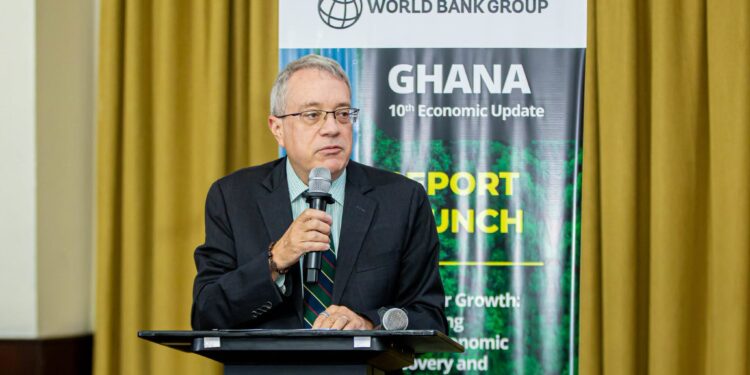
The World Bank has warned Ghana that its recovery is still incomplete despite recent gains.
According to the World Bank, Ghana’s macroeconomic rebound is real, but the harder test is whether the stability can translate into productive jobs, stronger household incomes and a labour market capable of absorbing a rapidly expanding workforce.
Ghana’s economy has recovered incredibly from the 2022-2023 crisis, but the headline numbers conceal a more difficult question: are the economic wins generating enough productive work for the citizens entering the labour market?
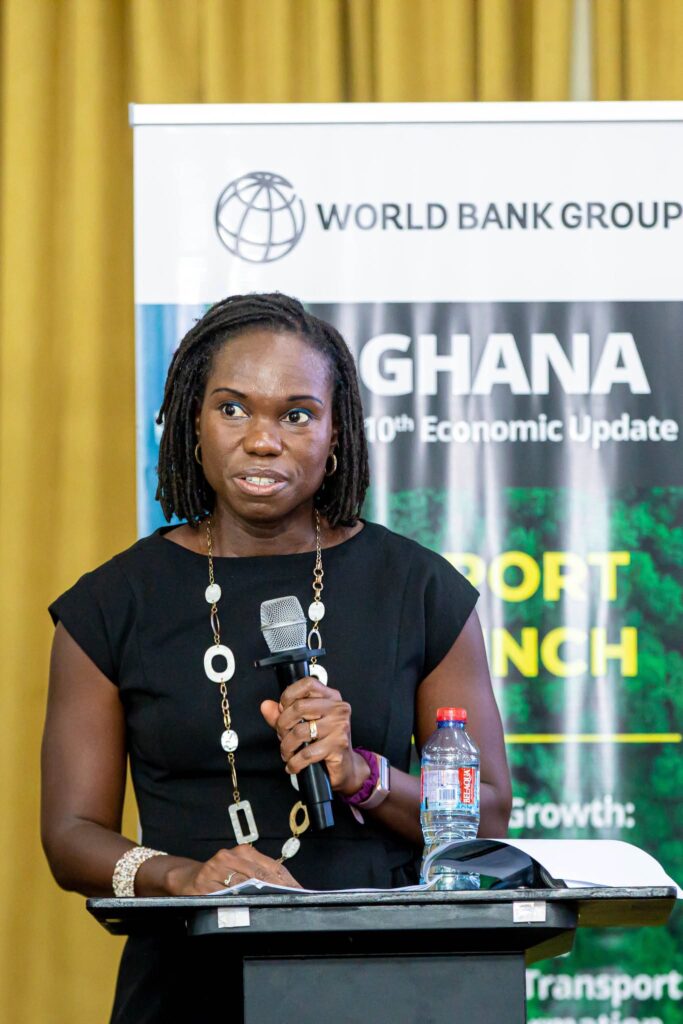
According to the 10th Ghana Economic Update by the World Bank Report, real GDP experienced growth of 6.0 percent in 2025, the fastest growth rate since 2019, while non-oil GDP grew by 7.6 percent. Between 2012 and 2023, Ghana’s working-age population increased by about 2.7 million, compared with roughly 250,000 net jobs created in formal and non-subsistence informal employment.
That works out to an absorption gap of almost 11 to one. The World Bank’s diagnosis is straightforward: “The recovery, however, remains structurally incomplete.”
For households, that distinction matters. GDP measures the value of what the economy produces. It does not show whether a young graduate can get a job, a trader’s earnings become more secure, or a small manufacturer can hire another employee.
Strong Growth Does Not Automatically Mean Strong Job Creation
The composition of Ghana’s recovery helps explain the gap. Services grew by 8.1 percent in 2025 and agriculture by 6.8 percent, while industry grew by only 2.3 percent. Gold mining performed strongly, but oil and gas output contracted sharply.
Those differences are significant matter because diverse sectors do not employ labour at the same intensity. Higher gold output and prices can strengthen exports, reserves and public revenue without producing jobs on the scale possible in manufacturing, agro-processing, construction or labour-intensive services.
The policy problem is therefore no longer simply how to restore stability. It is how to harness that stability to make private investment in sectors that can employ people on a large scale more attractive. As the World Bank puts it, “stabilization is necessary but not sufficient.”

The Youth Labour Market Shows the Pressure Most Clearly
The report’s labour-market figures posit why the jobs challenge remains serious. More than 330,000 jobs were added during the first three quarters of 2025, yet unemployment still stood at 13.0 percent in the third quarter. Among young people aged 15 to 24, unemployment was much higher at 32.4 percent, while 21.5 percent were neither working nor in school or training.
The figures are not directly comparable with the longer-term estimate of 250,000 net jobs created between 2012 and 2023 because they are based on different measures of employment. Even so, the broader picture is clear: Ghana’s working-age population is growing faster than the economy is creating enough secure and productive jobs.
Job quality also remains a concern. More than two-thirds of workers are in vulnerable forms of employment, especially women, rural workers and agricultural workers. This means employment can increase without necessarily granting households the stable incomes and security they expect from an economic recovery.
Why Transport Is Really a Productivity and Jobs Issue
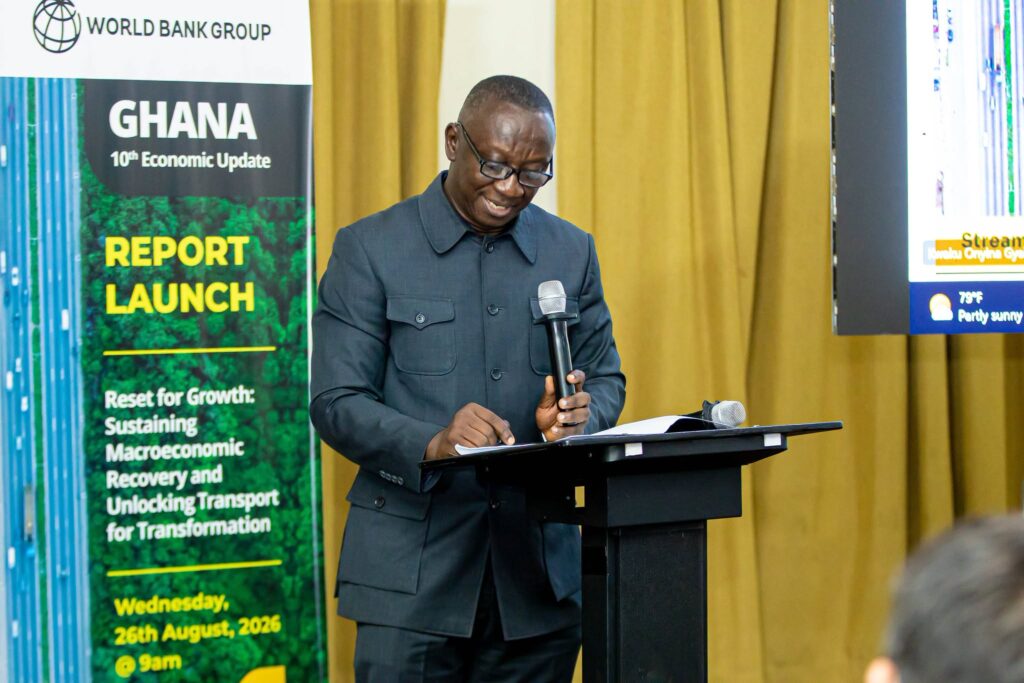
The World Bank’s decision to devote the report’s special focus to transport is therefore not accidental. Transport affects the cost structure facing firms, farmers and workers across the economy.
“Transport matters because labour market access is spatial,” the report notes. A farmer on a poor feeder road may accept a lower farm-gate price because traders must cover higher fuel, vehicle and spoilage costs. A small agro-processor may remain too small to hire because moving inputs and finished products is unreliable. An urban worker may reject a job if transport absorbs too much of the wage.
The Bank estimates, illustratively, that a 10-20 percent reduction in transport costs could raise farm-gate prices by 4-8 percent while decreasing consumer food prices by 5-12 percent. That is the link between infrastructure and household welfare: reduction in transaction costs can improve producer margins, lower consumer prices and expand the market in which firms can profitably operate.
The Recovery Becomes Real When Firms Hire and Incomes Improve
Ghana has already achieved some key successes. These benefits include lower inflation which protects purchasing power, a more stable currency also reduces uncertainty over imported inputs, and falling borrowing costs can improve the economics of investment.
However, these benefits are the initial steps in the transmission process. Firms must react by investing, expanding production and increasing the number of employees. For that to happen consistently, Ghana also needs reliable power, improved transport, access to finance, the availability of the relevant skills and a business environment that allows productive businesses to grow rather than stay small and informal.
The demographic pressure makes an urgent task. The World Bank estimates Ghana’s working-age population to expand by additional 4.8 million by 2035.
The real test of the recovery is therefore not whether GDP growth remains above 5 percent on paper. It is whether stable prices, lower financing costs and better infrastructure change the decisions made every day by farmers, traders, manufacturers and service firms.
If investment rises but employment does not, the recovery will remain statistically impressive but socially incomplete. If firms expand, productivity improves and household incomes become more secure, then macroeconomic stability will have done what ultimately matters: created room for people in the economy to participate in growth rather than merely observe it.
READ ALSO: GEPA Partners Central Expo ’26 As Exhibition Marks 5th Anniversary