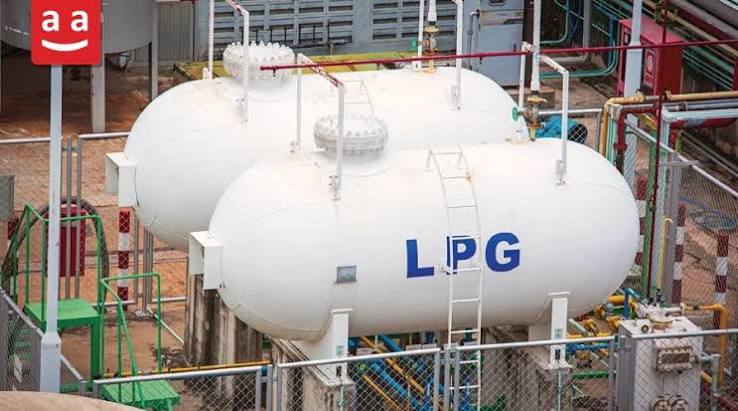
Ghana’s clean-cooking ambitions could face another affordability challenge as the Chamber of Petroleum Consumers (COPEC) projects a marginal increase in liquefied petroleum gas prices during the first pricing window of September 2026.
COPEC expects LPG to sell at approximately GH¢14.19 per kilogramme from September 1, with a possible range of GH¢13.48 to GH¢14.90 depending on market movements.
The projection comes as the international free-on-board price of LPG rises from $596 to $611 per metric tonne, representing a 2.64% increase.
The cedi, meanwhile, appreciated by approximately 2.39% against the US dollar over the assessment period, limiting but not completely eliminating the impact of the higher international LPG benchmark.
The development is significant because LPG is increasingly positioned within Ghana’s broader clean-cooking and energy-transition agenda, even as the country remains dependent on imported supply to satisfy a substantial portion of demand.
Import Exposure Keeps LPG Vulnerable
The latest projection highlights a structural feature of Ghana’s LPG market: domestic affordability remains closely connected to developments in international markets and the exchange rate.
Even when the local currency strengthens, an increase in the international price of LPG can still feed into domestic prices.
Conversely, a weaker cedi can amplify international price increases and expose consumers to even greater volatility.

COPEC’s latest assessment provides a clear illustration.
The cedi appreciated by 2.39%, but the international LPG benchmark increased by 2.64%, leaving a marginal upward pressure on the projected retail price.
The effect is smaller than the pressure recorded in petrol, whose FOB benchmark rose by 10%.
Nevertheless, LPG presents a different policy concern because its affordability is directly connected to the ability of households and businesses to adopt and continue using cleaner cooking fuels.
“The projected retail price of LPG is expected to increase marginally and sold at Ghc14.19/Kg.”
Duncan Amoah, Executive Secretary, COPEC
The concern extends beyond the immediate price at the filling station.
Where LPG becomes less affordable, households that have already shifted towards cleaner cooking can face pressure to reduce consumption or revert to alternative fuels.
Such shifts can weaken the effectiveness of clean-cooking interventions and create a policy contradiction: expanding access to LPG while allowing affordability pressures to undermine sustained use.
Affordability Remains Central To Energy Transition
Ghana’s energy transition is often discussed through the lenses of renewable electricity, electric mobility and emissions reduction.
Yet cooking energy remains an important component of the transition because millions of households and businesses depend on fuels for daily cooking.
The earlier rise in LPG imports examined in Ghana’s petroleum market therefore carries significance beyond import statistics.

Increasing imports can indicate stronger demand, but they also reveal exposure to international supply and pricing conditions.
A growing LPG market that remains heavily import-dependent can expand access while simultaneously increasing vulnerability to global price shocks.
That makes affordability a central component of energy policy.
If LPG is intended to play a larger role in Ghana’s clean-cooking strategy, policies must consider not only infrastructure and distribution but also the resilience of the supply chain and the ability of consumers to absorb price movements.
The latest COPEC projection suggests that even a relatively modest international price increase can place upward pressure on the domestic market.
Subsidy Offers Relief But Raises Policy Questions
COPEC has asked government to extend its subsidy intervention beyond August until global petroleum benchmarks return to normalcy.
The Chamber also expects oil marketing companies to maintain current ex-pump diesel prices to ease the burden on consumers.
“COPEC would like to appeal to the government to extend its subsidy intervention beyond the August deadline until global benchmarks return to normalcy.”
Duncan Amoah, Executive Secretary, COPEC
For LPG, however, the long-term policy question is whether repeated intervention can provide a durable solution to an underlying exposure to international markets.
Subsidies can protect consumers during periods of abnormal price volatility, but they also transfer part of the cost from consumers to the public finances.
If international prices remain elevated for an extended period, the fiscal burden can become increasingly difficult to sustain.
A more resilient LPG market would require attention to the entire value chain, including supply security, storage, transportation, distribution infrastructure and pricing transparency.
Domestic refining and processing capacity could also contribute to reducing exposure to external markets where economically and technically feasible, although LPG supply has its own specific production and import dynamics and cannot simply be treated as an extension of the petrol market.
Energy Security Must Include Cooking Fuel
The projected LPG increase reinforces a wider energy-security lesson for Ghana.
Energy security is not only about keeping electricity flowing or ensuring adequate petroleum stocks.
It also involves ensuring that households and productive sectors can access essential energy at prices that do not undermine economic welfare.

For households, cooking fuel is a basic energy requirement. For restaurants, food processors and other small businesses, LPG is also a production input.
An increase in LPG prices can therefore affect both household expenditure and operating costs for businesses that depend on the fuel.
COPEC’s projection should consequently be viewed within the wider debate about Ghana’s energy resilience.
The country’s exposure to international petroleum markets means that exchange-rate management, supply diversification and domestic energy infrastructure remain important determinants of consumer welfare.
The September LPG projection is only a marginal increase, but its significance lies in what it reveals about the structure of Ghana’s clean-cooking transition.
If LPG demand continues to grow while supply remains significantly exposed to international markets, affordability will remain a critical vulnerability.
The policy challenge is therefore not merely to make LPG available. It is to build a market in which households and businesses can reliably afford to keep using it, even when international energy markets become volatile.
READ ALSO: ADB Champions Safer Banking as GAB Fraud Awareness Campaign Climaxed