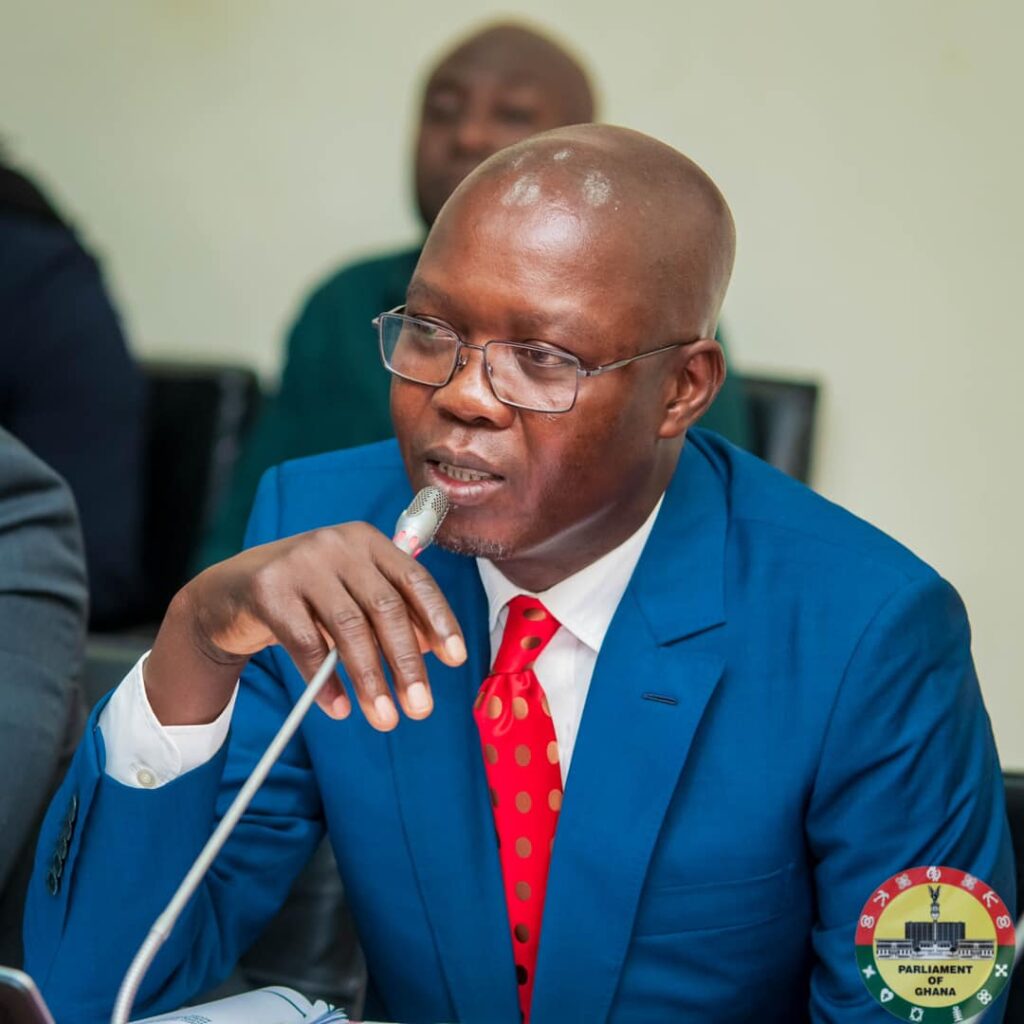
The Chairman of Parliament’s Appointments Committee, Benard Ahiafor, has rejected allegations that members of the committee received GH¢70,000 in connection with the vetting of government and Supreme Court nominees.
The First Deputy Speaker described the claim as strange, insisting that he was unaware of any payment allegedly made to members of the committee during the recent vetting exercise. Directing attention to the allegation, Honourable Ahiafor questioned its source and argued that the person directly accused of facilitating the payment should be contacted to clarify the matter.
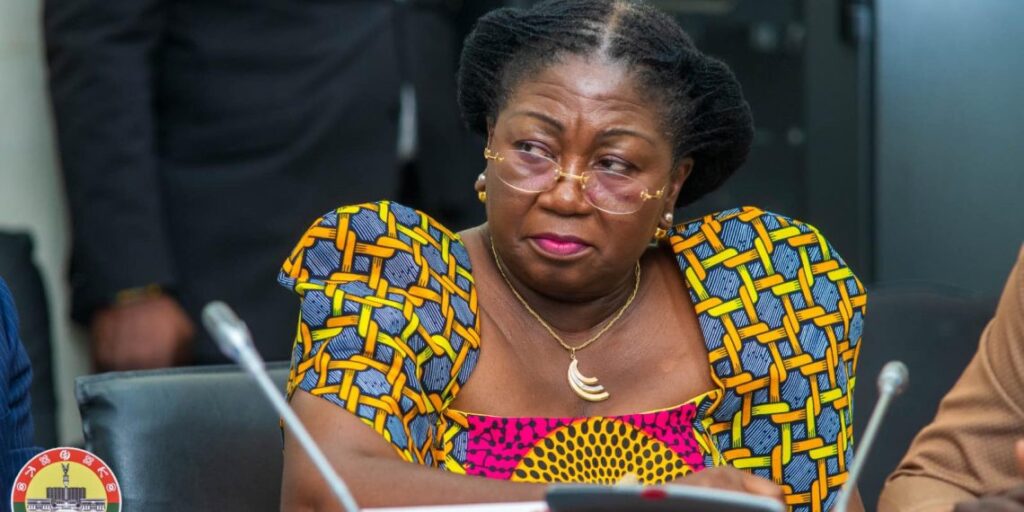
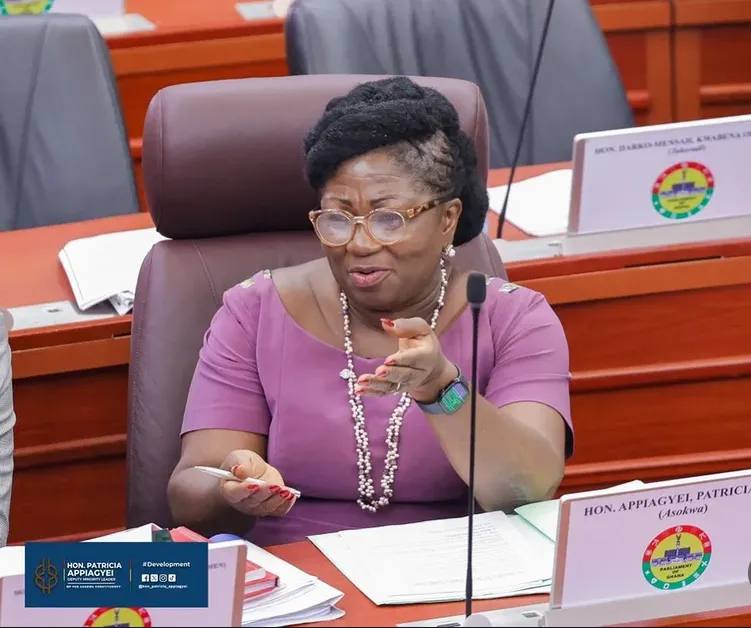
The claim surfaced through a purported memorandum attributed to Deputy Minority Leader Patricia Appiagyei, which alleged that GH¢70,000 was allocated as an advance in connection with the parliamentary vetting process. Honourable Ahiafor, however, stated that he has no knowledge of such an arrangement and challenged the nominees who appeared before the committee to indicate whether they had given money to him or any other committee member.
The Chairman of the Appointments Committee also issued a strong warning to nominees against giving money to individuals who claim they can influence the outcome of parliamentary vetting. He explained that such individuals could include committee members, other MPs, parliamentary staff or members of the public who present themselves as lobbyists.
According to the First Deputy Speaker, nominees who encounter demands for money should report the matter to the police instead of complying with such requests. He further placed on record that since assuming responsibility for the committee, neither he nor, to his knowledge, the committee had accepted even a bottle of water from nominees appearing before it.
“I have not taken even a pure water from any nominee that appears before us. So far as I am concerned, as the chairperson of the committee, I admonish all the nominees that nobody should come to them with issues relating to money.”
Bernard Ahiafor
The Chairman also noted that the members of the committee were available for scrutiny and urged anyone with evidence of payments to come forward with the information. Meanwhile, Honourable Ahiafor disclosed that he had attempted to contact the Majority Chief Whip, who was mentioned in the allegation as the person through whom the money allegedly passed.
He explained that his efforts to reach the Minority Chief Whip, Honourable Annoh Dompreh has been unsuccessful after he learnt that the legislator was outside the jurisdiction. Analysing the conflicting accounts surrounding the matter, the First Deputy Speaker noted that reports have emerged suggesting that the purported memorandum itself was fake. Consequently, he declined to draw conclusions from the document without establishing its authenticity and the identity of its author.
First Deputy Speaker Questions Source Of Disputed GH¢70,000 Allegation
The Chairman of Parliament’s Appointments Committee, Ben Ahiafor also questioned the source of allegations that GH¢70,000 was received in connection with the committee’s recent vetting activities.
The First Deputy Speaker argued that conflicting denials from both sides of the political divide made it necessary to establish who authored the document containing the allegation before Parliament could determine how to proceed. Honourable Ahiafor said the situation had become more complicated after a subsequent social media publication described the purported memorandum as fake.
On the issue of parliamentary allowances, the Chairman clarified that committee members are entitled to allowances when committee sittings extend beyond prescribed working hours. He explained that such payments are processed administratively by the Clerk of Parliament through the Finance Committee before being distributed to eligible members.
However, Honourable Ahiafor disclosed that the Appointments Committee is yet received its allowances for the relevant sittings. “The allowances are processed by the Clerk through the Finance Committee, and when it is ready, it is then distributed,” he explained.
The First Deputy Speaker was also careful not to make a blanket declaration on behalf of every committee member regarding whether any individual received money outside the recognised allowance system. He stated that he could only account for himself and indicate that he was not aware of any member receiving money in relation to the allegations under discussion.
Turning to the disputed memorandum, Honourable Ahiafor argued that the responsibility for establishing the truth could not rest solely on individuals denying the allegation. As a lawyer, he invoked the principle that a person who makes an assertion bears the burden of proving it, particularly where both the Minority and Majority sides have rejected the claim.
The Chairman therefore directed attention to the need to identify and authenticate the person behind the purported document before relying on its contents. He advised investigators seeking clarity to establish whether the person to whom the memorandum had been attributed actually authored it.
According to Honourable Ahiafor, confirmation from the purported author would provide a more reliable basis for assessing the allegations and determining whether further action was necessary. He also noted that the Majority Chief Whip has denied the allegation, while the Minority side has similarly rejected the claims surrounding the alleged payment. The uncertainty has placed greater emphasis on verification as questions continue to be raised about the integrity of Parliament’s vetting procedures.
READ ALSO: OSP Opens Probe Into Alleged GH¢70,000 Vetting Payment