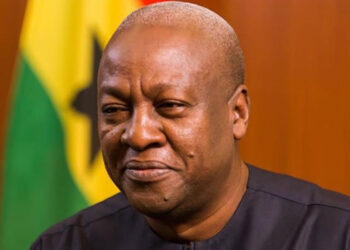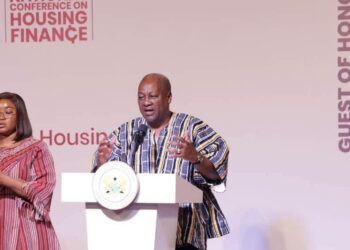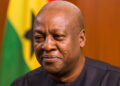
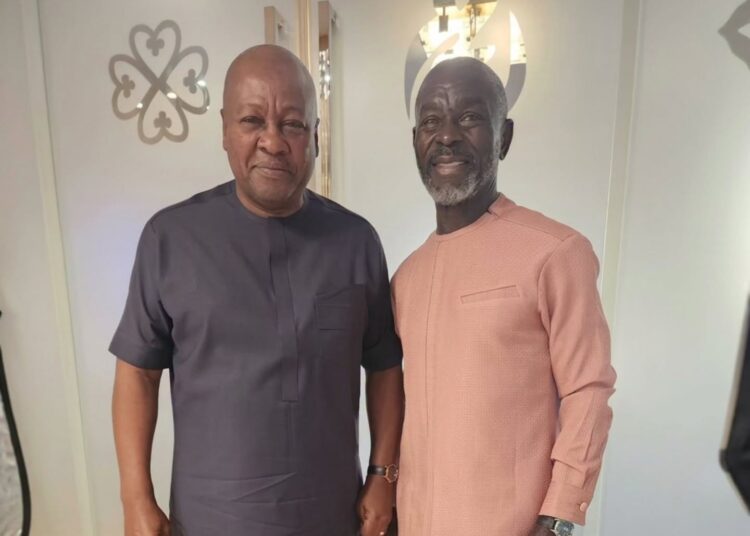
Captain (Rtd.) Prince Kofi Amoabeng (Rtd), founder of the defunct UT Bank and principal owner of UT Holdings Limited, met President John Dramani Mahama at the President’s private residence on Tuesday, September 8, for discussions he described as matters of national interest. He left the meeting with a public verdict on the administration’s performance and a pledge of support for its development agenda.
Mr Amoabeng disclosed the visit in a Facebook post shortly afterwards, writing that “So far, I believe he is doing well” and adding that he and those around him were glad to support the President in every way they could as he works towards building a better Ghana.
He tied that support to what he called the right mindset, responsible leadership and a shared commitment to progress, themes that have run through his public commentary for years.
Why the assessment carries weight
Mr Amoabeng is not a habitual praise-singer of political figures. The retired military officer built Unique Trust Financial Services from a three-person operation into UT Holdings, with subsidiaries in Ghana, elsewhere in Africa and in Europe, and has spent much of his public life since UT Bank’s 2017 collapse arguing about institutions rather than parties.
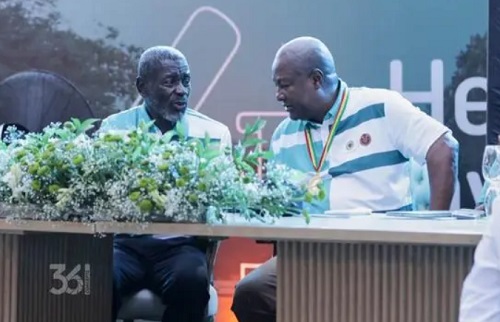
He has been consistently sparing with commendation for politicians of any colour, which is precisely what makes a favourable word from him worth registering. His shift towards President Mahama predates the current term.
Speaking in a media interview in March 2024, Amoabeng told Kofi Adoma that despite a long association with the New Patriotic Party, seven years of observing governance since 2016 had convinced him a change was needed, and he said, “I have to go fully behind NDC and Mahama” to see what the former President could deliver in a second term.
He framed the previous choice as a wrong experiment and the coming one as a correction.
The friendship behind the endorsement
Mr Amoabeng returned to the theme in December 2025, when he mentioned that President Mahama’s humility is a rare quality in Ghanaian public life.
He traced the relationship back to President Mahama’s years as Vice President, describing a friendship that began through the First Lady, Lordina Mahama, and survived the demanding stretch between 2009 and 2010 when UT was completing its transition into a fully licensed bank.
What he emphasised was character rather than policy, a President he found humane, approachable and comfortable with people across social lines.
The warning he has never withdrawn
That admiration has always travelled with a caution. In a subsequent media interview in January 2026, Mr Amoabeng argued that President Mahama’s easygoing temperament could become a liability if it is not paired with firm sanction.
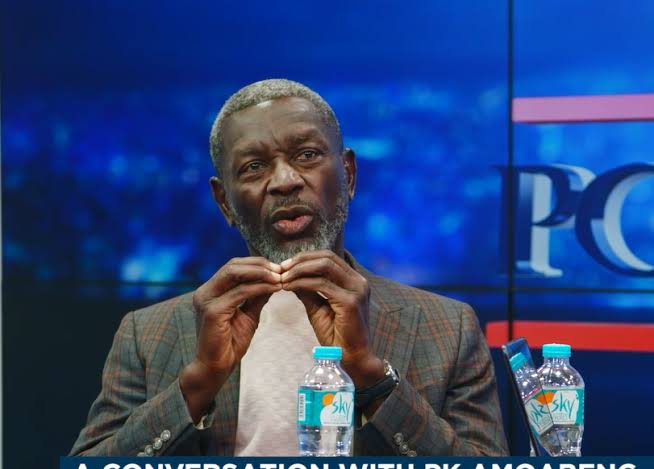
His concern, as he put it, is that the President “loves to see people happy. He wants to please people,” a disposition he considers incompatible with the enforcement that turns policy into results.
Pressed on whether that amounted to a problem, he did not soften it. He said a leader must be prepared to set a direction and impose consequences on those who fail to follow it, including dismissal where necessary.
He drew comparisons with Singapore, Rwanda, Japan and China, arguing that leaders in those systems combine genuine care for citizens with strict accountability, and that tough enforcement reflects a functioning system rather than personal hostility.
Notably, he offered that critique while acknowledging measurable gains under the administration, pointing to movement in inflation and in the cedi’s performance against the dollar. The pattern is consistent. Mr Amoabeng praises the man, credits the numbers, and questions the enforcement.
Unfinished business in the financial sector
One strand of his interest in the administration remains unresolved.
Mr Amoabeng has previously indicated that he is watching for policy direction on the National Democratic Congress’s commitment to review licences revoked during the banking sector clean-up, UT Bank’s among them, while stressing that any decision on the bank’s future would sit with shareholders rather than with him, since he has no intention of returning as its head.
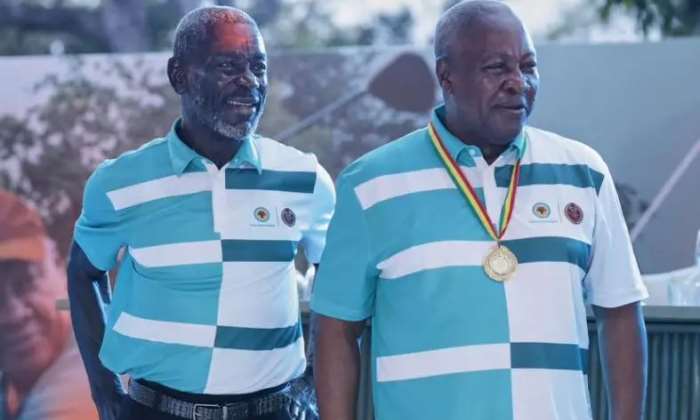
Tuesday’s meeting produced no announced outcomes, and neither party has published an agenda. What it delivers instead is a marker. A businessman who broke with his former political home to back this presidency, and who has publicly identified its central weakness as an unwillingness to punish failure, has now sat with the President and come away satisfied enough to say so in public.
Whether the courage he keeps asking for follows is the question his own record leaves hanging.
READ ALSO: GoldBoard Targets Higher Gold Volumes And Strategic Foreign Exchange