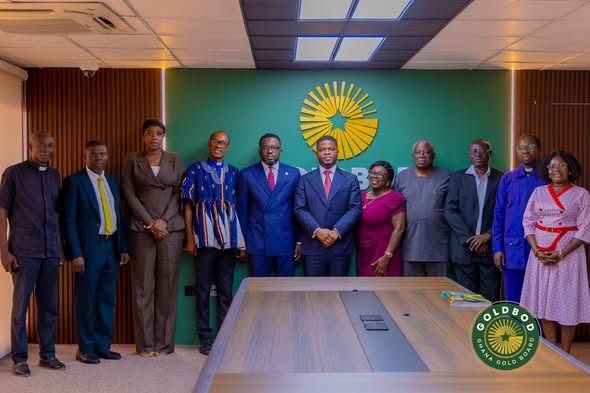
Sammy Gyamfi, the Chief Executive Officer of the Ghana Gold Board (GoldBoard), has expressed immense confidence in the institution’s capacity to record high gold purchasing volumes, secure critical foreign exchange, and deliver strong financial returns by the end of the year.
Speaking on the institution’s strategic direction, he highlighted that despite prevailing global economic friction and severe market price volatility, the state-backed gold buyer remains positioned to meet its strategic mandates.
The primary goal focuses on consolidating national gold purchases, building robust foreign exchange reserves, and driving state revenues directly from precious minerals trading.
Elaborating on these corporate targets, the GoldBoard CEO explained that navigating the complex dynamics of the extractive industry requires absolute resilience and a dedicated focus on key macroeconomic objectives.
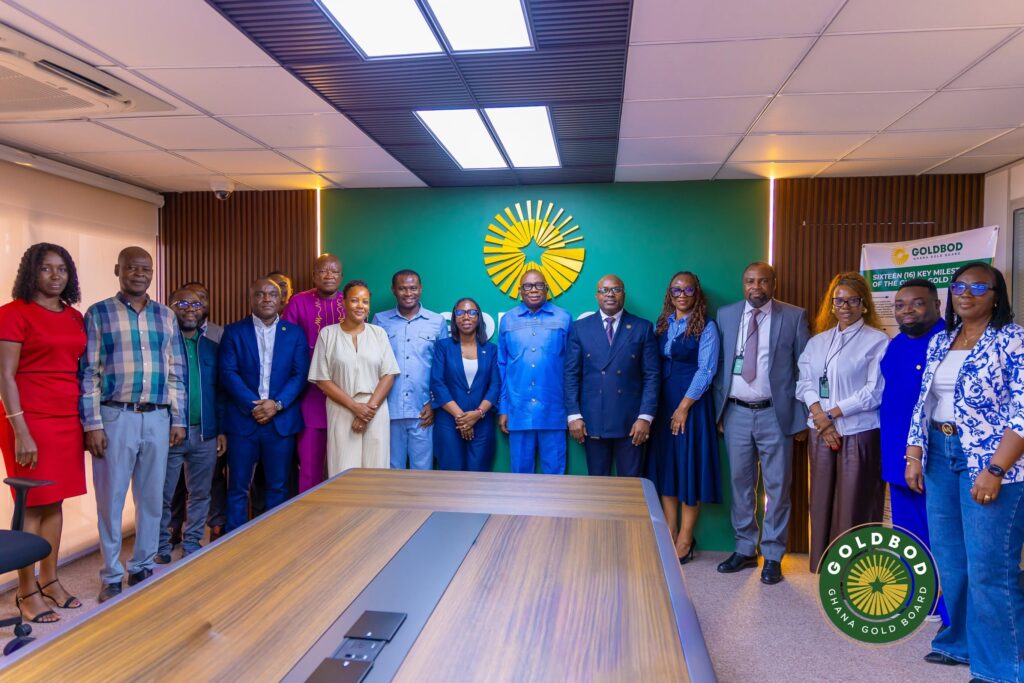
Political distractions and public misgivings often surface when major reforms are introduced in the natural resource sector. However, non-partisan, neutral, and faith-based institutions such as the Institute of Economic Affairs (IEA) and the Christian Council play a pivotal role in maintaining public trust.
By offering independent evaluations and authoritative commentary, these organizations help filter out political noise and validate genuine state-led progress in natural resource governance.
“This year, despite the challenges with regards to volatility and world market price, we are very optimistic that our results will be very stellar in terms of the quantity of gold we would have bought by the end of the year, the foreign exchange we would have brought in, and the profits we would have generated from our activities. Sometimes, you think you kind of get distracted when you’re focused on very important things for Ghana, and you have a lot of, you know, mischief in the introduction.”
Sammy Gyamfi, the Chief Executive Officer of the Ghana Gold Board (GoldBoa
Macroeconomic Stabilization And Forex Supply
The strategic intervention by GoldBoard to scale up domestic gold purchases addresses chronic foreign exchange liquidity pressures and local currency depreciation.
Historically, an unaccounted percentage of artisanal and small-scale gold production was lost to illicit cross-border smuggling networks, depriving the national treasury of vital hard currency. By offering competitive market pricing and establishing structured purchasing channels, GoldBoard aggregates local yield directly into foreign currency reserves.
Through direct gold monetization, the board supplies dollars to commercial banks and the central bank, mitigating foreign exchange volatility and stabilizing import costs across key industrial sectors. This framework ensures that local precious mineral yields directly fuel national macroeconomic resilience while reducing exposure to sudden external trade shocks.
Formalization Of Artisanal Mining Chains
Formalizing artisanal and small-scale gold trade forms a core technical driver behind GoldBoard’s volume expansion strategy.
Small-scale mining accounts for a substantial fraction of national output, but structural fragmentation traditionally weakened traceably managed yields.
GoldBoard enforces strict licensing frameworks for gold buyers, aggregators, refiners, and smelters while partnering directly with local mining communities.
By deploying state-of-the-art assay facilities, the board guarantees precise purity valuations for local producers and encourages formal trade routes.
Furthermore, aligning local trade protocols with international anti-money laundering standards significantly reduces illegal cross-border leakage, while mandatory domestic refining shifts operations from raw dore exports toward LBMA-standard bullion production.
Institutional Oversight And Public Trust
Maintaining transparency and civic alignment remains essential for sustaining GoldBoard’s operational mandate in a highly competitive extractive ecosystem.
Independent bodies like the Christian Council and the IEA provide critical checks and balances against politicization in natural resource management, creating a stable atmosphere for long-term investments.

“But that is the nature of the political terrain, so we understand that. And thank God for organizations like the IEA, the Christian Council, and all that, because you are neutral voice. When you speak, your voice carries weight.”
Sammy Gyamfi, the Chief Executive Officer of the Ghana Gold Board (GoldBoard)
Collaborative engagements with civic and religious leaders reassure local mining communities that natural resource proceeds directly support broader economic growth, environmental land reclamation, and water body restoration initiatives.
Through rigorous oversight and community-focused policy execution, GoldBoard continues to bridge the gap between commercial mining success and sustainable national development.
READ ALSO: IMANI Engagement Exposes Seven Structural Cracks in Ghana’s Social Protection System