Stanbic Bank Ghana has moved to address one of the less visible barriers to Ghana’s transition to cleaner energy: the cost of financing the technologies needed to make that transition possible.
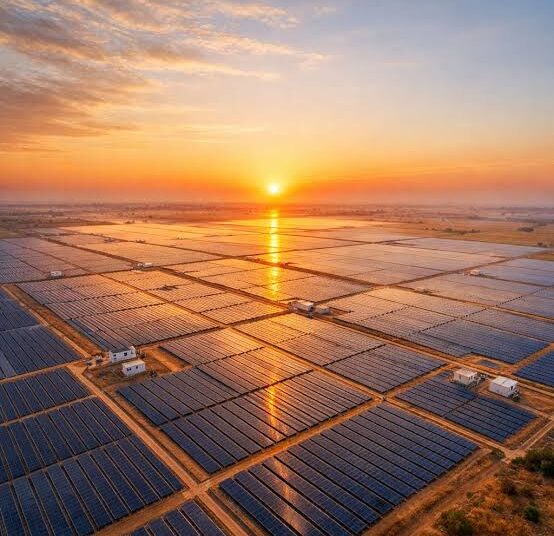
Through its newly launched “Be Powered” campaign, the bank is combining renewable-energy and electric-vehicle financing with an awareness drive aimed at encouraging households, businesses and institutions to adopt solar systems and electric mobility solutions.
The initiative places finance at the centre of Ghana’s energy transition, recognising that interest in cleaner technologies does not automatically translate into adoption when the upfront cost remains beyond the reach of many consumers and businesses.
At the launch, Head of Business and Commercial Banking, Dinah Kaleo-Bioh, said the bank viewed sustainable growth as inseparable from Africa’s wider development needs.
“At Stanbic Bank, our purpose is clear: Africa is our home, and we drive her growth. We believe that Africa’s growth must be powered by solutions that are sustainable, inclusive, and capable of creating long-term value.”
She said the bank’s Solar and EV Finance Solution was intended to provide practical support for individuals and businesses seeking to participate in Ghana’s shift towards cleaner energy and sustainable mobility.
Financing Becomes A Critical Energy Transition Issue
For Ghana, the significance of the initiative extends beyond the launch of another financial product.
Solar systems and electric vehicles can require substantial upfront investment, even where their longer-term operating economics may be attractive.
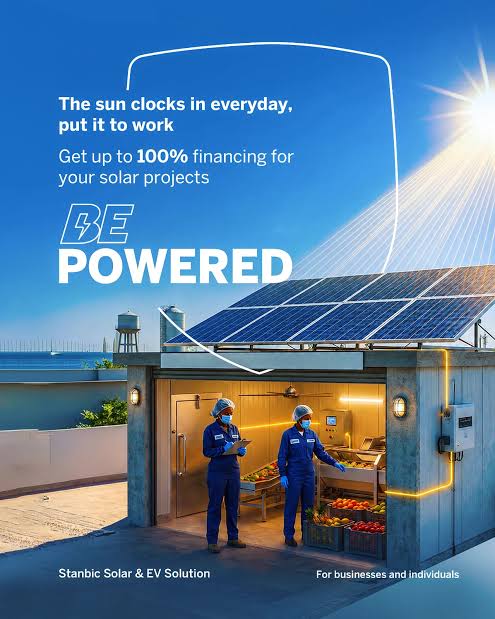
This creates a gap between the economic case for adopting clean technologies and the ability of consumers or businesses to actually pay for them.
Stanbic is seeking to bridge that gap by making financing part of the clean-energy proposition.
The bank said the new solution was developed in response to a continuing financing constraint facing households and businesses interested in renewable energy and sustainable transport.
That challenge matters because Ghana’s energy transition cannot depend solely on the availability of technology. It also requires capital that allows consumers to acquire, install and maintain that technology.
For businesses in particular, the decision to invest in solar is not simply an environmental calculation. It can influence operating costs, energy resilience and the ability to manage exposure to changing electricity costs.
The same principle applies to electric mobility. The financial decision involves not only the purchase price of an EV but also the wider economics of fuel consumption, maintenance and the infrastructure required to operate the vehicle.
Stanbic’s intervention therefore places commercial finance within the broader energy conversation.
Rather than treating sustainability as an issue confined to environmental policy, the campaign frames it as an investment and business decision.
‘Be Powered’ Seeks To Turn Interest Into Adoption
The campaign’s second component is aimed at the behavioural side of the transition.
Head of Brand and Marketing, Chidinma Braye-Yankee, described “Be Powered” as an effort to move sustainability from awareness to practical action.
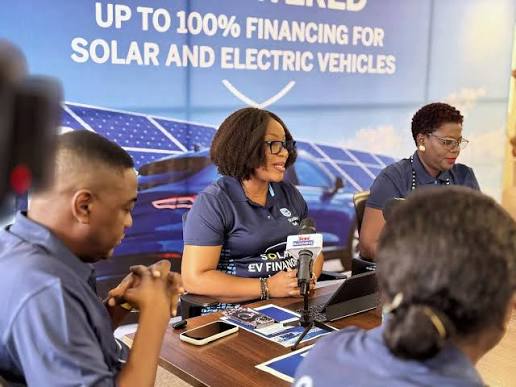
“Be Powered is an agenda that seeks to inspire awareness, adoption and action. We recognise that while interest in sustainability continues to grow, many people still view renewable energy as complex or inaccessible.”
Head of Brand and Marketing, Chidinma Braye-Yankee
The distinction is important because awareness alone does not necessarily produce investment.
Consumers may understand the benefits of solar energy or electric vehicles but remain hesitant because of cost, unfamiliarity with the technology or uncertainty about whether the investment will deliver value over time.
Stanbic said its campaign was designed to address that gap by educating customers while also providing a financing mechanism through which adoption could become more attainable.
“Be Powered is about empowering individuals and businesses to embrace the future with confidence. It is about powering homes, powering businesses, powering innovation and ultimately powering growth”.
Ms Braye-Yankee
The approach consequently links financial access with a broader attempt to normalise clean-energy technologies as practical investments rather than specialised products for a limited market.
Clean Energy Finance Could Strengthen Business Resilience
The commercial dimension may ultimately prove to be one of the strongest arguments for wider adoption.
For businesses, renewable energy can provide an alternative source of electricity and potentially reduce exposure to energy costs over the life of an installation.
Electric mobility, meanwhile, can alter the cost structure of vehicle ownership by reducing dependence on conventional transport fuels and potentially lowering maintenance requirements.
This does not mean that every solar or EV investment will automatically produce savings. The economics depend on the cost of the equipment, financing terms, usage patterns, technology performance and the wider operating environment.
That is why access to appropriate financing is particularly significant.
A financing product that enables a business to spread the cost of an energy investment over time can change the decision from one based entirely on immediate affordability to one based on longer-term cash flow and operating benefits.
Stanbic’s strategy therefore reflects a broader shift in the role financial institutions can play in Ghana’s energy sector.
Banks do not generate electricity or manufacture electric vehicles, but they can influence how quickly households and companies gain access to the technologies required to change the way energy is consumed.
Sustainable Mobility Adds A New Dimension
The inclusion of electric vehicles also broadens the campaign beyond conventional renewable-energy financing.
Ghana’s energy transition is not limited to how electricity is generated. It increasingly involves how energy is consumed across transport, industry, commercial activity and households.
Transport is particularly significant because shifting from internal-combustion vehicles to electric alternatives changes the relationship between mobility and the electricity system.
As electric vehicles become more widely adopted, demand for charging infrastructure and reliable electricity will become increasingly important.
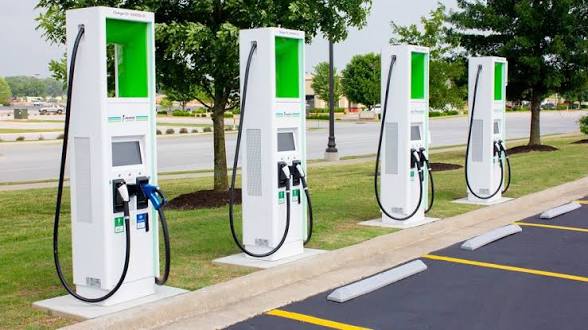
That means financing EV purchases is only one part of the equation; the broader ecosystem required to support electric mobility must develop alongside demand.
Stanbic’s decision to combine EV and solar financing consequently places two sides of the transition within one financial proposition: cleaner electricity supply and cleaner energy consumption.
The bank said the solution was intended to support individuals, businesses and institutions seeking to invest in both areas.
Finance Could Help Move Ghana Beyond Pilot-Stage Adoption
The wider significance of “Be Powered” will ultimately depend on whether financing can translate into sustained investment rather than isolated purchases.
For Ghana, that distinction is crucial.
A clean-energy transition built around occasional projects will have limited impact. Greater value comes when solar systems become a normal component of business investment and electric mobility becomes commercially viable for a broader section of the market.
That requires consumers to see clean technologies not simply as environmentally responsible choices, but as assets capable of delivering economic value.
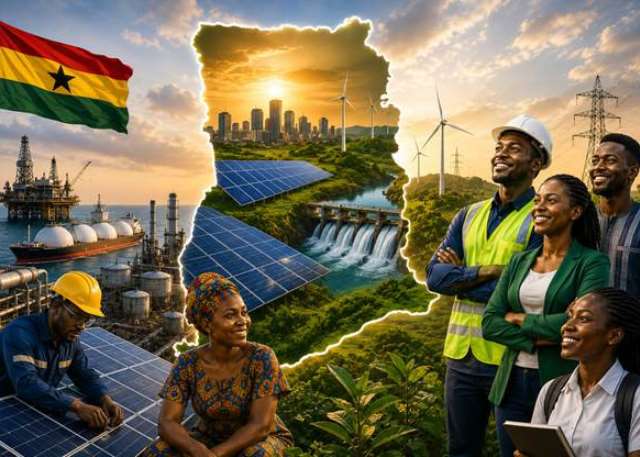
Stanbic is positioning its campaign around precisely that argument.
As Ms Kaleo-Bioh put it:
“We believe that Africa’s growth must be powered by solutions that are sustainable, inclusive, and capable of creating long-term value.”
The statement captures the central challenge facing Ghana’s energy transition. The country does not only need cleaner technologies; it needs the financial mechanisms, commercial incentives and consumer confidence capable of moving those technologies from interest to widespread use.
“Be Powered” therefore represents more than a sustainability campaign. Its significance lies in testing whether financial innovation can help close one of the practical gaps between Ghana’s clean-energy ambitions and the investments required to achieve them.
READ ALSO: BoG Sounds Alarm Over ‘Double-Your-Money’ Investment Scams