Ghana’s push towards a cleaner energy system could create new fiscal pressures if the country relies too heavily on borrowing to finance the transition, stakeholders have cautioned, calling instead for greater use of grants, private capital and financing structures that limit long-term debt exposure.
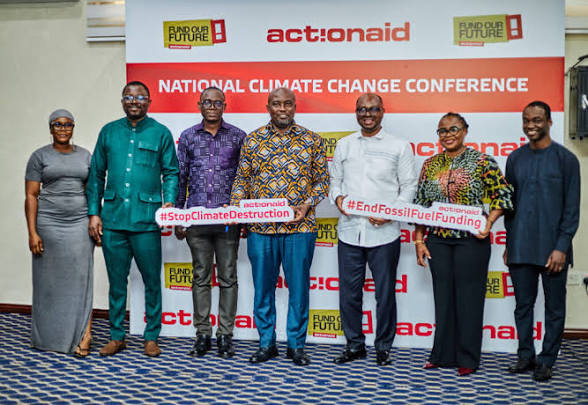
The concern emerged at a national policy dialogue on Ghana’s renewable energy transition, where policymakers, civil society and energy-sector experts examined how the country can expand clean energy while protecting public finances and ensuring that the benefits of the transition reach households, workers and businesses.
The discussion comes as Ghana seeks to significantly expand renewable generation and develop a broader pathway towards net-zero emissions, at a time when the country’s fiscal position remains an important consideration in major infrastructure decisions.
Financing Model Matters
John Nkaw, Country Director of ActionAid Ghana, argued that the financing structure behind the transition could be as important as the projects themselves.
He warned against responding to climate-related vulnerabilities by creating another financial vulnerability through excessive borrowing.
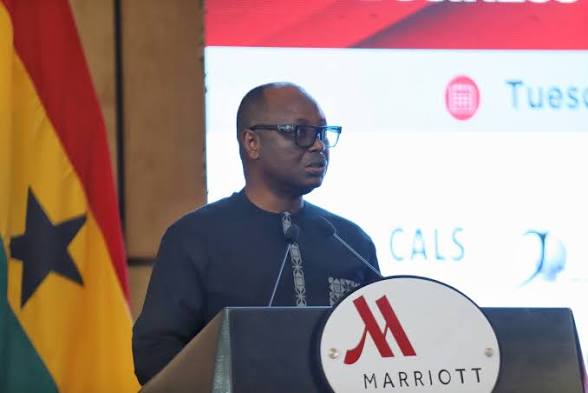
“Ghana cannot afford to respond to the climate crisis by creating another crisis through unsustainable borrowing.”
John Nkaw, Country Director of ActionAid Ghana
His argument places the financing question at the centre of Ghana’s transition strategy. Renewable energy projects require substantial upfront capital, while transmission, storage, mini-grids and other supporting infrastructure add further costs.
For Ghana, the challenge is therefore not simply mobilising enough money, but determining which forms of capital can finance the transition without placing disproportionate repayment obligations on the state.
ActionAid’s 2026 report, cited at the dialogue, links debt pressures in climate-vulnerable countries to their ability to finance climate action and essential public services. The report recommends greater use of grant-based climate finance and reforms to the international debt architecture.
Transition Linked To Economic Development
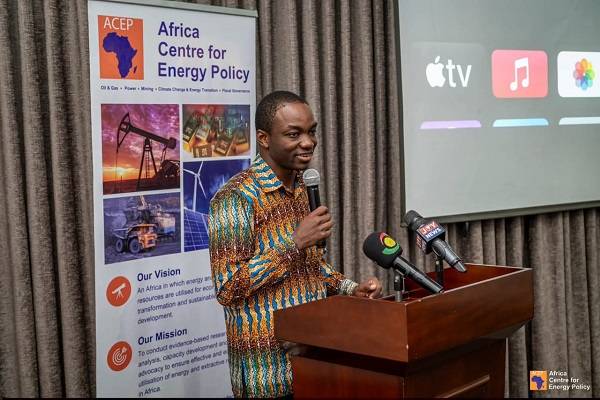
Charles Gyamfi Ofori, Policy Lead for Climate Change and Energy Transition at the Africa Centre for Energy Policy (ACEP), argued that Ghana should avoid treating the energy transition as an issue confined to the electricity sector.
The transition, he said, has implications for industrialisation, employment, trade, finance and social development.
That approach matters because a renewable-energy expansion that relies predominantly on imported equipment could leave Ghana spending significant amounts of capital without building a substantial domestic industrial base.
Mr Ofori therefore called for stronger domestic value chains around the transition, including opportunities for Ghanaian businesses to participate in manufacturing, services and other activities associated with clean-energy deployment.
“Energy transition seeks to deliver three outcomes simultaneously: climate sustainability, energy security and economic prosperity,”
Charles Gyamfi Ofori, Policy Lead for Climate Change and Energy Transition at ACEP
The economic dimension is particularly important for Ghana because the country is seeking to increase renewable generation while also addressing persistent challenges around energy costs, infrastructure and energy-sector finances.
A transition that lowers emissions but increases import dependence or creates unsustainable fiscal obligations would leave some of those vulnerabilities unresolved.
Government Puts Transition Cost Above US$500bn
Seth Mahu, Director of Renewable Energy and Green Transition at the Ministry of Energy and Green Transition, disclosed that Ghana could require more than US$500 billion to reach net-zero emissions by 2070.
The scale of that requirement makes it difficult for government to rely on public expenditure alone.
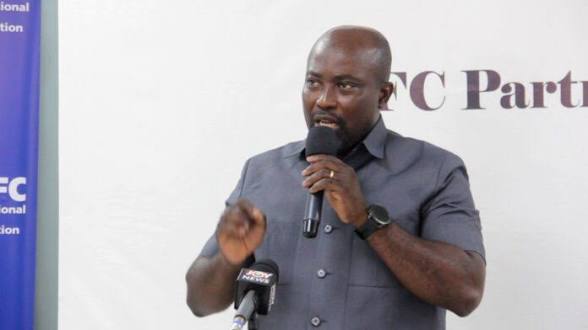
Mr Mahu said the government was working with financial institutions, development finance institutions and multilateral development banks to mobilise the capital needed for the transition.
The Renewable Energy Fund is also being used to de-risk investments and improve the attractiveness of renewable-energy projects.
Ghana’s existing energy-transition framework similarly envisages a combination of public and private financing, including public-private partnerships and other mechanisms to support investments in renewable energy, mini-grids, efficiency and related infrastructure.
This financing approach could become increasingly important as the country moves from policy commitments to larger-scale projects.
Renewable Capacity Set For Expansion
Ghana currently has about 342.5 megawatts of installed renewable-energy capacity across utility-scale, rooftop and standalone systems, representing roughly 6% of the national generation mix, according to Mr Mahu.
Government is targeting more than 1,400MW of installed renewable capacity by 2030.
The expansion is expected to extend beyond large power projects. More than 5,000 solar home systems are also targeted for remote communities, while mini-grid deployment is being expanded in areas where extending the national grid may not be the most practical option.
Eight renewable-energy mini-grids have already been commissioned, serving more than 15,000 people, while construction has begun on another 35 systems expected to connect more than 70,000 people in island and lakeside communities.
The figures point to a transition that is increasingly being framed not only around generation capacity but also around access and decentralised energy.
Financing Must Reach Productive Investment
The debate over debt also raises a broader question about how Ghana prioritises its limited fiscal space.
A transition programme that channels scarce public funds into projects without adequate preparation, revenue models or private-sector participation could increase the financial burden without delivering the expected economic returns.

That makes project preparation particularly important.
Ghana’s existing transition framework identifies private and public finance mobilisation, public-private partnerships, domestic financing and innovative procurement as components of its financing strategy.
Recent discussions among finance and industry stakeholders have similarly pointed to the need for conditions that make projects bankable before attempting to mobilise capital at scale.
For Ghana, this means the transition financing conversation increasingly has to move beyond the question of how much money is needed to what type of money should finance each project.
Grants may be more appropriate for social and climate-resilience projects that do not generate sufficient commercial returns.
Concessional finance can help reduce the cost of capital for strategic infrastructure, while private investment can be mobilised for commercially viable projects.
Such differentiation could reduce the pressure to finance every component of the transition through sovereign borrowing.
Energy Security Remains Central
The financing debate is also inseparable from Ghana’s energy-security concerns.
The country is seeking to increase renewable energy while maintaining reliable electricity supply and managing the role of natural gas during the transition.
The Energy Commission has previously described energy efficiency, renewables and other cleaner technologies as important components of Ghana’s transition pathway, while recognising natural gas as a strategic transitional fuel.
That balancing act means Ghana cannot simply pursue the cheapest available renewable projects in isolation.
Investment must also consider transmission capacity, storage, system flexibility and the ability to integrate intermittent renewable generation.
Consequently, the financing requirement extends beyond solar panels and other generation assets to the infrastructure needed to make those assets useful to the national grid.
Just Transition Requires Wider Participation
Stakeholders at the dialogue also emphasised that financing decisions should consider who benefits from the transition.
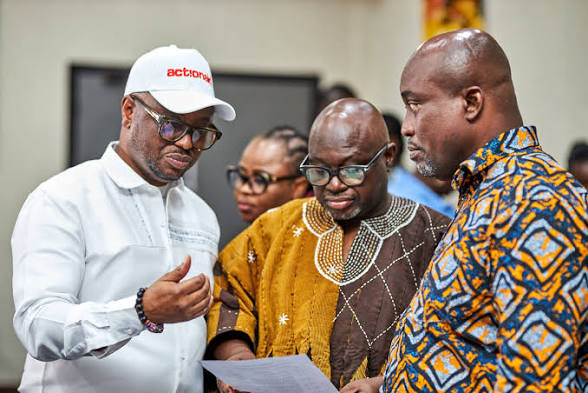
Mr Nkaw said workers, women, young people and communities should have a role in decision-making, while cleaner energy should improve affordability, access and livelihoods.
This introduces a social dimension to the financing debate.
If capital is concentrated in large projects while households and smaller businesses face higher costs or remain excluded from modern energy services, the transition could deepen existing inequalities.
For Ghana, decentralised solar, mini-grids and productive-use energy systems could therefore complement utility-scale renewable investments by extending the benefits of the transition beyond major urban and industrial centres.
The government’s planned expansion of mini-grids and solar home systems provides an example of how transition spending can also be directed towards energy access.
Ultimately, Ghana’s energy transition faces a financing test as much as a technological one. The country needs enough capital to expand clean energy, modernise infrastructure and strengthen resilience, but the funding model must not undermine the fiscal stability the transition is intended to support.
The emerging consensus from the policy dialogue is therefore not against borrowing itself, but against treating debt as the default solution for every transition investment.
For Ghana, the more sustainable path will depend on matching each project with financing that reflects its commercial returns, public value and ability to repay.
READ ALSO: Trust Bank Delists From GSE After GH¢4.2m Settlement