The Ministry of Food and Agriculture has introduced an initiative under the Feed Ghana Programme to provide irrigation systems for vegetable farmers and improve access to fertilisers, in a move aimed at increasing food production, strengthening farm incomes and improving Ghana’s food security.
The initiative forms part of government’s broader effort to support farmers with the inputs and infrastructure required to produce throughout the year. By combining irrigation with fertiliser supply, the programme is expected to help vegetable farmers reduce their dependence on rainfall, increase yields and improve the consistency of food supplies to markets.
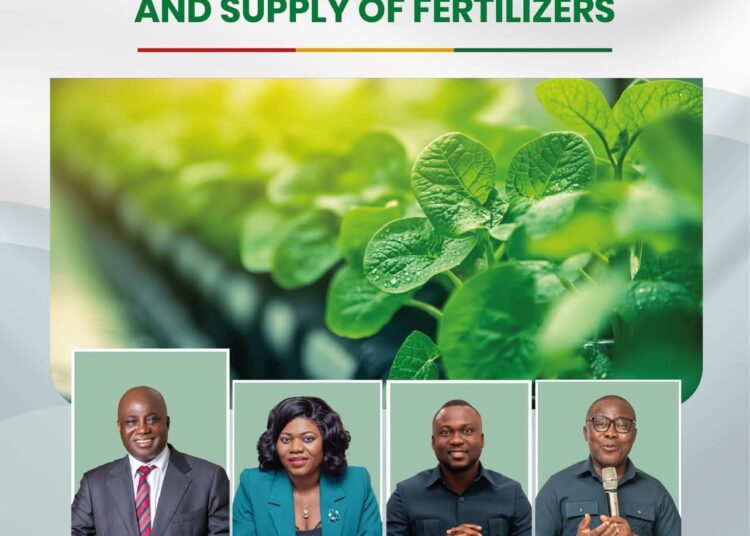
The initiative is being led by the Ministry of Food and Agriculture with the participation of Hon. Eric Opoku, Hon. Charity Gardiner and Hon. Haruna BA Mohammed.
Their involvement highlights the government’s focus on coordinated agricultural support and the need to connect national food production targets with practical assistance for farmers at the community level.
The Feed Ghana Programme is designed to promote sustainable farming, increase domestic food production and improve the livelihoods of farmers. Its focus on irrigation and fertiliser is particularly significant for vegetable producers, who require reliable water and adequate soil nutrients to maintain production and meet market demand.
Vegetable farming is an important source of income for thousands of farmers across Ghana. Crops such as tomatoes, onions, pepper, cabbage, okra and leafy vegetables supply households, restaurants, food processors and traders.
However, production is often affected by irregular rainfall, high input costs, limited access to irrigation and declining soil fertility.
Addressing a Major Constraint Facing Farmers
The provision of irrigation systems is expected to address one of the major constraints facing farmers. With access to dependable water, vegetable producers can cultivate beyond the main rainy season and plan their production more effectively.
This can support multiple production cycles, improve crop quality and reduce the risk of losses caused by prolonged dry spells.
For farmers, irrigation also creates opportunities to respond more efficiently to market demand. Instead of relying entirely on seasonal rainfall, producers can schedule planting and harvesting according to prevailing prices and the needs of buyers.
This could help improve supply to urban markets and reduce periods of scarcity that often lead to sharp increases in vegetable prices.
Hon. Eric Opoku said the initiative reflects government’s commitment to providing farmers with the support needed to expand production and build more resilient agricultural businesses.
“The Feed Ghana Programme is about giving our farmers the tools, inputs and support they need to produce more, earn better incomes and contribute to national food security.”
Minister for Food and Agriculture, Hon. Eric Opoku
The fertiliser component of the initiative is equally important. Adequate fertiliser application helps replenish soil nutrients, supports plant growth and can improve yields when used correctly.
For smallholder farmers, the cost of fertiliser remains a major production challenge, particularly at a time when prices of agricultural inputs and other farm services continue to place pressure on operating budgets.
Improved access to fertiliser could enable farmers to cultivate larger areas and achieve better returns from their land. It could also support the production of vegetables that meet quality requirements for formal markets, supermarkets, institutional buyers and agro-processors.
Without proper use, fertiliser can be wasted, production costs can rise and environmental risks may increase.
The Irrigation Creates Opportunities for Private Sector Participation
Suppliers of irrigation equipment, solar-powered pumps, water storage systems, greenhouse technologies and farm machinery could benefit from increased demand as the programme expands.
Financial institutions may also find opportunities to develop credit products tailored to farmers investing in irrigation and improved production systems.
The programme could further stimulate local agribusinesses involved in input distribution, transport, aggregation, packaging and marketing. Increased vegetable production would require stronger links between farmers and buyers to ensure that produce reaches markets quickly and in good condition.
Hon. Charity Gardiner the Ahafo Regional Minister, said the initiative would support a more sustainable approach to farming by helping producers manage water resources and improve productivity.
“We take another step towards strengthen Agriculture and supporting hardworking vegetable farmers in Ahafo. I am delighted to join the Minister of Food and Agriculture, Hon. Eric Opoku.’’
Ahafo Regional Minister, Hon. Charity Gardiner

The success of the initiative will depend on effective implementation, transparent distribution and regular monitoring. Farmers must receive irrigation equipment and fertiliser at the right time, particularly before planting periods.
Maintenance arrangements will also be necessary to ensure that irrigation systems remain functional after installation.
Farmer organisations and local authorities are expected to play an important role in identifying beneficiaries, coordinating water access and supporting the management of shared irrigation facilities.
Community ownership could help protect equipment, encourage responsible water use and improve the long-term sustainability of the investment.
The initiative also aligns with Ghana’s efforts to reduce dependence on imported food and strengthen domestic production. Increased vegetable output could help improve food availability, reduce pressure on foreign exchange and create opportunities for local processing and value addition.
For consumers, a more reliable supply of locally produced vegetables could contribute to improved food access and help moderate price fluctuations. For farmers, higher productivity and better market connections could translate into increased incomes and improved household welfare.
The Ministry of Food and Agriculture is expected to continue working with stakeholders to expand the programme and ensure that its benefits reach farmers across the country.
The initiative’s broader message is that irrigation, fertiliser, technical support and market access must be addressed together if Ghana is to build a productive and resilient agricultural sector.
Through the Feed Ghana Programme, government is seeking to move agriculture beyond subsistence production and position farmers as key participants in Ghana’s economic growth.
The irrigation and fertiliser initiative represents an important step towards that objective by supporting farmers to produce more, farm sustainably and secure better livelihoods.
READ ALSO:Mahama Blames US And France For Sahel Crisis At New York Forum