Ghana’s petroleum market recorded a sharp increase in fuel consumption in the first half of 2026, even as international supply disruptions pushed pump prices significantly higher, exposing both the growing strength and lingering vulnerabilities of the country’s downstream petroleum sector.
According to the Chamber of Oil Marketing Companies’ (COMAC) Analysis of Petroleum Product Volumes, H1 2026, national petroleum-product consumption rose by 12.24% to 4.06 billion litres during the six-month period.
The increase was driven largely by stronger demand for petrol and diesel, which together accounted for more than 80% of total petroleum consumption.
Petrol consumption increased by 13.11%, while diesel demand rose by 17.11%. LPG consumption also expanded by 16.93%, indicating that higher fuel prices did not significantly weaken demand across the major petroleum-product categories.
COMAC Industry Report Assessment
The growth in demand, however, came against a difficult international market backdrop.
COMAC’s report notes that Brent crude, which began the year at about US$75 per barrel, climbed to between US$115 and US$120 following the escalation of conflict in the Middle East and the disruption of shipping through the Strait of Hormuz.
The disruption reportedly caused vessel movements through the strategic waterway to fall by about 96%, while Gulf oil production declined by an estimated 6.7 million barrels per day.
The resulting rerouting of petroleum cargoes increased freight, insurance and delivery costs, adding pressure to Ghana’s largely import-dependent downstream market.
“The first half of 2026 was marked by exceptional volatility in global petroleum markets,” COMAC said in its assessment of the period.
Domestic Refining Changes Supply Picture
Despite the international shocks, the report identifies a significant shift in Ghana’s domestic petroleum supply structure.
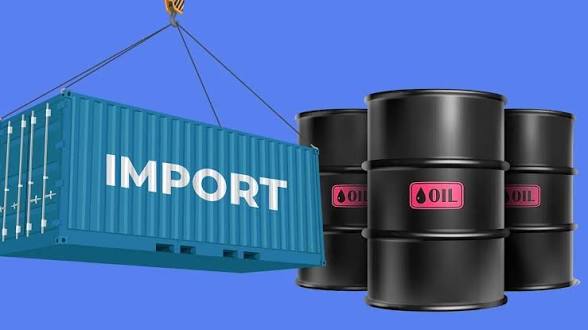
Petroleum-product imports fell by 12.67% to 3.43 billion litres in the first half of 2026, while domestic production surged by 350.7% to 878.33 million litres.
The sharp increase in local production was largely driven by Sentuo Oil Refinery, highlighting the growing role of domestic refining in meeting Ghana’s petroleum demand.
The development is significant for a country whose fuel market has historically been highly exposed to international refined-product prices and supply disruptions.
Yet COMAC’s figures reveal an important limitation: the increase in domestic production has not displaced imports as Ghana’s principal source of refined petroleum products.
This leaves the country with an emerging domestic refining base, but one that has not yet reached the scale required to insulate the market from global supply shocks.
The concentration of local refining also presents another layer of risk. COMAC’s report indicates that Sentuo accounted for 91.3% of domestic refinery output during the period, while Tema Oil Refinery recorded no production.
That means Ghana’s progress in reducing its import requirement is being accompanied by increased dependence on a relatively narrow domestic refining base.
Prices Rose as Consumption Climbed
The resilience of fuel demand becomes more striking when viewed against pump-price movements.
COMAC recorded increases of 19.9% in average ex-pump petrol prices, 29.4% for diesel and 22.9% for LPG compared with their January opening levels.
Yet consumption continued to rise.
The divergence suggests that petroleum demand remained relatively resilient despite the higher cost of fuel, with transport, commercial activity and household energy needs continuing to sustain consumption.
At the same time, Ghana’s supply buffers improved considerably.
Closing petroleum stocks increased by 91%, from 440.24 million litres to 840.64 million litres. The increase lifted the country’s consumption-weighted average stock cover from 3.2 weeks to six weeks.
The improvement provides an important cushion against short-term supply disruptions.
But the gains are not uniform across all products.
LPG remains considerably more exposed, with stock cover at only 3.1 weeks at the end of the period. Given the growing 16.93% increase in LPG consumption recorded during the first half, maintaining adequate LPG inventories could become increasingly important for household and commercial energy security.
Growth Masks Structural Vulnerabilities
The report therefore presents a downstream sector that is stronger in some respects but still structurally exposed.
Ghana consumed more fuel, produced substantially more refined products domestically, imported less and ended the first half of the year with significantly higher petroleum stocks.
Those gains strengthen the country’s immediate supply position.

However, the continued dominance of imported refined products means that Ghana remains vulnerable to international oil-price movements, exchange-rate pressures, freight disruptions and geopolitical events.
COMAC’s assessment consequently frames the next stage of the downstream sector as more than a question of increasing supply.
The challenge is to convert higher domestic refining output and stronger inventories into a more diversified and resilient petroleum supply system.
The concentration of refining capacity also means that increasing domestic production alone may not be sufficient. A more resilient market would require broader refining capacity, stronger infrastructure, adequate strategic stocks and continued improvements in the efficiency of petroleum-product distribution.
For consumers, the stakes are straightforward: the more exposed Ghana remains to external supply shocks, the greater the risk that disruptions abroad will quickly translate into higher prices at the pump.
The first half of 2026 therefore offers a mixed picture for Ghana’s energy security. Domestic production is expanding and inventories are improving, but the country has yet to break its dependence on imported refined petroleum products.
COMAC’s findings ultimately point to a sector at an important transition point — one where rising demand and growing domestic production are creating opportunities, but where supply concentration and continued exposure to global markets remain significant risks.