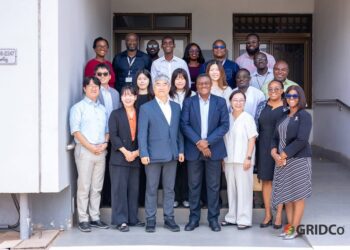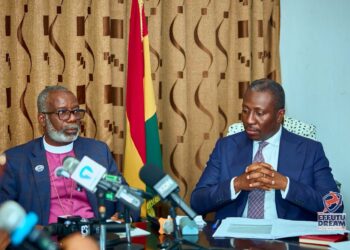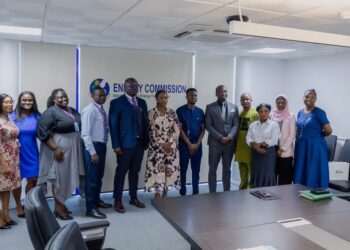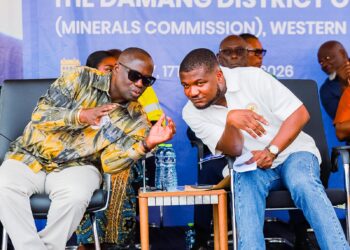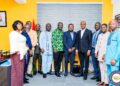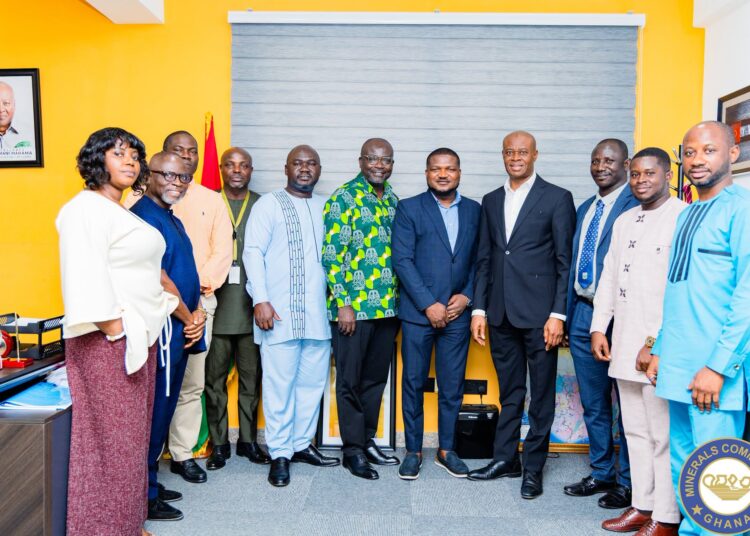
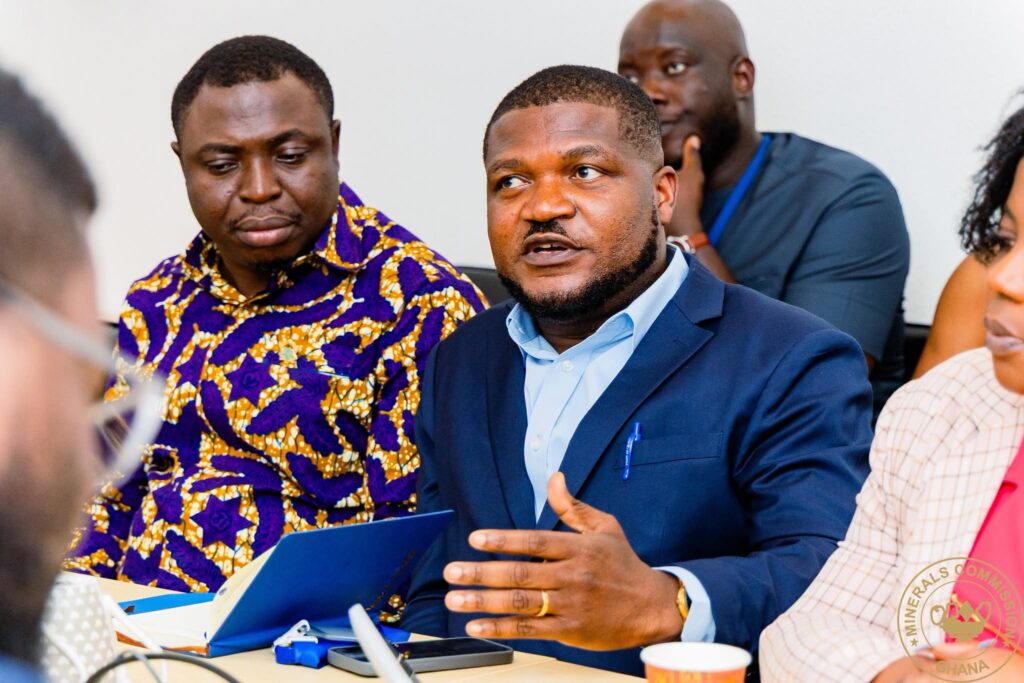
The Chief Executive Officer of the Minerals Commission, Mr. Isaac Andrews Tandoh, has held pivotal discussions with a high-level delegation from the University of Mines and Technology (UMaT), led by Vice-Chancellor Professor Bernard Kumi-Boateng, to deepen institutional collaboration focused on advancing sustainable mining practices and innovative research in Ghana.
The high-level meeting served a dual purpose: formally introducing Professor Kumi-Boateng to the Commission following his assumption of office, while establishing an operational framework between academia and regulatory authorities.
Both leadership teams explored critical areas of strategic alignment, focusing on capacity building, responsible small-scale mining management, environmental protection, and the development of highly skilled human capital to meet the modern demands of the extractive industry.
“This should not be a one-time engagement. Let us work together, identify our common priorities and determine how both institutions advance the development of Ghana’s mining sector.”
Mr. Isaac Andrews Tandoh
Mr. Tandoh underscored that academic institutions remain fundamental to developing practical solutions for the structural challenges confronting Ghana’s mining sector.
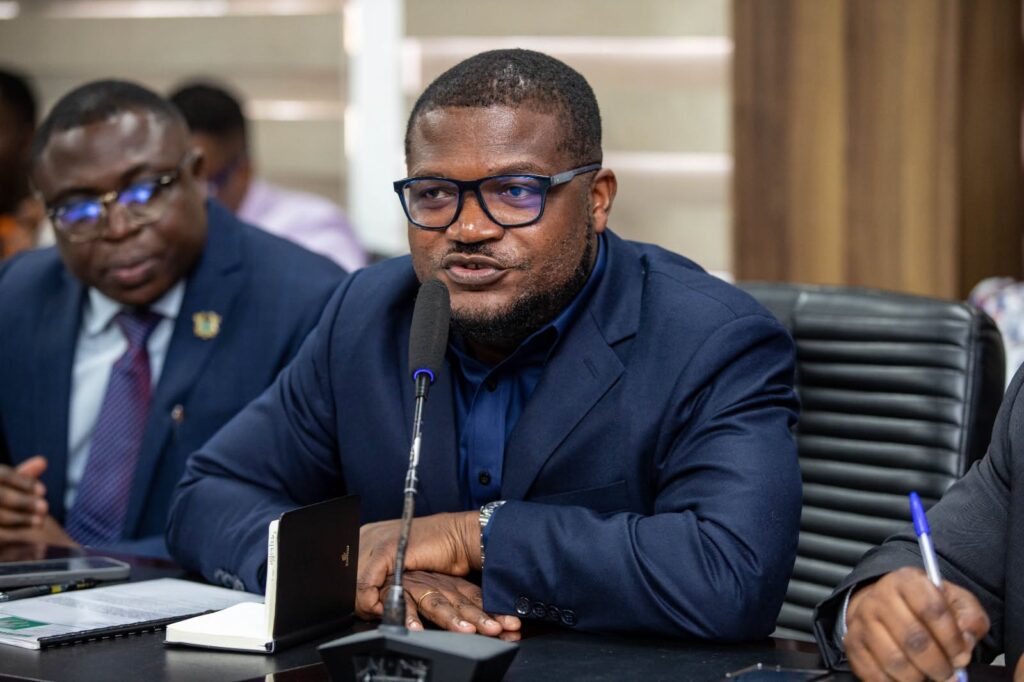
He emphasized the urgency of bridging the long-standing gap between theoretical academic training and direct field operations, noting that regulatory support from the Minerals Commission could strengthen academic research proposals when applying for state research funds.
In response, Professor Kumi-Boateng outlined actionable intervention proposals, notably urging a legal or administrative requirement for small-scale mining operators to engage qualified UMaT graduates and licensed technical personnel as a mandatory condition for obtaining or renewing mining licenses.
Transforming Small-Scale Mining Through Technical Expertise
The inclusion of trained professionals in small-scale mining represents a pivotal strategy to curb illegal, environmentally destructive practices locally known as galamsey that threaten major water bodies and forest reserves.
By embedding UMaT-trained mining engineers, environmental specialists, and licensed practitioners directly into artisanal and small-scale operations, the sector can shift from unregulated, hazardous extraction to technically sound, eco-friendly processing methods.
This structural reform creates formal employment pathways for tertiary graduates while giving the Minerals Commission clear regulatory oversight and legal accountability mechanisms over site operators.
Furthermore, UMaT’s plan to introduce a mandatory Postgraduate Diploma in Sustainable Mining for all its students ensures that every graduate enters the workforce equipped with mandatory environmental safety standards.
Professional Standardisation and Academic Innovation
To support non-technical professionals working in the mining ecosystem, UMaT proposed introducing specialized professional certification programs designed to enhance career progression and improve institutional oversight across legal, financial, and administrative mining workflows.
Prof. Kumi-Boateng also advocated for direct joint assignments between UMaT’s research faculty and the Commission in critical operational areas, including environmental impact assessments, operational risk audits, and community resettlement planning.
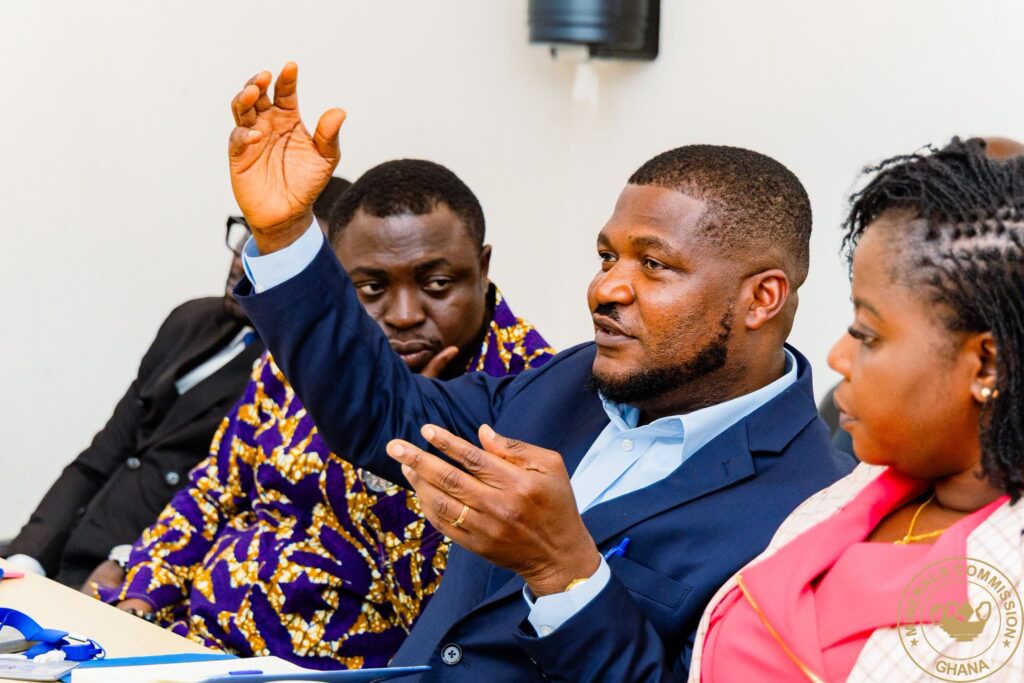
Mr. Tandoh warmly received these proposals, highlighting that enforcing strict technical standards fosters corporate responsibility and ensures that operators violating environmental or mining regulations can be held legally accountable.
Bridging Policy and Execution for National Development
The Deputy Minister for Lands and Natural Resources, Hon. Dr. Yusif Sulemana, commended the initiative and pledged full government backing to ensure these proposals transition swiftly from institutional dialogue into concrete policy execution.
Broad research shows that Ghana’s extractive sector requires robust science-backed policies to balance natural resource exploitation with ecological preservation.

Relying strictly on administrative enforcement without technical training on the ground has historically proven insufficient in curbing illegal mining activities.
Integrating UMaT’s academic rigor into the Minerals Commission’s regulatory mandate creates a sustainable framework that promotes green mining technologies, protects natural habitats, and maximizes long-term socio-economic returns for local communities.
READ ALSO: MoGCSP Declares Zero Tolerance for Abuse, Warns Against Violence in All Forms