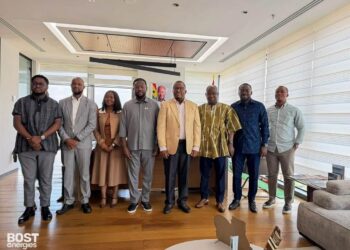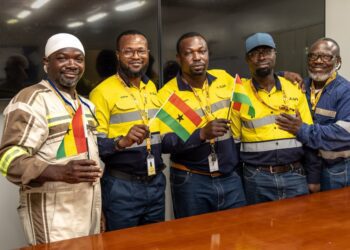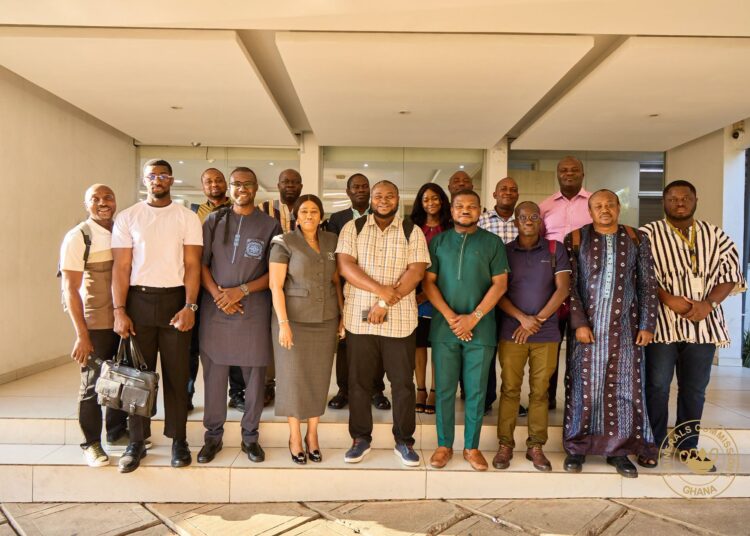
The Minerals Commission of Ghana hosted a high-level delegation from the Republic of Guinea’s Ministry of Environment and Sustainable Development to advance bilateral cooperation in extractive governance and ecological protection.
The meeting took place at the Minerals Commission’s headquarters in Accra, establishing an institutional mechanism for cross-border knowledge sharing between the two West African nations.
Led by the Minerals Commission’s Chief Executive Officer, Mr. Isaac Tandoh, alongside members of the executive management team, the high-level dialogue evaluated regulatory frameworks required to modernize the regional mining landscape.
“Discussions centered on Ghana’s regulatory framework for artisanal and small-scale mining, with particular attention to ongoing reforms designed to formalize the sector, strengthen compliance, and promote responsible mining practices that protect both communities and the environment.”
Minerals Commission
The engagements focused on Ghana’s evolving regulatory framework for artisanal and small-scale mining (ASM), prioritizing policy reforms aimed at formalizing informal operations, enhancing compliance, and enforcing environmental protection. Senior officials examined Ghana’s integrated land reclamation programs, which rehabilitate degraded mining zones into agricultural land, vocational hubs, and commercial centers.
The delegation analyzed the inter-agency coordination framework between the Minerals Commission, the Environmental Protection Agency (EPA), the Forestry Commission, and the Water Resources Commission. This multi-agency oversight model provides a structured baseline for regional regulatory alignment.
Cross-Border Extractives Governance and Institutional Synergy
Regional cooperation between Ghana and Guinea is driven by the structural demands of West Africa’s mining sector.
Guinea holds the world’s largest reserves of bauxite alongside significant unexploited iron ore deposits in the Simandou corridor, whereas Ghana stands as Africa’s top gold producer with an established legal framework for small-scale mining.
Unregulated artisanal mining presents shared environmental risks across borders, including river siltation, deforestation, and soil toxicity.
By engaging with Ghana’s regulatory system, the Guinean Ministry of Environment and Sustainable Development aims to adopt formalization strategies that balance economic access for local miners with strict environmental standards. Coordinated governance reduces regulatory arbitrage, preventing illegal operators from exploiting gaps between neighboring jurisdictions.
Integrated Environmental Reclamation and Regulatory Frameworks
A central focus of the bilateral sessions was Ghana’s land reclamation model, which addresses post-mining environmental degradation. The Minerals Commission presented its reclamation framework, which combines ecological restoration with targeted livelihood initiatives.
Rather than treating site restoration purely as a land treatment process, Ghana’s methodology incorporates agricultural development, vocational training, and local enterprise creation directly into economic recovery plans for mining communities.
The Guinean delegation examined how Ghana maintains environmental standards through joint supervision across state agencies.
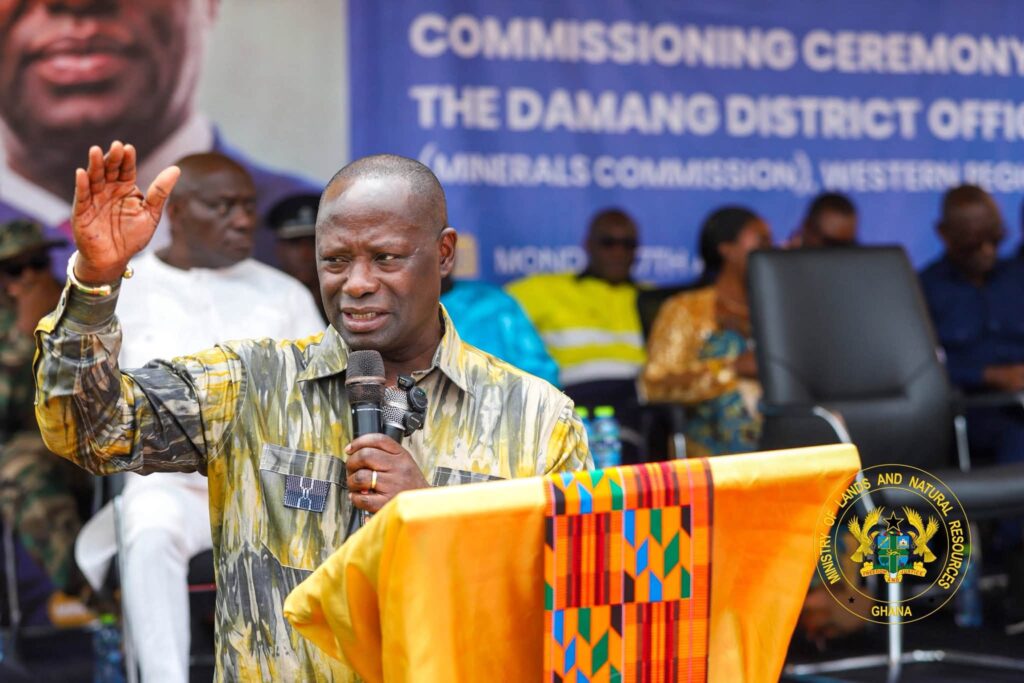
Inter-agency management involving the EPA, the Forestry Commission, and the Water Resources Commission prevents institutional overlaps and ensures compliance throughout the mining lifecycle. CEO Isaac Tandoh noted during the session that “the Minerals Commission reiterated its dedication to strengthening regional partnerships that advance sustainable development across Africa’s mining sector.”
This operational alignment provides Guinea with an actionable model for environmental monitoring and watershed management within its own expanding extractives domain.
Harmonized Extractive Stewardship Across West Africa
The delegation’s visit highlights a shift toward regional standardization in West Africa’s extractives sector.
Unregulated mining and resource management challenges cross national borders, making localized regulatory efforts insufficient on their own. Institutional cooperation allows both nations to align technical parameters for trace-ability, environmental compliance, and community compensation models.
Guinean officials reaffirmed their commitment to adopting elements of Ghana’s stewardship model, particularly regarding post-mining land reclamation and inter-agency coordination.
The visit concluded with both delegations reaffirming their commitment to sustainable resource development, establishing a framework for ongoing technical exchange and joint oversight across the West African extractive corridor.
READ ALSO: Komfo Anokye Emerges as First Public Facility with Fertility Centre