A rapidly worsening displacement crisis in Yemen has forced more than 200,000 people from their homes since fighting intensified, with humanitarian organisations warning that the resources needed to support those affected are running dangerously low.
According to the International Organization for Migration (IOM), 201,217 people, representing 33,776 households, have been displaced across 10 governorates, with nearly the entire population recorded as having fled since September 1.
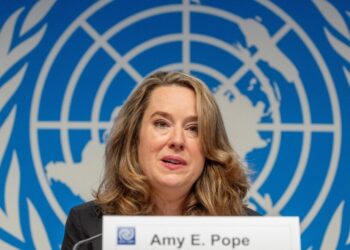
IOM Director General Amy Pope stated that “people are running for their lives and finding nowhere safe to go.”
“They need a roof, food, and safety today. Our teams are on the ground, but the funding is not. I am asking donors to act now, because every day of delay costs lives. Yemen must not become a forgotten crisis. The world has the means to help. It must use them now.”
Amy Pope
IOM’s latest figures show that 197,755 people have been displaced since the beginning of September, highlighting the extraordinary acceleration of the crisis within a matter of weeks.
The figures have climbed sharply since the middle of September. IOM’s Displacement Tracking Matrix recorded about 76,000 displaced people at that point. By the end of the month, the number had risen above 145,000 before reaching 201,217 in the latest assessment.
Displacement Escalates as Humanitarian Needs Rise
Moreover, the extent of the emergency is demonstrated by the displacement’s geographic dispersion. With 114,708 displaced persons, or 57% of the total, Ta’iz has recorded the highest number. Aden has recorded 20,814 displaced individuals, while Lahj comes in second with 42,264.
There are an additional 9,030 displaced individuals in Abyan and 8,244 in Al Hodeidah. Hadramawt, Shabwah, Ma’rib, Al Maharah, and Ad Dali have smaller numbers.
In Ta’iz. Three-quarters of the people listed as displaced in the governorate are from three districts: Ash Shamayatayn, Jabal Habashi, and Al Ma’afer.
Al Ma’afer has recorded 31,230 displaced people, followed closely by Jabal Habashi with 31,020 and Ash Shamayatayn with 24,894. In Lahj, Al Madaribah Wa Al Aarah has recorded 23,616 displaced people, while Tuban has registered 14,676. In Aden, Al Burayqah accounts for 10,320.
The emergency has also extended beyond Yemen’s borders, with more than 3,700 people fleeing across the sea to Djibouti.
IOM revealed that shelter is the most frequently reported priority, cited by 35% of displaced people. Food follows at 33%, while 22% identify cash assistance as their most urgent need. Another 105 cite protection.
Moreover, IOM has warned that host communities cannot absorb the growing burden indefinitely, particularly as displacement continues to increase.
IOM teams are also working with local authorities and partners to provide emergency shelter, essential household items, cash assistance, clean water and protection services. Assistance is also being provided in Djibouti to people arriving by sea.
Yet the organisation revealed that the response is falling significantly behind the pace at which needs are emerging.
IOM Director General highlighted that “every day our teams meet families who have lost everything. We know what they need. We know how to deliver it. What we lack is the means to reach them all.”
Funding Gap Raises Fears of a Deepening Humanitarian Emergency
Yemen’s humanitarian response plan is currently only 20% funded, leaving agencies with a substantial shortfall at a time when displacement is continuing to rise.
The funding shortage creates a growing gap between the scale of the emergency and the capacity of humanitarian agencies to respond. As more people leave their homes, existing assistance programmes face pressure to serve larger populations with limited resources.
The situation also places host communities in a difficult position. Families providing accommodation and other forms of support to displaced people are sharing resources at a time when their own capacity may already be stretched.
Without additional assistance, the pressure could deepen competition for basic services and increase vulnerabilities among both displaced families and the communities receiving them.
The movement towards Djibouti adds another dimension to the crisis. People leaving Yemen by sea require assistance from the moment they arrive, creating humanitarian responsibilities that extend beyond the country’s borders.
For those making the journey, crossing the sea does not necessarily mark the end of their vulnerability. Exhaustion, limited access to food and water and the loss of possessions can leave new arrivals dependent on immediate humanitarian support.
The widening gap between humanitarian needs and available funding has become one of the central concerns surrounding Yemen’s latest displacement surge.
IOM is calling on the international community to provide immediate funding, arguing that additional resources are needed to sustain emergency operations and reach families in areas experiencing rapid displacement.
The organisation is also calling on all parties to protect civilians and humanitarian workers and to ensure safe and unhindered access to people requiring assistance.
READ ALSO: Arteta Pens New Arsenal Contract