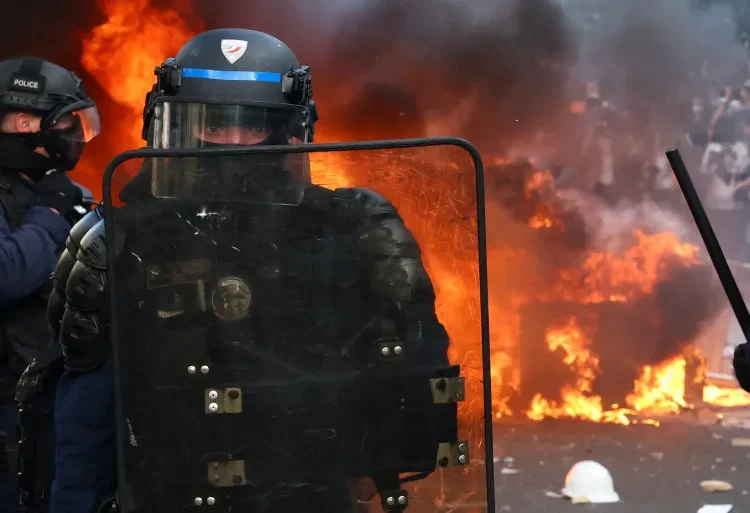
France has suspended the use of stun grenades by police at high-school demonstrations following mounting criticism over the use of force during two weeks of protests that have left hundreds of students, school staff and police officers injured.
Interior Minister Laurent Nuñez announced the temporary suspension today after a 15-year-old boy lost his hand during a protest in Lens, northern France, on Monday.
Nuñez said that the measure would remain in place while authorities establish exactly what happened in the incident. “I am suspending their use for the high school students’ movement until light has been shed on what happened,” Nuñez said.
Authorities have not established whether the teenager picked up the grenade or was struck by it. Police stated that up to 200 protesters had been throwing projectiles at officers when riot police intervened. The boy’s mother said his hand had been amputated and rejected suggestions that her son had picked up the grenade.
The incident has intensified concerns about police tactics as demonstrations over France’s education system continue. The protests have been driven by complaints about teacher shortages, overcrowded classrooms, deteriorating school buildings and long school days.
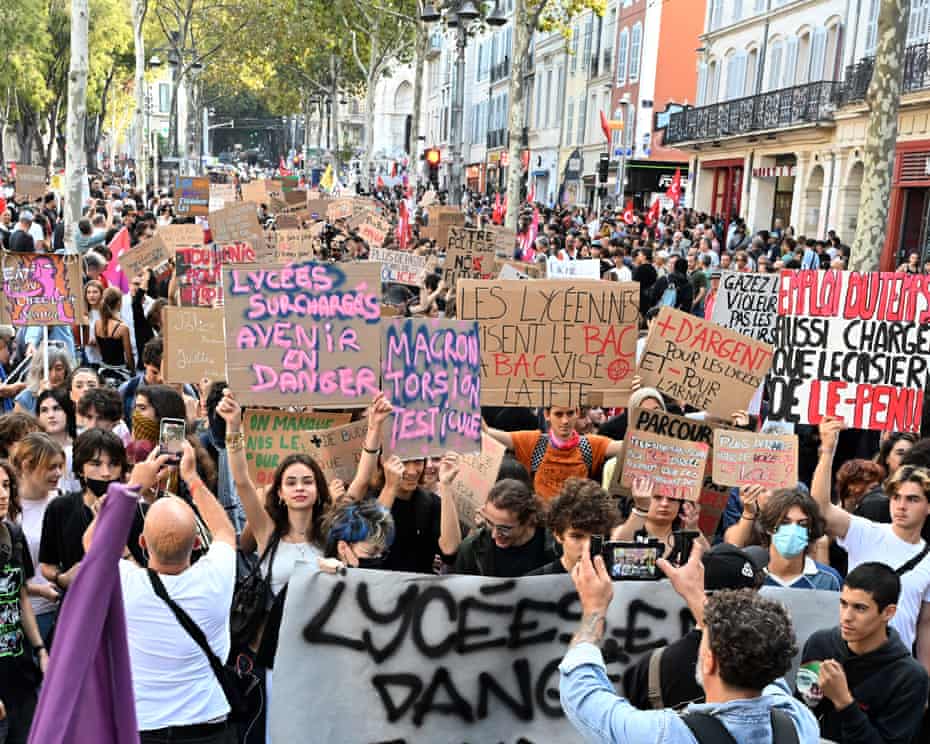
At least 215 teenagers and 85 school staff have been injured since the demonstrations began, while about 750 police officers have also been wounded, according to figures cited by French authorities. Nuñez disclosed that 18 internal police investigations had been opened into allegations of excessive or disproportionate policing during the protests. The investigations include cases involving a young protester who lost several teeth and another student who lost the use of an eye.
Nuñez defended the broader role of police, saying that officers were deployed to protect students and maintain order, while acknowledging that allegations of disproportionate force required investigation.
Rights groups and trade unions have repeatedly criticised the use of riot-control weapons against young demonstrators. The government, however, has also pointed to incidents in which protesters have thrown objects at police, damaged property and set fires.
The decision to halt stun grenade use came a day after France experienced its largest day of demonstrations since the movement began. Government figures put the number of participants nationwide at more than 250,000, while organisers estimated a substantially higher turnout.
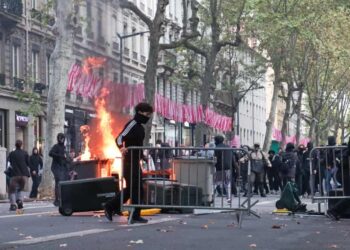
Most demonstrations passed without major incidents, but some descended into clashes between protesters and riot police. Officers used tear gas and baton charges to disperse groups in parts of Paris and other cities. Nearly 500 people were detained on Tuesday alone, while more than 6,500 people have been arrested since the protests began, most of them minors.
The demonstrations have also caused significant disruption to schools. The Education Ministry said that classes were fully or partially suspended in 528 of France’s roughly 3,700 high schools today, although the number was lower than the previous day. More than 500 schools remained affected as the government sought to restore normal classes.
Lecornu To Make Speech On Protests
The Prime Minister, Sébastien Lecornu, is due to make a speech today on the demonstrations as well as the dire state of the country’s finances, which is severely constraining the government’s capacity to act on the protesters’ demands.
Lecornu on Tuesday condemned the violence and told parliament it could not be tolerated, while also rejecting accusations that the government had ordered “police repression” against the protesters.
Lecornu has recognised the legitimacy of students’ concerns while condemning violence and damage to schools. He has called for dialogue between students, school leaders and the government and previously instructed Ministers to prepare proposals addressing students’ complaints.
The government has also faced criticism over the pace of its response. Student protesters have called for more teachers to replace absent staff, improvements to school buildings and changes to school schedules. They have described classrooms as overcrowded and buildings as poorly maintained.
The protests have increasingly become a political issue as France prepares for a presidential election to choose a successor to President Emmanuel Macron. The government is simultaneously under pressure to reduce its large budget deficit, limiting the money available for major new spending on education.
The unrest has also triggered accusations over political involvement. Government officials have accused the radical-left La France Insoumise party of encouraging the movement after several of its lawmakers attended school blockades. The party’s leader and presidential candidate, Jean-Luc Mélenchon, has backed the students’ demands while calling for demonstrations to remain peaceful.
The government has sought to distinguish between legitimate demonstrations and violent incidents. Lecornu has condemned what he described as “ultra violence” around some schools, while authorities say dozens of schools have been damaged or ransacked during the unrest.
The suspension of stun grenades represents a temporary adjustment to police tactics rather than a broader halt to efforts to control demonstrations. Nuñez said the measure was necessary while investigators determine the circumstances surrounding the Lens incident.
For students and their supporters, however, the decision comes amid wider concerns about how the authorities have handled the demonstrations. With protests expected to continue, the government faces pressure to address education grievances while also preventing further confrontations between young demonstrators and police.
READ ALSO: October 7 Anniversary Draws Tributes From World Leaders