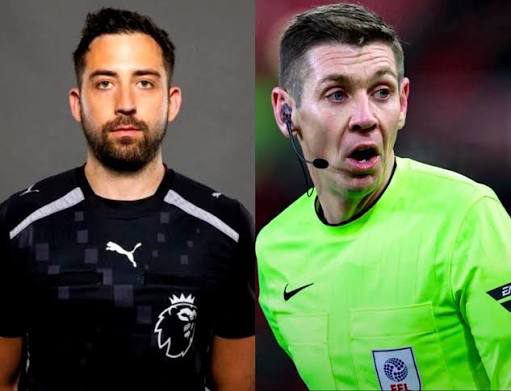
Matt Donohue and Blake Antrobus have been left out of this weekend’s Premier League appointments following their involvement in the controversial VAR decision that allowed Manchester City’s winning goal against Manchester United.
Donohue was the Video Assistant Referee at Old Trafford, while Antrobus served as his assistant VAR during Sunday’s Manchester derby.
Their absence comes after Pro Ref admitted that an “error of judgement” was made in the review that led to Erling Haaland’s goal being awarded. The Cityzens went on to win 1-0.
The decision to leave the duo out of this weekends actions was taken by Pro Ref chief refereeing officer Howard Webb and the organisation’s management team after reviewing the incident.
But while the decision to omit the officials is understandable, it raises a bigger question about how responsibility should be assigned when a VAR team fails to handle a subjective decision correctly.
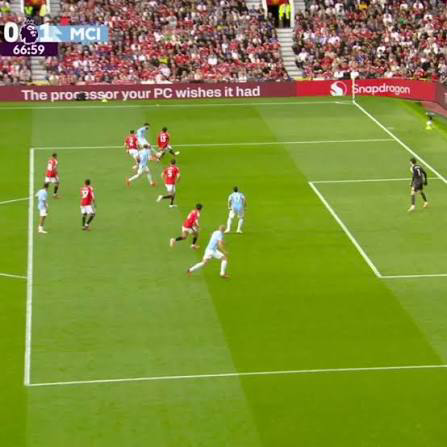
Haaland’s goal was initially ruled out for offside before VAR intervened. The review established that Manchester United defender Patrick Dorgu’s boot had played the striker onside when Josko Gvardiol delivered the ball across goal.
That part of the decision was correct. The controversy centred instead on City midfielder Enzo Fernandez, who was in an offside position and attempted to head the ball before Haaland converted.
Fernandez did not touch the ball, making the assessment of whether he interfered with play subjective. Pro Ref subsequently said Donohue should have recognised the likely impact of Fernandez’s position and recommended that referee Michael Oliver conduct an on-field review.
The Decision to Drop Them Has a Strong Case
There is little doubt that the VAR process fell short.
Once the review established that Haaland was onside, the officials still had to consider whether another City player had committed an offside offence during the same sequence. Fernandez’s position and attempted involvement made that a legitimate question.
The crucial failure was therefore not necessarily reaching the wrong conclusion about Fernandez. It was failing to recognise that the question required center referee Michael Oliver’s judgement.
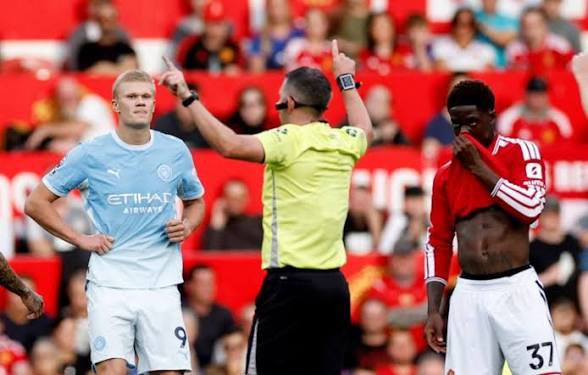
An on-field review would not have guaranteed that the goal was overturned. Oliver could have watched the footage and concluded that Fernandez’s actions did not constitute interference. But the referee would at least have been given the opportunity to make the final subjective assessment.
That is precisely what Pro Ref believes should have happened.
The consequences are also easier to understand because Haaland’s goal decided the match. City won 1-0 despite Phil Foden being sent off in the 23rd minute, meaning the disputed decision carried considerable weight in the final result.
From that perspective, leaving the VAR officials out of the next round can be seen as a direct response to a significant failure in judgement rather than simply punishment for controversy.
But Should Both Officials Carry the Same Consequence?
This is where Pro Ref’s decision becomes more debatable.
Donohue was the VAR responsible for recommending an on-field review, while Antrobus served as his assistant. Yet the public explanation from Pro Ref does not establish precisely what Antrobus did or did not do during the review.
That matters.
If the objective is accountability, then responsibility should ideally be attached to the individual decision-making process. Removing both officials may be appropriate if both were judged to have contributed to the failure, but Pro Ref has not publicly explained the respective roles that led to the same consequence.
There is also a distinction between an incorrect factual decision and a failure to escalate a subjective one.
VAR correctly determined that Haaland was onside. The problem was recognising that this did not settle the entire incident because Fernandez’s involvement remained open to interpretation.
That makes the error serious, but not necessarily straightforward.
The decision to omit Donohue and Antrobus can therefore be defended, particularly because Pro Ref has acknowledged the mistake and the incident directly influenced the outcome of a major Premier League fixture.
However, whether it was right to apply the same consequence to both officials depends on the extent of their individual involvement in the failed review.
Ultimately, the value of the decision will depend on what follows. If the omission is part of a process of assessment, clarification and improvement, it can be justified. If it is simply a public punishment following a high-profile controversy, questions about its fairness will remain.
The Manchester derby exposed a genuine VAR failure. Pro Ref was right to address it. The more difficult question is whether dropping both officials was the fairest way to do so.
READ ALSO: Scotland, Wales and Northern Ireland Unite to Push for Independence