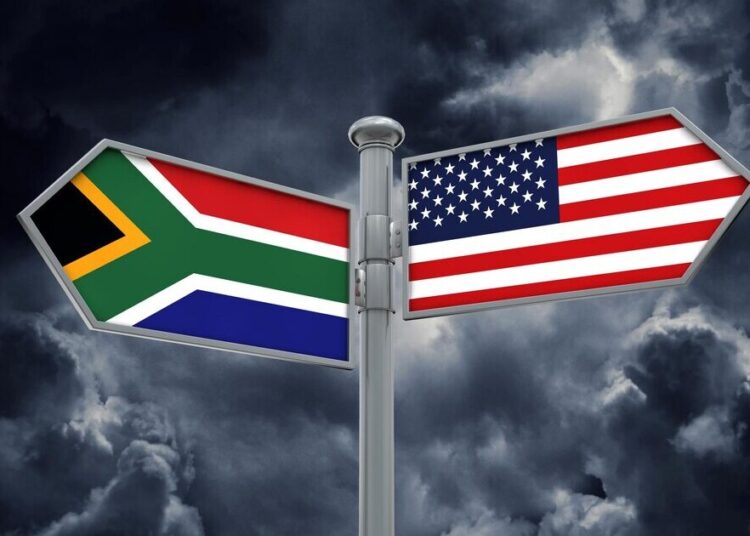
South Africa has challenged US position on new visa restrictions targeting certain foreign nationals linked to the country, describing the stance as a mischaracterisation of its domestic policies and calling for the dispute to be addressed through diplomatic engagement.
The South African Department of International Relations and Cooperation stated that it had noted the restrictions announced a day earlier by US Secretary of State Marco Rubio.
According to the South African government, the measures reflected the misrepresentation of South Africa’s internal policy by groups it referred to as fringe actors.
The latest dispute adds to a deterioration in relations between United States and South Africa since US President Donald Trump took office for a second term. The two administrations have become more divided over South Africa’s policies on racial inequality, land reform, and other domestic concerns, as well as the larger foreign-policy positions.
In its response, South Africa’s foreign ministry rejected the use of unilateral measures as a means of resolving bilateral disagreements.
“We maintain that challenges in our bilateral relations with the USA can only be resolved by constructive engagement through state actors on both sides of the diplomatic channel not unilateral acts.”
South African Department of International Relations and Cooperation
The statement came after Rubio announced a new visa restriction policy targeting foreign nationals whom the US government stated have enacted or enabled policies involving race-based discrimination, incitement of violence, or land confiscation without compensation in South Africa.
Rubio noted that the policy was intended to target individuals associated with what the U.S. administration considers discriminatory policies and actions affecting minority groups.
“Today, I’m announcing a new visa restriction policy targeting foreign nationals who enact or enable policies that promote race-based discrimination, incite violence, or enable land confiscation without compensation in South Africa.”
Marco Rubio
He added, “Those responsible for these injustices have no place in the United States.”
The U.S. Department of State emphasised that the measures were necessary because Washington would not allow such conduct to continue unchecked. The department indicated that the actions “directly undermine peace, economic stability, and the rule of law” and were incompatible with the stated pillars of U.S. foreign policy.
However, the identities of the people who will be affected by the restrictions had not been made public at the time of the announcement.
The U.S. Ambassador to South Africa also indicated that the visa measures could be followed by additional steps, describing them as “only the first step in a series of escalatory measures.”
Dispute Over Race and Reforms
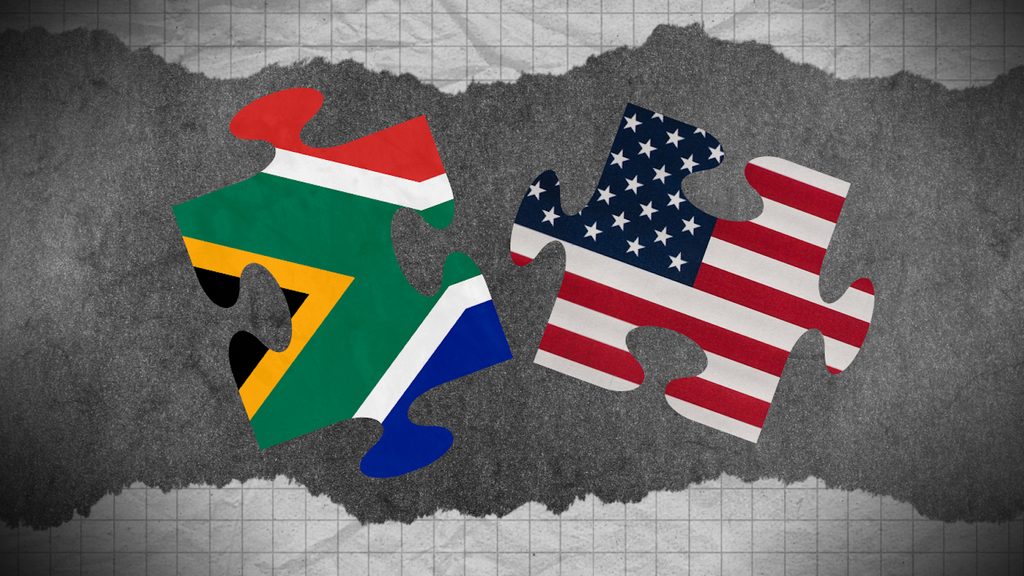
The latest measures are rooted in longstanding disagreements between the Trump administration and South Africa over policies dealing with the legacy of apartheid-era racial inequality.
Trump has repeatedly criticised South Africa over its affirmative-action and land-reform policies, arguing that they discriminate against the country’s white Afrikaner minority.
South African government has rejected claims that the country is persecuting its white population and has defended policies designed to address inequalities that persisted after apartheid.
Rubio echoed the Trump administration’s position in announcing the new restrictions, noting that the South African people “are being failed by a government that is destroying its economy through an obsessive pursuit of racial grievance against the Afrikaner minority.”
He also accused the South African government of failing to adequately address rural crime, violent rhetoric and race-based discrimination against Afrikaners and other minority populations.
South Africa, however, has argued that such portrayals misrepresent its domestic political and social conditions.
The disagreement over land is particularly significant because South Africa’s land question remains closely connected to the economic and social inequalities inherited from apartheid.
Land reform has therefore remained a politically sensitive issue as the government seeks to address historical ownership patterns while maintaining constitutional and legal protections.
Since the beginning of Trump’s second term, Washington and Pretoria have clashed over South Africa’s domestic policies and aspects of its foreign policy.
The Trump administration has previously taken measures affecting its relationship with South Africa, while Washington has also supported a programme through which white Afrikaners have been permitted to resettle in the United States.
The latest place additional pressure on an already difficult diplomatic relationship and introduces another point of contention between the two governments.
The timing is especially significant for Pretoria, considering South Africa’s efforts to maintain its economic connection with the United States in the face of broader trade tensions.
Last month, the administration stated that it was willing to offer Washington a “generous” new trade agreement as part of efforts to avert tariffs, which may exacerbate the pressures on an economy with high unemployment.
The controversy also has repercussions beyond the immediate visa restrictions. While the limits do not apply to the entire South African people, further deterioration in bilateral ties may impede cooperation in trade, investment, and other areas.
READ ALSO: Eden Hazard Wants Chelsea’s Front Three to Keep Scoring