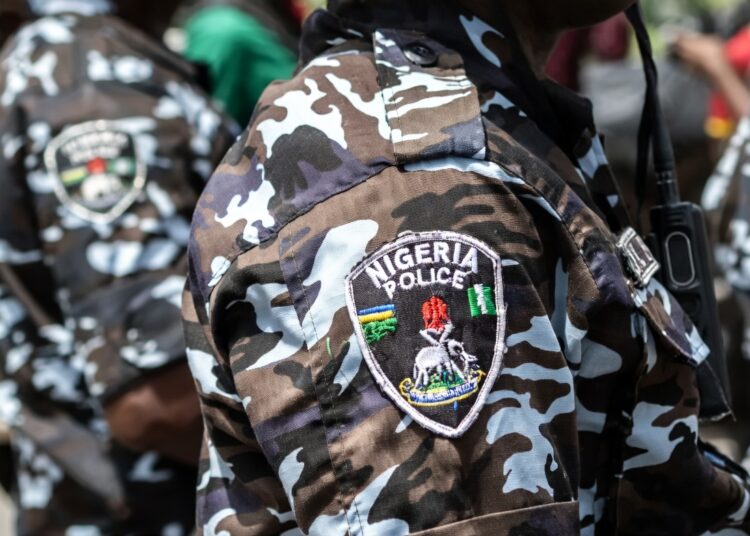
Nigeria has heightened security surveillance around schools, NYSC orientation camps, places of worship and other vulnerable locations following intelligence indicating plans by terrorist elements to launch coordinated attacks across the country.
The security alert, circulated by the Nigeria Police Force to its formations nationwide, comes as schools prepare for the resumption of the 2026/2027 academic session, raising concerns over the possibility of attacks targeting learning institutions and other locations where large numbers of people gather.
According to the police communication, intelligence available to the Department of Operations indicated an “increased mobilisation of terrorist elements for possible coordinated attacks” on places of worship, schools, NYSC orientation camps and other vulnerable locations.
The alert was distributed to Assistant Inspectors-General of Police overseeing Zones 1–17, Mobile Police units, counter-terrorism and other specialised formations, as well as Commissioners of Police across the states.
It was also copied to several departments and formations at Force Headquarters, including Intelligence, Finance and Administration, the Directorate of Training and Development, the Force Criminal Investigation Department, Research and Planning, ICT and the Force Security Department.
According to the police, intelligence had also revealed the movement of armed elements from Katsina through Kaduna towards Plateau State, heightening concerns over the possible movement of terrorist operatives and the need for tighter monitoring of routes and vulnerable locations.
The Nigeria Police Force further disclosed that suspected Islamic State West Africa Province operatives and local collaborators were conducting surveillance and reconnaissance of potential targets.
Police Intensify Surveillance Around Vulnerable Locations
The Department of Operations directed affected commands and formations to heighten security around schools, places of worship, NYSC orientation camps and other locations considered vulnerable to attacks.
“All personnel should maintain heightened vigilance and report suspicious persons, vehicles, movements or objects through established channels.”
Nigeria Police Force
Commanders were also instructed to intensify intelligence-led surveillance, patrols, stop-and-search operations, access control and rapid-response arrangements around identified vulnerable locations.
The measures are intended to enable security agencies to detect suspicious movements early and respond quickly to any emerging threat.
Commissioners of Police were further directed to tighten security at state borders, entry and exit routes and other critical approaches in an effort to prevent the infiltration and movement of armed elements.
The alert therefore extends beyond individual institutions, placing greater emphasis on monitoring the routes through which suspected terrorists could move between states.
The Defence Headquarters also acknowledged the security situation, indicating that it was monitoring developments.
The Director, Defence Media Operations, Maj. Gen. Michael Onoja, stated , “we are monitoring the situation.”
The Nigeria Security and Civil Defence Corps (NSCDC) has similarly moved to strengthen its intelligence operations, particularly around educational institutions.
The NSCD noted that it had doubled its intelligence network across its state commands to protect schools and other learning institutions.
Speaking on security arrangements for the reopening of schools, NSCDC spokesperson Babafemi Afolabi disclosed that intelligence-driven operations involving federal and tactical squads had thwarted more than 100 attempted attacks on schools.
“All tactical squads, officers, and men of the Corps in different state commands the Commandant General has already briefed them through their commandants. So, now that schools have resumed, they’ve doubled their intelligence network, and I’m very sure that nothing of such will happen.”
NSCDC spokesperson
Moreover, Afolabi urged parents not to allow fear to prevent their children from returning to school, while stressing the importance of cooperation between communities and security agencies.
“I would advise parents and their wards to just let them free to go to school. Nothing of such will happen. That’s why we’ve been able to work in collaboration with other stakeholders, even the community leaders.”
NSCDC spokesperson
He added, “this is the time we have to work and we have to do it all together because security is a collective responsibility. When they notice anything going on in their area, they should quickly alert us and let us know.”
According to NSCDC, “not only Civil Defence are doing this; we work together with other sister agencies, and also the private guards. We have millions of them all over the federation.”
“So, part of the training we are giving to them is to put their ear on the ground and to furnish us with any information whatever that is going on in their area—that they should furnish us and let us know.”
NSCDC spokesperson
Meanwhile, Former Assistant Inspector-General of Police Ali Amodu has described the alert as part of the normal responsibility of security agencies to gather intelligence, share information and prepare citizens for possible threats.
He indicated that the communication should encourage Nigerians to remain alert rather than dismiss the warning.
“Whichever department must have actually ignited or sent the alert is going to serve one and the same purpose. And it is a good thing; it’s a responsibility of the law enforcement, not only to enforce law but to gather intelligence and send alerts so that citizens can always be alert.
“Citizens can always be ready. They cannot take things for granted. When such an alert is given, from experience, you discover that everybody will sit up.
Former Assistant Inspector-General of Police
He added, “security is everybody’s business. I must be very frank with you, over the years, we Nigerians have taken things for granted. It is now dawning on us that there is a need for us to be very cautious in what we do and to be alert.”
Amodu urged residents to report strange persons, suspicious movements and vehicles, particularly around places of worship and other public gathering points.
He added that security agencies, including the police, Department of State Services and military, had intelligence-gathering responsibilities and would be expected to take appropriate preventive measures after receiving such alerts.
READ ALSO: Constitutional Review Committee To Refer Public Disagreements On Recommendations Back To Government