A newly released global report has painted a troubling picture of escalating attacks on education, revealing that schools, teachers and students are increasingly vulnerable in today’s destructive and complex conflict environments.
According to Education Under Attack 2026, a major research published by the Global Coalition to Protect Education from Attack (GCPEA), at least 8,500 attacks against education occurred worldwide between 2024 and 2025. The figure marks a more than 40% increase over the preceding two years and underscores what academics call a progressively deteriorating situation for children and educators stranded in conflict zones.
The attacks affected more than 10,600 students, teachers and education personnel across 83 countries and territories. Significantly, 55 of those countries were not officially classified as being in active armed conflict, demonstrating how violence against education is increasingly extending beyond traditional war zones.
Felicity Pearce, lead researcher for Education Under Attack 2026 believe the actual scale of the crisis may be considerably larger.
“Escalating conflict, shrinking humanitarian access, and widespread information blackouts mean many attacks are never reported.”
Felicity Pearce
The findings emerge against the backdrop of a sharp rise in global insecurity. International conflict monitoring groups have reported that the number of armed conflicts worldwide has reached levels not seen since the Second World War, creating increasingly dangerous conditions for civilians and public institutions.
Among the countries recording the highest numbers of attacks on education were Colombia, the Democratic Republic of the Congo, Ethiopia, Haiti, Palestine and Ukraine.
Ukraine alone experienced more than 900 attacks on schools during the reporting period as the prolonged war continued to damage educational infrastructure and disrupt learning for millions of children.
The situation in Palestine proved even more devastating. The report documented more than 2,000 attacks targeting education, while separate assessments indicated that by the end of 2025 nearly every school in Gaza had been damaged or destroyed. The destruction has left vast numbers of children without safe access to classrooms and raised concerns about the long-term impact on an entire generation’s education.
Haiti, included as a dedicated case study for the first time, recorded more than 400 attacks on education facilities and personnel as worsening gang violence and instability continued to affect daily life.
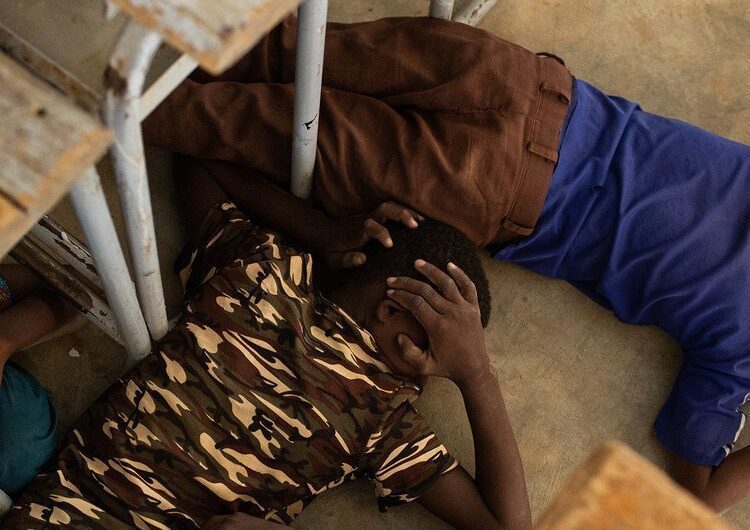
The report also paints a troubling picture of how educational institutions are increasingly caught in the crossfire of modern conflicts. Schools that once served as safe spaces for learning are becoming targets of armed groups, military operations and explosive attacks, leaving students and teachers exposed to extreme danger.
Particularly concerning is the growing use of explosive weapons in populated areas.
According to the report, approximately 300 attacks involving explosive devices, including drone-borne explosives. Many of these incidents occurred during school hours, causing deaths and injuries while forcing institutions to suspend classes for prolonged periods.
Professor Tejendra Pherali, Professor of Education, Conflict and Peace at University College London stressed that, “It’s heartbreaking to see numbers are rising; it is the same pattern every year” adding, “In my view, this is more systematic rather than episodic, and attacks are increasingly strategic.”
“Behind these numbers are the children who no longer see schools as a place of safety. It’s not just education that is lost it’s safety, futures and trust in educational institutions.”
Professor Tejendra Pherali
The report also highlights how girls and women continue to face disproportionate risks during conflicts. In at least 11 countries, female students and educators were specifically targeted because of their gender. Attacks on girls’ schools, sexual violence and restrictions on female education were documented across several regions.
In Afghanistan, authorities continued to restrict girls’ education by shutting down learning centres for girls above Grade Six and detaining female teachers, further limiting educational opportunities for young women.
Military Occupation of Schools Nearly Doubles as Calls Grow for Global Action
One of the most alarming findings in the report is the sharp rise in the military use of educational institutions.
The number of recorded cases in which schools and universities were occupied by military forces or armed groups increased by 91 per cent compared with the previous reporting period. Researchers documented more than 1,900 incidents, with Colombia, the Democratic Republic of the Congo and Ethiopia among the most heavily affected countries.
Education advocates warn that military occupation transforms schools into potential military targets while exposing children to additional dangers, including recruitment by armed groups, sexual violence and retaliatory attacks.
Lisa Chung Bender, Director of the GCPEA, noted that, the findings should serve as a global warning.
“A warning that the world is drifting toward a place where even the youngest are no longer off-limits. And a warning that if we do not hold the line now, we may never get it back.”
Lisa Chung Bender
According to the report, Myanmar, Nigeria, Yemen, and Cameroon had the highest number of students and educational professionals killed or injured. It indicated that, more than 1,700 people were killed in just four countries alone.
In Nigeria, more than 700 students and staff were reportedly kidnapped during the reporting period, highlighting the continued threat posed by armed groups targeting educational institutions. In Myanmar, at least 80 students and staff members were killed and approximately 240 injured.
In light of this, the GCPEA has called on governments, United Nations agencies, and foreign donors to take immediate action.
READ ALSO: Self-Published Zimbabwean Novel Becomes Netflix Hit 14 Years Later