
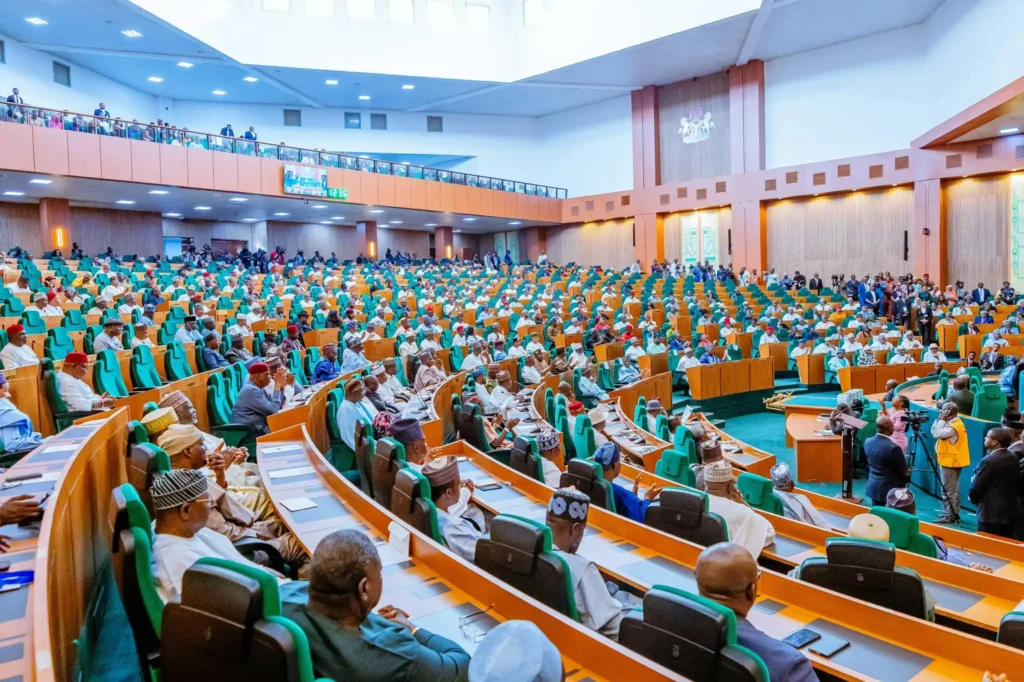
Nigeria has taken a historic step toward overhauling its security architecture after the House of Representatives overwhelmingly approved a constitutional amendment bill that would allow states to establish and operate their own police forces, marking one of the most significant security reforms since the country’s return to democratic rule.
The legislation, popularly known as the State Police Bill, was passed during Thursday’s plenary session after 289 lawmakers voted in favour of the proposal, while only one member opposed it.
Speaker of the House Tajudeen Abbas, who presided over the session, abstained from voting.
For proponents of decentralised policing, who have maintained for years that Nigeria’s centrally managed security system is no longer equipped to adequately address the various and growing challenges facing Africa’s most populous country, the result marks a significant breakthrough.
The bill was passed in response to mounting concerns about the nation’s deteriorating security in a number of areas, including an increase in kidnapping, armed banditry, communal violence, acts linked to separatists, and insurgency.
President Bola Ahmed Tinubu, who has stated support for decentralised policing as part of larger initiatives to bolster national security and enhance law enforcement responsiveness, has given the idea considerable impetus.
Supporters believe state police would enable governors and local authorities to respond more rapidly to security threats while improving intelligence gathering through officers who possess deeper knowledge of local communities, languages and geographical realities.
For decades, policing in Nigeria has remained under federal control, with command structures and operational decisions managed from Abuja. Critics of the system argue that this arrangement has become increasingly ineffective given the country’s size, population and varied security challenges.
Nigeria’s northeast continues to grapple with jihadist insurgency, while communities across the northwest and north-central regions face recurring attacks by armed bandits and kidnappers. Elsewhere, farmer-herder clashes, separatist violence in the southeast and oil-related criminality in the Niger Delta continue to stretch security resources.
Many state governors have long complained that while they are held accountable by citizens for security failures, they lack direct operational control over the police formations working within their states.
Thursday’s proceedings, however, were not without controversy.
Shortly after lawmakers settled down for the day’s business, Kaduna lawmaker Bashir Zubairu raised a point of order, expressing concern that members had only received copies of the report prepared by the House Committee on Constitution Review shortly before the debate commenced.
Recognised by the Speaker, Zubairu argued that lawmakers had insufficient time to study the document before voting on a matter of national significance.
“Mr Speaker, this document was only made available to lawmakers in the chambers, and we are yet to go through it. We cannot do justice to it because we have not gone through it.”
Bashir Zubairu
However, the Speaker ruled the objection out of order, allowing the legislative process to continue.
Out of the 290 lawmakers present during the session, 289 voted in favour of the bill, while only one voted against it, highlighting the broad bipartisan support the proposal currently enjoys within the lower chamber.
Security Concerns Drive Push for Decentralised Policing
The strong support for state police reflects growing frustration with the country’s inability to contain increasingly sophisticated security threats.
Recent months have witnessed a surge in attacks across multiple regions, reinforcing calls for reforms that would allow local authorities to play a greater role in maintaining public safety.
In May alone, gunmen abducted dozens of students and teachers during separate attacks in Oyo and Borno states, incidents that once again highlighted the operational reach of criminal and insurgent groups.
Security analysts argue that localised police structures could improve response times and strengthen preventive intelligence gathering.
According to Ayomide Akinwale, an analyst at SBM Intelligence, “Nigeria’s centralised policing model slows emergency responses because states lack direct control.”
Advocates also argue that officers recruited at state level would be more familiar with local terrain, cultural dynamics and community networks, making them better equipped to address emerging threats.
President Tinubu has sought to complement the proposed reform with plans to increase recruitment into the federal police force, a move supporters say demonstrates a broader commitment to strengthening Nigeria’s security institutions.
Despite the enthusiasm surrounding the bill, concerns remain over how state police forces would be managed and funded.
Critics warn that governors could potentially misuse state-controlled police units against political opponents, activists or minority groups. Others question whether economically weaker states would possess sufficient resources to sustain effective and professional police organisations.
There are also unresolved questions regarding training standards, operational oversight and coordination between state and federal agencies, particularly when responding to crimes that cross state boundaries.
For these reasons, analysts indicates that, the next phase of the legislative process will be crucial.
The constitutional amendment must still secure approval from at least 24 state assemblies before it can become law.
READ ALSO: Black Sherif’s ‘Find A Way’ Climbs Ghana Apple Music Chart Rapidly