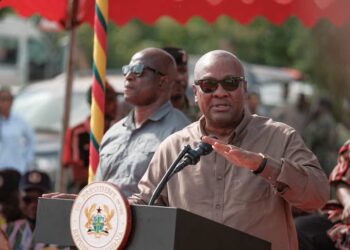
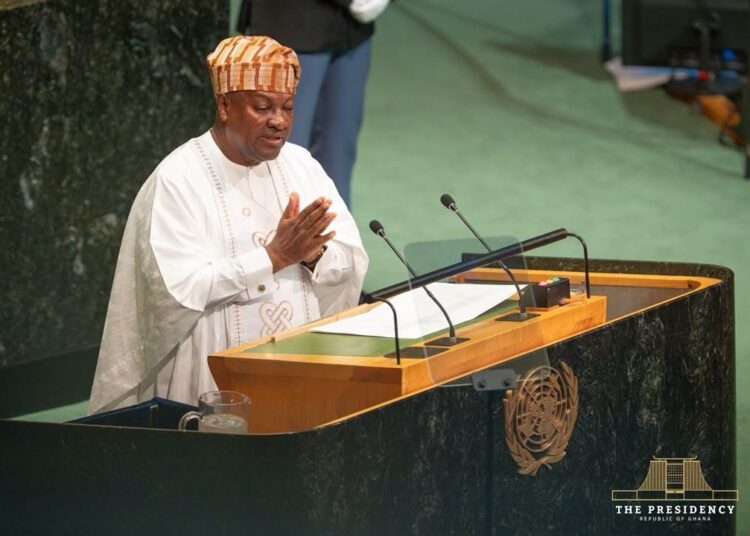
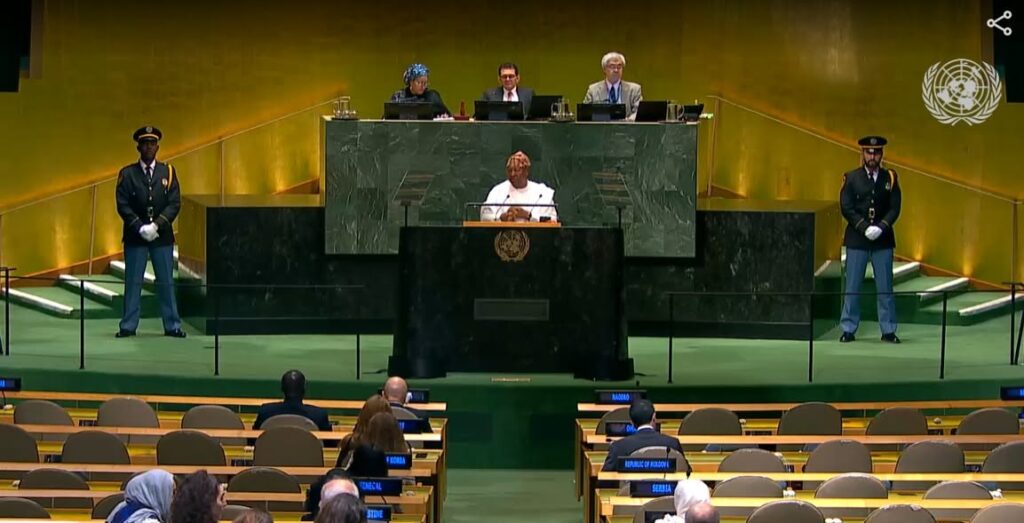
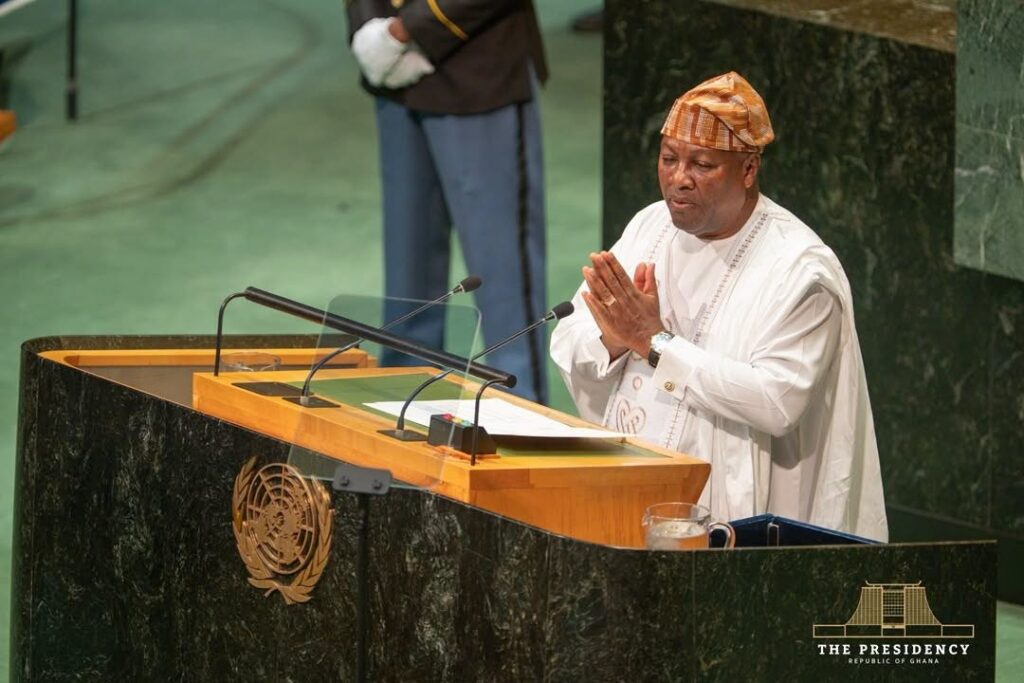
President John Dramani Mahama has used Ghana’s address to the United Nations General Assembly to set out four priorities for the African Union chairmanship the country assumes in January 2027. He served what he called notice of those intentions on Thursday, 24 September 2026, during the General Debate of the 81st Session in New York.
The President named continental integration, faster implementation of the African Continental Free Trade Area, peace and security across Africa’s conflict zones, and a single continental voice on the global stage.
Announcing the agenda in New York rather than at an AU summit signals that Ghana intends its chairmanship to be as much about how Africa is heard abroad as about business within the union.
Four Priorities, Set On Notice
President Mahama’s formulation was compact. Ghana intends to use the chairmanship “to champion continental integration, accelerate the implementation of the African Continental Free Trade Area, push for peace and security in all the conflict zones of Africa, and ensure that Africa speaks on the global stage with one resolute, undivided and confident voice.”
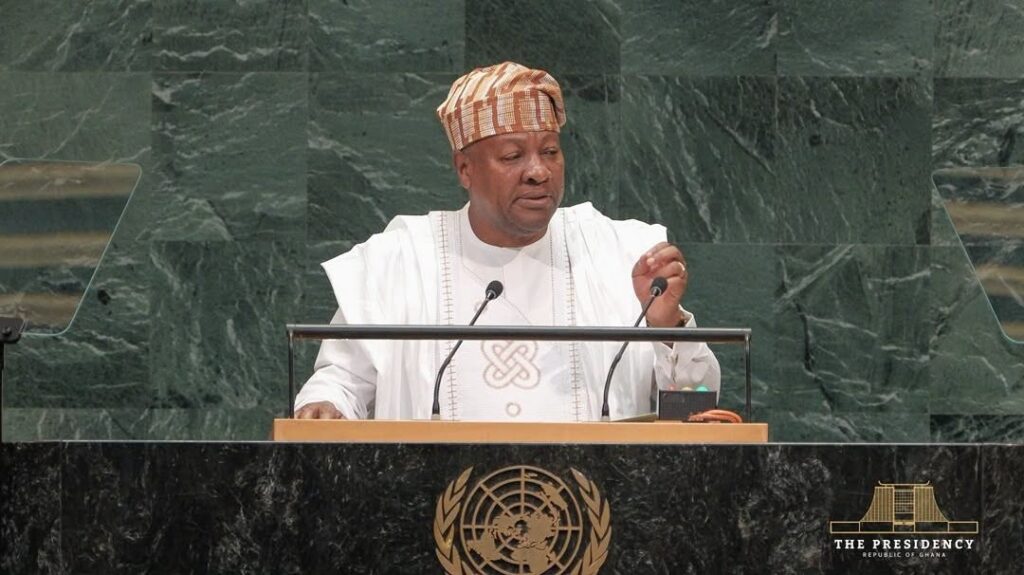
The last of the four is the one that ties the address together, since his demands earlier in the speech for a permanent African seat on the Security Council and for reform of the global financial architecture both depend on the continent holding a common position.
The trade priority carries a home advantage, since the AfCFTA secretariat sits in Accra, and President Mahama described the agreement elsewhere in his address as the engine for intra-African trade, structural transformation and industrial growth.
The difficulty is implementation rather than ambition. The agreement has been in force for years, yet intra-African trade remains a modest share of the continent’s total commerce, held back by tariff schedules still under negotiation, weak transport links and non-tariff barriers that no treaty text removes on its own.
A chairmanship lasts twelve months, which is short for structural work of that kind. What it can deliver is political attention, and hosting the secretariat gives Ghana a direct line to the institution handling the detail.
Peace In Every Conflict Zone
The security pledge is the broadest of the four. President Mahama’s phrasing covers all of Africa’s conflict zones, a list that runs from Sudan, which he described in the same address as the world’s worst humanitarian crisis, through the eastern Democratic Republic of Congo to the Sahel.
That last theatre sits closest to Ghana. Earlier in the speech he called for solidarity with neighbours in the Alliance of Sahel States facing what he termed the terrorist scourge, and Ghana has maintained its own channel to Mali, Burkina Faso and Niger since the three left the Economic Community of West African States.
Reconciling that outreach with ECOWAS positions will be among the more delicate tasks of the chairmanship, since the bloc that endorsed his candidacy and the states he is courting remain estranged.
The Preparation Behind The Pledge
Ghana has spent the past year building the framework behind Thursday’s announcement. In August, a high-level committee of experts chaired by Foreign Minister Samuel Okudzeto Ablakwa submitted five reports to the President, covering a strategy document, priority pillars and a work programme.
The committee drew on senior diplomats and serving AU officials, among them Dr Mohamed Ibn Chambas and Ambassador Kwasi Quartey, and invited submissions from Ghanaians, other Africans and the diaspora.
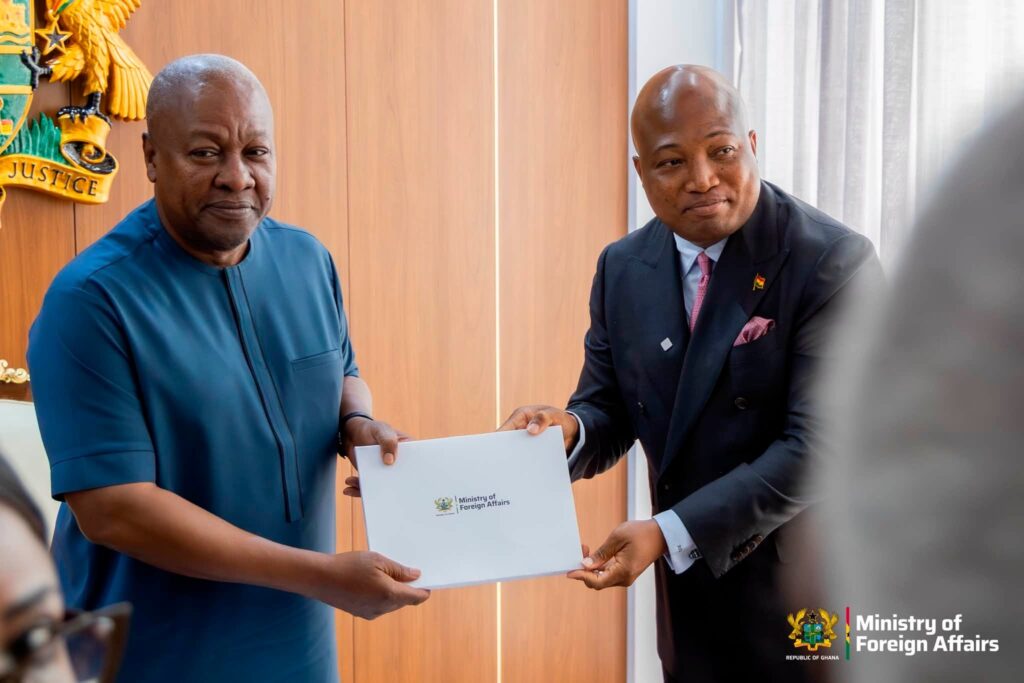
“President Mahama’s tenure is expected to be transformative and impactful due to the rigorous preparatory work underway and his bold vision for our continent,” Hon Ablakwa said at the time.
The four priorities announced in New York track closely with that preparatory work, which suggests Thursday’s statement was the public unveiling of a settled agenda rather than an improvisation.
The Road From Abuja
Ghana’s path to the chair began in December 2025, when the ECOWAS Council of Ministers, meeting in Abuja, named Mahama the region’s sole candidate. Days later, West African heads of state unanimously endorsed that resolution, clearing the regional hurdles.
He consolidated the position in February 2026 by winning election as First Vice Chair of the African Union, the office that places a leader in line for the chair when the rotation reaches West Africa.
What the year produces will be measured against expectations Ghana has itself raised. The AU chair holds no executive authority over member states and serves for twelve months, which leaves agenda-setting as the real instrument.
President Mahama arrives with a completed strategy, a reparations agenda already carried through this Assembly and a reform initiative a year old, which is more than most incoming chairs bring to the office.
READ ALSO: GoldBod Earns Public Praise for Transparency in Gold Trading Reports