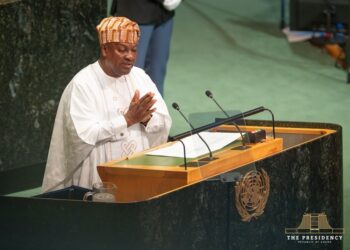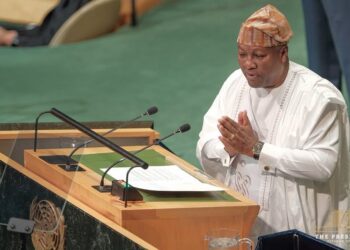
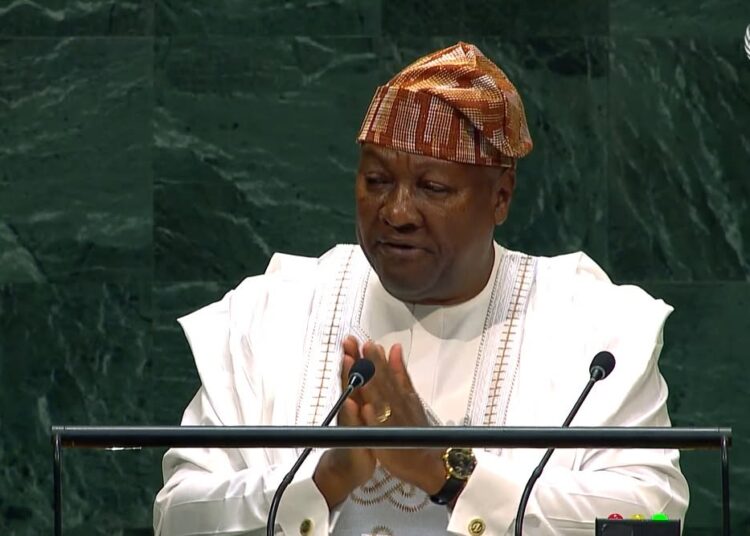
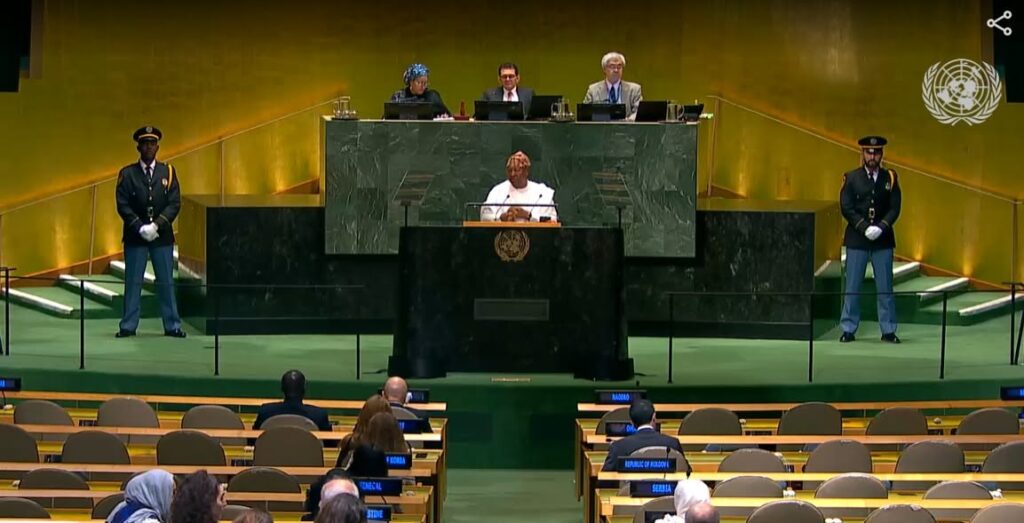
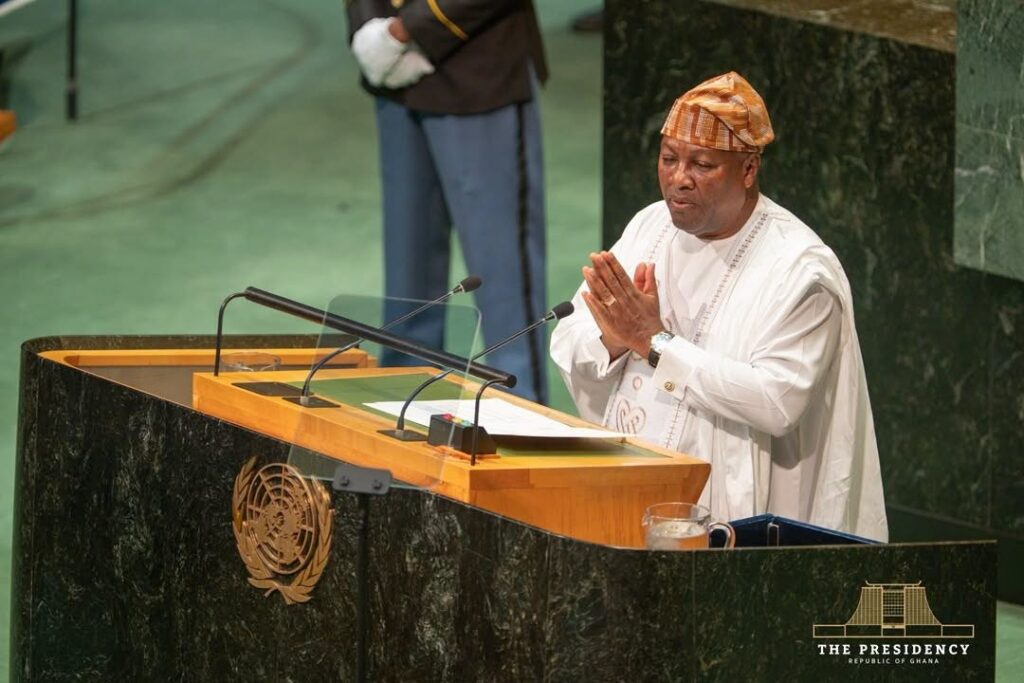
President John Dramani Mahama has told the United Nations General Assembly that recognising the transatlantic slave trade as the gravest crime against humanity means nothing without dismantling the economic structures it left behind. He set out the demand on Thursday, 24 September 2026, in Ghana’s national statement to the General Debate of the 81st Session in New York.
Six months after Ghana carried Resolution 80/250 through the same chamber, the President named five mechanisms he wants removed: unfair global trade, predatory resource extraction, discriminatory credit ratings, unsustainable debt burdens and the export of raw materials while value addition and jobs are created elsewhere.
His argument is that acknowledgement is a beginning and repair is the obligation that follows it.
From Pledge To Resolution
President Mahama reminded the Assembly that he stood at the same podium a year ago and pledged, on behalf of Africa and the global African diaspora, to seek full international recognition of transatlantic trafficking and racialised chattel enslavement as the gravest crime against humanity.
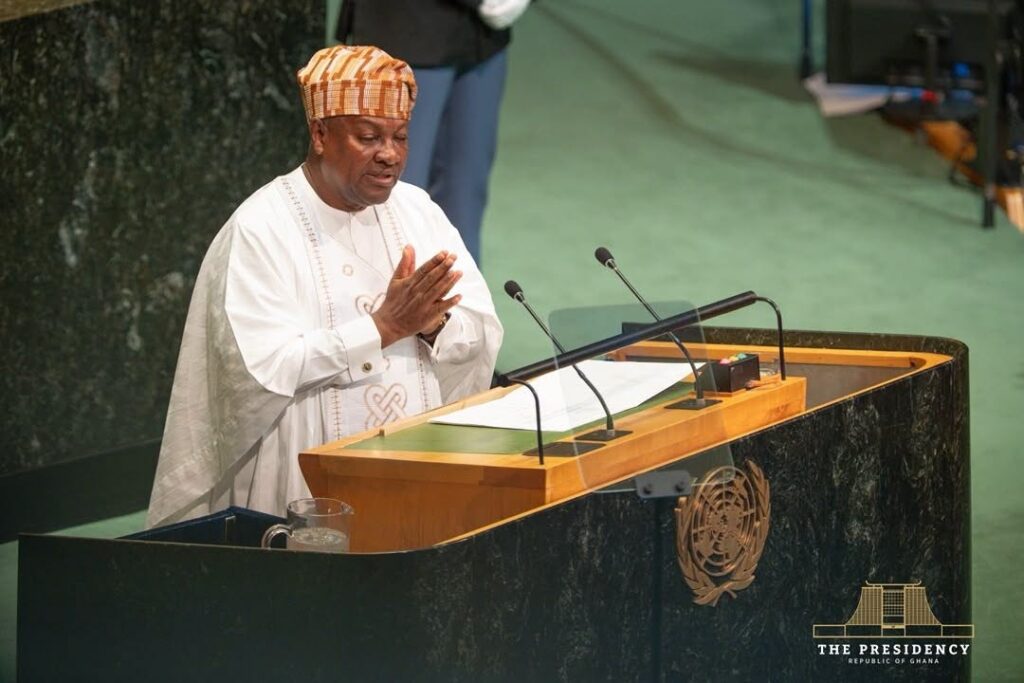
He recalled the warnings that greeted it. Some cautioned that the effort was reopening old wounds, he said, but Ghana came neither to provoke division nor to render empty judgement.
“True healing requires truth. And truth requires acknowledgement. And acknowledgement must lead to meaningful repair,” he said. Ghana tabled the resolution on 25 March, the International Day of Remembrance of the Victims of Slavery and the Transatlantic Slave Trade. It passed with 123 votes in favour.
The President thanked every nation that voted for it and expressed gratitude to partners in the African Union, CARICOM, the Community of Latin American and Caribbean States and across the Global South, the blocs that supplied the numbers.
Against The Passive Voice
Before turning to economics, President Mahama made an argument about language. For centuries, he said, the tragedy was rendered in the passive voice, as though millions of African men, women and children simply vanished into the shadows of time.
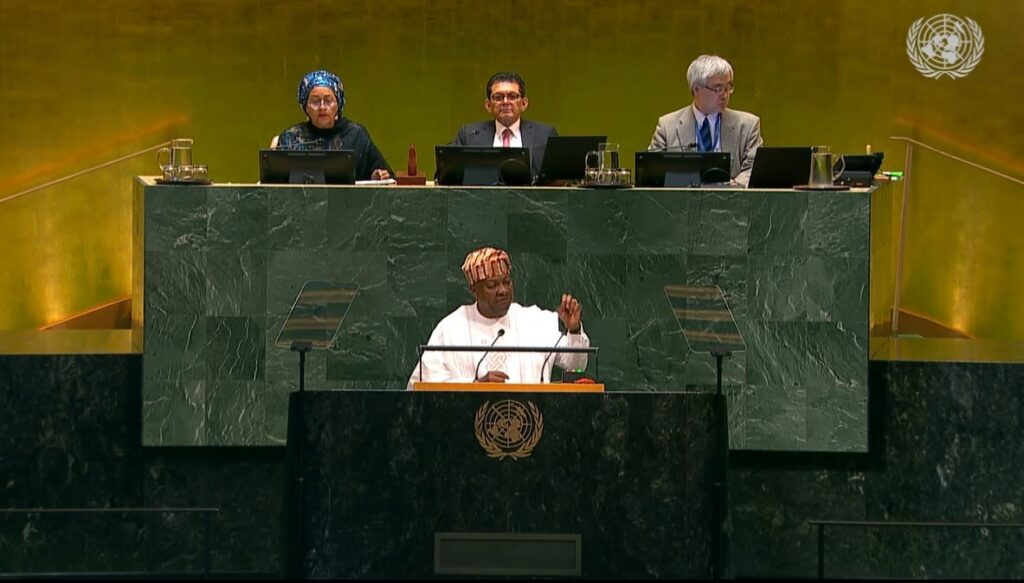
He replaced that grammar with a sequence of active verbs. “They did not vanish. They were hunted. They were captured. They were trafficked. They were bought. They were sold,” he said, adding that they were exploited for profit and torn from the families and communities they belonged to.
Their unpaid labour, he told the Assembly, built the cities, industries, banking institutions and empires of the modern Western world, while the continent they left was depopulated and burdened with split families, structural disruption and generational trauma.
The rhetorical point carries a legal one. Passive construction removes the actor, and without an actor there is no party to hold responsible. President Mahama insisted the March vote was more than symbolism.
“That resolution was not a mere gesture,” he said, arguing it was adopted because the structural legacies of those crimes continue to fuel systematic racism, economic marginalisation and a global financial architecture weighted against Africa and people of African descent.
That framing connects a historical claim to a present-day balance sheet, which is what allows him to move from remembrance to policy.
What Structural Transformation Means
The five targets he named are all live disputes in international economic policy rather than abstractions. Credit ratings are the most immediate.
African governments have long argued that agency assessments carry a risk premium unsupported by default histories, raising borrowing costs across the continent, and the African Union has been developing its own rating agency in response.
Debt follows directly from that, since higher rates mean larger repayments, which is the burden President Mahama elsewhere described as forcing governments to choose between servicing creditors and serving citizens. Raw material export without processing is the third, and the one Ghana is addressing domestically through its push to refine minerals at home.
President Mahama acknowledged movement since March, noting positive overtures from countries and institutions that have joined the dialogue on reparatory justice, and naming the Netherlands, Germany and France.
Germany and France went further this week by co-hosting Ghana’s side event on the restitution of cultural property, having abstained in March. The pattern suggests states that could not support the resolution’s language are willing to engage with its consequences.
Whether that engagement reaches the five structures he named is the open question. Cultural restitution involves objects and can be negotiated museum by museum.
Credit ratings, debt terms and trade rules sit inside institutions where the countries being asked to concede hold the votes, and none has yet indicated willingness to treat reparatory justice as a reason to change them.
READ ALSO: BoG Unveils Heritage Cedi Notes for November Launch