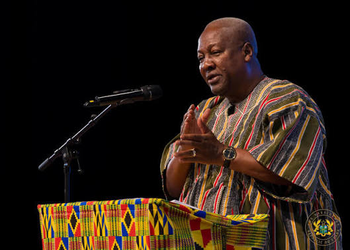
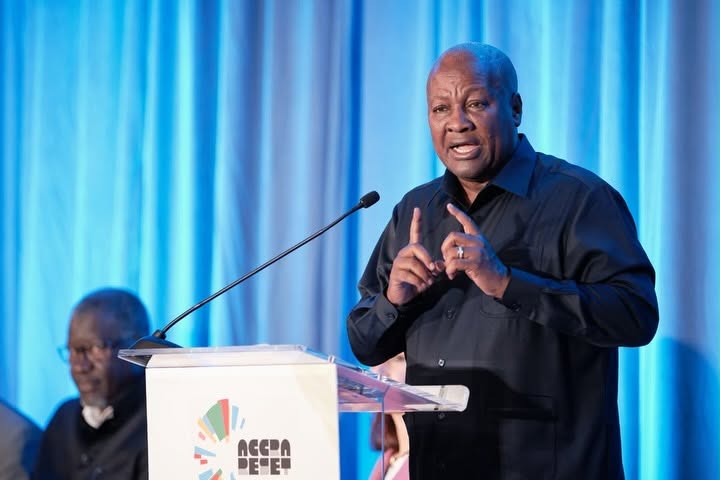
President John Dramani Mahama says the insults directed at him on TikTok do not trouble him, but Ghana must reach a collective decision on how the platform is handled. He set out that position at a town hall with the Ghanaian community in New York on Friday, 25 September 2026, answering a question about arrests over social media posts.
The President has asked the Ghana Journalists Association and the Media Foundation for West Africa to convene stakeholders on the question. He conceded that the police sometimes overreact, while arguing that Ghanaians are too quick to invoke free expression when the posts in question carry threats.
Crocodile Skin
President Mahama was dismissive of any suggestion that he needs shielding from criticism. “As a leader, I don’t mind being insulted. I have been insulted. I have been maligned. I have been voted out of office,” he said, describing his own skin as crocodile hide.
His objection was directed at anonymity rather than criticism. He said he does not mind people who show their faces and take responsibility for what they say, but drew a distinction with those who hide behind an account while posting the worst of it.
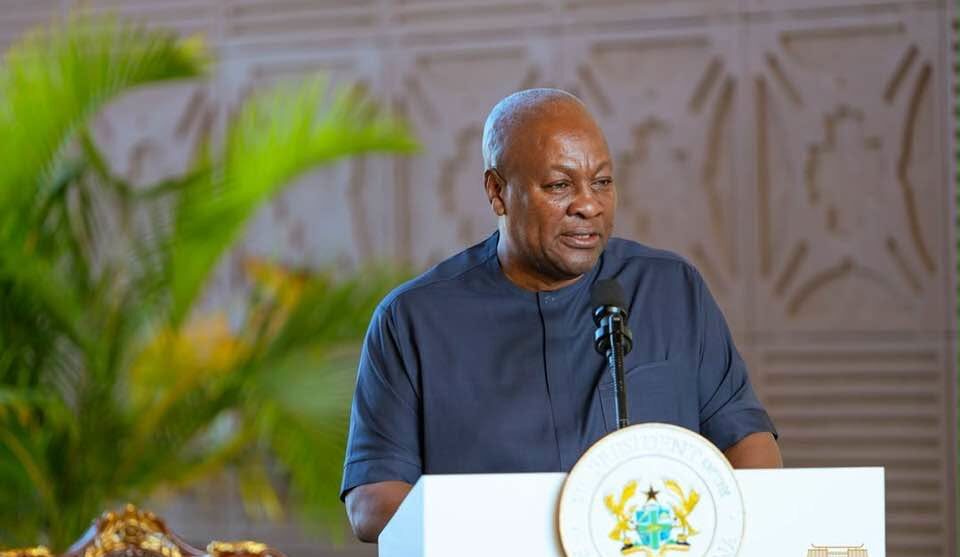
He added that he is doing his best for Ghana and for Africa and intends to do what is right regardless of the abuse.
The Option He Says He Could Take
President Mahama framed the wider difficulty as one no country has solved, with governments everywhere wrestling over how to protect information integrity on a platform where anyone with a phone can publish and the algorithm keeps pushing similar material at users.
Having established that he is not personally aggrieved, he set out the choice as he sees it. He could tell the Inspector General of Police and take a decision at cabinet that the agencies should back off entirely, leaving anyone free to insult anyone without arrest.
“But is that what we want?” he asked. He was candid about the risk of running the other way. Sometimes the police can overreact, he said, and “once you start the arrests you don’t know where to stop.”
That is an unusual admission from a sitting President about his own security services.
A Forum Rather Than A Decree
His proposed route is consultation. He wants the Ghana Journalists Association and the Media Foundation for West Africa to bring stakeholders together for a workshop or forum, referring to a letter already issued by his Executive Secretary.

The questions he put to that gathering were specific. Should the police be involved at all, and if so, how should the platform be regulated? “Let us make a collective decision on what we want to do with this new media,” he said.
Handing the question to a media body and a press freedom organisation rather than the Interior Ministry signals the outcome he expects, though it also shifts responsibility for a decision government must ultimately implement.
The Cases Behind The Debate
Ghana has prosecuted several TikTok users over content targeting the first family, and the record supports the President’s distinction between insult and threat.
In May, the Cyber Vetting and Enforcement Team arrested Mahama Aminat, also known as Akosua Serwaa Minat, at Sekyere Zongo in the Ashanti Region. Police said her videos carried insulting remarks, threatened the President’s life, and incited others to harm both him and the First Lady.
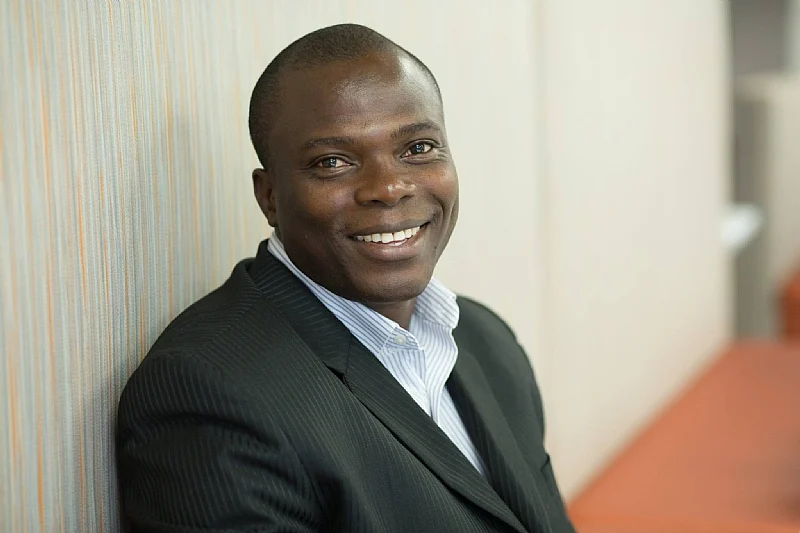
In July, the Accra Circuit Court sentenced 43-year-old Camila Alhassan to one year with hard labour for offensive conduct after she pleaded guilty. Police said her video contained threats against the lives of the President and the First Lady alongside false claims about his private life, including an allegation that he buried cows to secure victory in the 2024 election.
Officers are pursuing a separate false communication charge under the Electronic Communications Act. Not every case fits that pattern. A Techiman nurse, Salomey Awiti Bafoh, was remanded on 17 September over alleged abetment of false news and returns to court on 30 September, and former Vice President Mahamudu Bawumia has called for her release, accusing the government of selective enforcement.
The Comparison He Drew
President Mahama argued that Ghanaians sometimes behave as though they invented democracy and are freer than the countries that introduced it, offering as illustration a TikTok user threatening to hunt down and assassinate the American President.
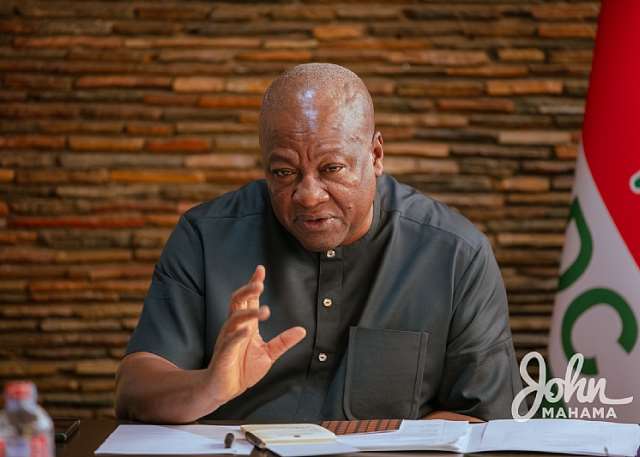
Such a post would bring an immediate arrest in the United States, he said, while producing free speech objections in Ghana. The prosecutions bear him out on threats. What they do not settle is where the line falls afterwards.
Lawyer Vicky Bright, urging police to drop the second prosecution against Alhassan, argued that criminal law should target demonstrable harm rather than speech that merely embarrasses or offends those in authority. Drawing that line is the work the President has now handed to the forum he proposed.
READ ALSO: Mahama Credits Fiscal Discipline for Ghana’s Economic Recovery